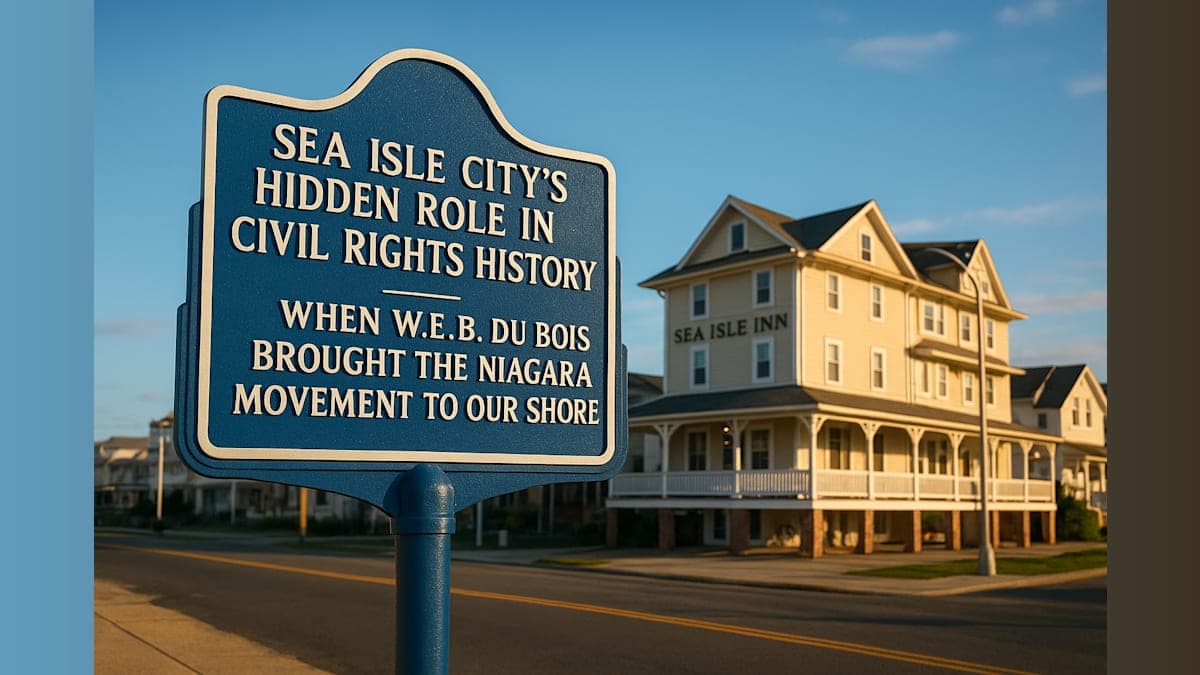
When we think about Sea Isle City, images of sun-soaked beaches, family vacations, and coastal charm typically come to mind. But tucked away in our community's history is a remarkable chapter that many residents may not know about—one that connects our small shore town to the broader struggle for civil rights in America.
In 1909 and 1910, Sea Isle City became an unlikely but significant setting for the final national gatherings of the Niagara Movement, an influential early civil rights organization led by the renowned scholar and activist W.E.B. Du Bois. These meetings, held right here in Cape May County, represented a crucial moment in the evolution of the American civil rights movement.
The Niagara Movement: A Foundation for Change
The Niagara Movement emerged during a period when African Americans faced systematic discrimination and violence across the nation. Founded by Du Bois and other Black intellectuals and activists, the organization took a bold stance, demanding full civil rights, economic opportunity, and an end to racial segregation—positions that were considered radical for their time.
What makes our local connection even more meaningful is that the work begun by the Niagara Movement directly contributed to the formation of the NAACP (National Association for the Advancement of Colored People), one of the most enduring and influential civil rights organizations in American history. The ideas discussed and strategies developed during those Sea Isle City meetings helped lay the groundwork for decades of civil rights advocacy.
Why Sea Isle City?
The choice of Sea Isle City as a meeting location speaks to the complex social dynamics of the early 20th century. While many Northern resort communities practiced their own forms of segregation, some coastal areas provided spaces where African American organizations could gather and strategize away from the intense scrutiny they faced in larger cities.
These gatherings weren't just administrative meetings—they were moments of community building, intellectual exchange, and strategic planning that would influence the direction of civil rights activism for generations to come. Delegates would have walked our streets, breathed our salt air, and shaped history within our community's borders.
Preserving Our Shared Heritage
This piece of Cape May County Black history reminds us that the story of our community is richer and more diverse than we might assume. It challenges us to look beyond the familiar narratives and recognize the many threads that weave together to create our local heritage.
Understanding that leaders like W.E.B. Du Bois chose our community for these historic final gatherings adds depth to our appreciation of Sea Isle City's place in American history. It's a reminder that even small communities can play outsized roles in movements that transform our nation.
As we continue to celebrate and preserve our local history, stories like these deserve to be remembered, shared, and honored. They belong to all of us—part of the complex, inspiring, and ongoing story of our community and our country's journey toward justice and equality.