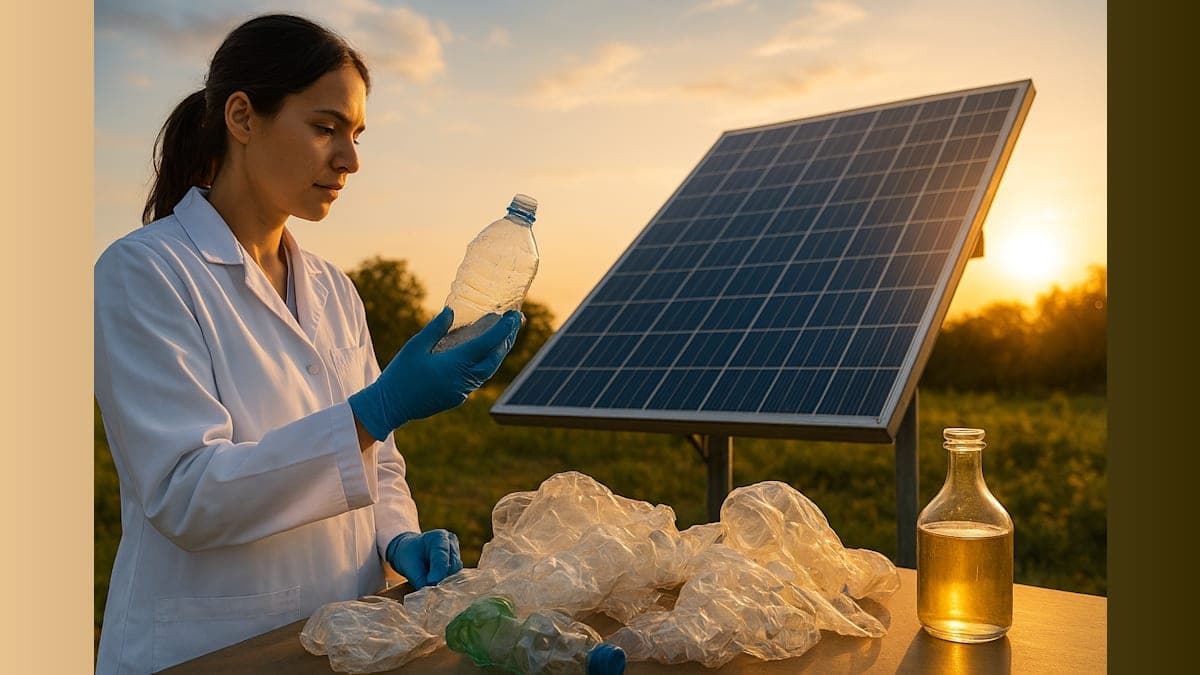
A team of researchers at the University of Waterloo has achieved a significant breakthrough in addressing the global plastic waste crisis. The scientists have successfully developed a process that converts plastic waste into acetic acid, the main ingredient in vinegar, using sunlight as the primary energy source.
This innovative approach relies on photocatalysis, a chemical process that uses light to accelerate reactions. The method represents a departure from traditional plastic recycling techniques, which often require substantial energy input and can produce harmful emissions. By harnessing solar energy, the Waterloo research team has created a potentially emission-free pathway for plastic waste management.
The significance of this discovery extends beyond waste reduction. Acetic acid serves as a valuable chemical commodity with widespread industrial applications, including food preservation, chemical manufacturing, and pharmaceutical production. By transforming discarded plastics into a marketable product, the process addresses both environmental and economic concerns simultaneously.
What distinguishes this advancement from previous plastic conversion technologies is its versatility. The researchers demonstrated success with multiple types of plastic materials, suggesting the method could handle the diverse waste streams that complicate current recycling efforts. Many conventional recycling programs struggle with mixed plastic types, leading to contamination and reduced efficiency.
The nature-inspired process reflects a growing trend in environmental science toward biomimetic solutions—technologies that emulate natural systems. Photocatalysis mirrors the way plants convert sunlight into chemical energy through photosynthesis, applying similar principles to break down synthetic polymers into simpler, useful compounds.
While the research represents a promising development, questions remain about scalability and commercial viability. Laboratory breakthroughs must undergo extensive testing and refinement before transitioning to industrial applications. Factors such as processing speed, cost-effectiveness, and the ability to handle contaminated or mixed plastic waste will determine whether the technology can achieve widespread adoption.
Nevertheless, the University of Waterloo discovery adds to a growing portfolio of innovative solutions addressing plastic pollution. As communities worldwide grapple with mounting waste challenges and seek sustainable alternatives to landfilling and incineration, technologies that transform waste into valuable resources offer compelling pathways forward. The conversion of plastic into acetic acid through sunlight-powered photocatalysis exemplifies how scientific innovation can align environmental stewardship with economic opportunity.