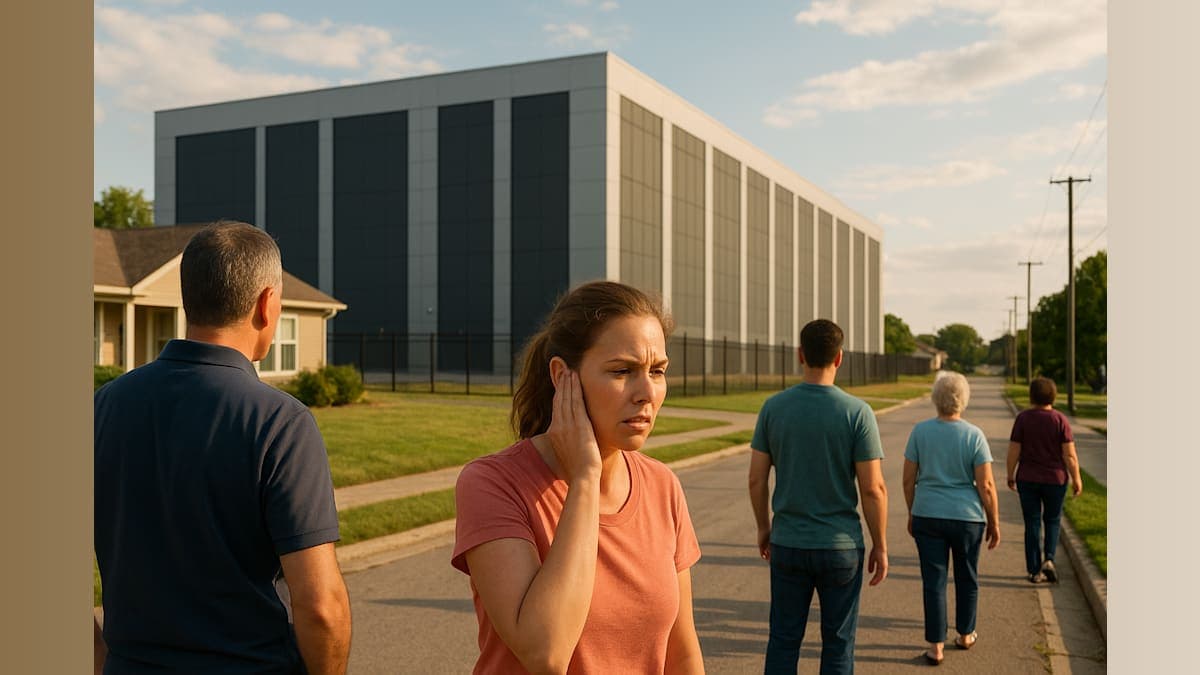
A strange, persistent humming noise has been disrupting the peace in our community, and residents believe they've identified the culprit: a massive artificial intelligence data center currently under construction.
The mysterious sound has become an unwelcome soundtrack to daily life for many neighbors, who describe it as a low-frequency hum that seems to permeate their homes and outdoor spaces. The timing of the noise appears to align with the rise of the new AI data center facility, raising questions about whether the two are connected.
Data centers, which house the massive computing infrastructure needed to power artificial intelligence systems, require extensive cooling and ventilation systems that run continuously. These facilities also consume enormous amounts of electricity, with equipment that generates both heat and noise. The industrial-scale operations can create vibrations and sounds that travel considerable distances, particularly the low-frequency hums that residents are reporting.
What makes this situation particularly frustrating for our neighbors is the elusive nature of the sound itself. Low-frequency hums can be notoriously difficult to pinpoint and measure, and they affect people differently—some residents may hear it constantly while others barely notice it at all. This variability can make it challenging to document the problem and seek solutions.
The emergence of this issue highlights a growing tension in communities across the region: the push to build infrastructure for our increasingly digital economy versus the quality of life concerns of residents who live nearby. As artificial intelligence technology demands ever-more computing power, data centers are expanding rapidly, often in areas where they bump up against residential neighborhoods.
For affected residents, the constant hum represents more than just an annoyance—it's a disruption to sleep, concentration, and the simple enjoyment of their homes. Many are calling for answers about what's causing the noise, whether it will continue once the facility is fully operational, and what can be done to mitigate its impact.
As our community grapples with this modern challenge, the situation serves as a reminder that technological progress must be balanced with the needs and wellbeing of the people who call this area home. The conversation about how we accommodate necessary infrastructure while preserving our quality of life is one that will likely continue as more such facilities are proposed in the future.