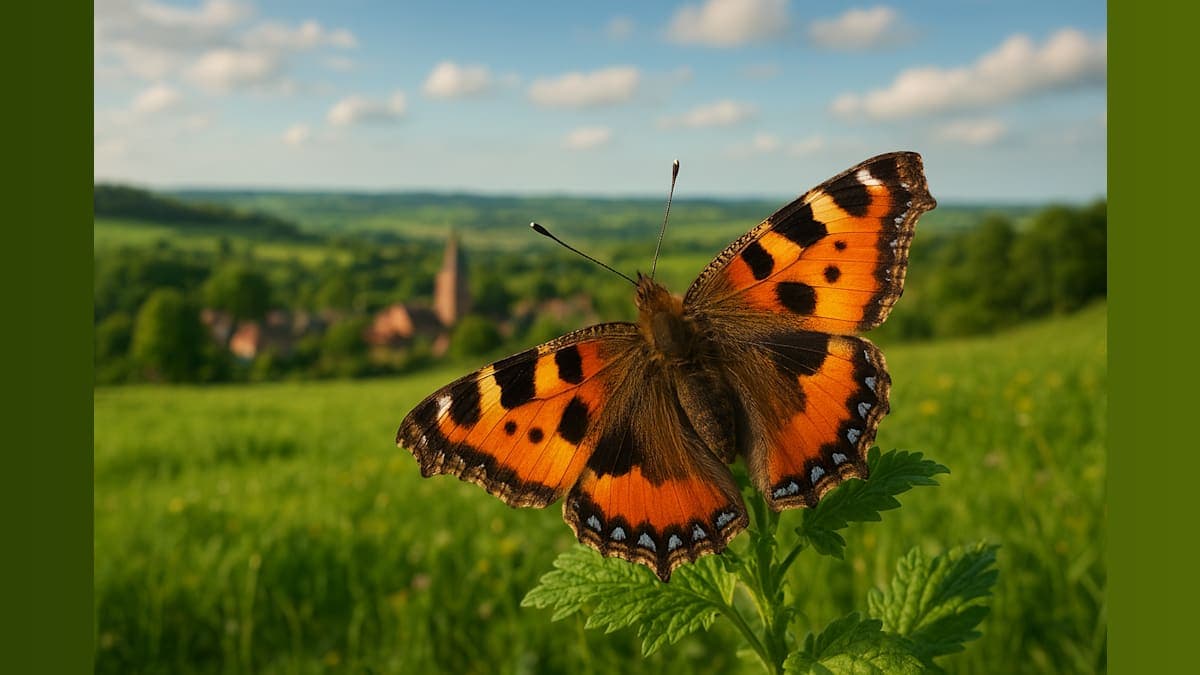
England is witnessing the remarkable return of a butterfly species that vanished from the landscape more than half a century ago. The large tortoiseshell butterfly, a striking insect that once graced British woodlands and gardens, appears to have successfully recolonized the country after decades of absence.
The species disappeared from England during the 1960s, a casualty of Dutch elm disease that swept through the country and decimated elm tree populations. These trees served as critical habitat for the large tortoiseshell, and their loss proved catastrophic for the butterfly population.
Unlike its smaller relative, the small tortoiseshell butterfly, which remained common throughout England, the large tortoiseshell became entirely absent from the British landscape. The species is considerably more substantial in size and possesses distinctive markings that make it a prized sighting among butterfly enthusiasts.
Recent years have brought encouraging news. Continuous and widespread sightings of the large tortoiseshell across multiple regions suggest the butterfly has not merely returned for brief visits but has established breeding populations. This pattern of sustained observation indicates a genuine recolonization rather than isolated incidents of vagrant individuals.
The apparent permanence of this return has generated considerable excitement within the British conservation community. Butterfly populations serve as important indicators of ecosystem health, and the successful reestablishment of a previously extirpated species represents a significant ecological achievement.
The mechanism behind this natural recolonization remains a subject of scientific interest. Butterflies are capable of dispersing across considerable distances, and it appears that populations from continental Europe may have gradually expanded their range back into England. Changes in climate patterns, habitat management practices, or the recovery of suitable host plants may have created conditions favorable for the species to reestablish itself.
This development underscores the resilience of natural systems and the potential for species recovery when conditions permit. While Dutch elm disease continues to affect elm populations, the large tortoiseshell appears to have adapted to the changed landscape, finding alternative resources or benefiting from elm trees that have survived or been replanted.
The return of the large tortoiseshell butterfly adds to the biodiversity of English ecosystems and provides a hopeful example of natural restoration. For a nation with a strong tradition of butterfly observation and conservation, the permanent reestablishment of this spectacular species represents both a scientific milestone and a cause for celebration among naturalists and the general public alike.