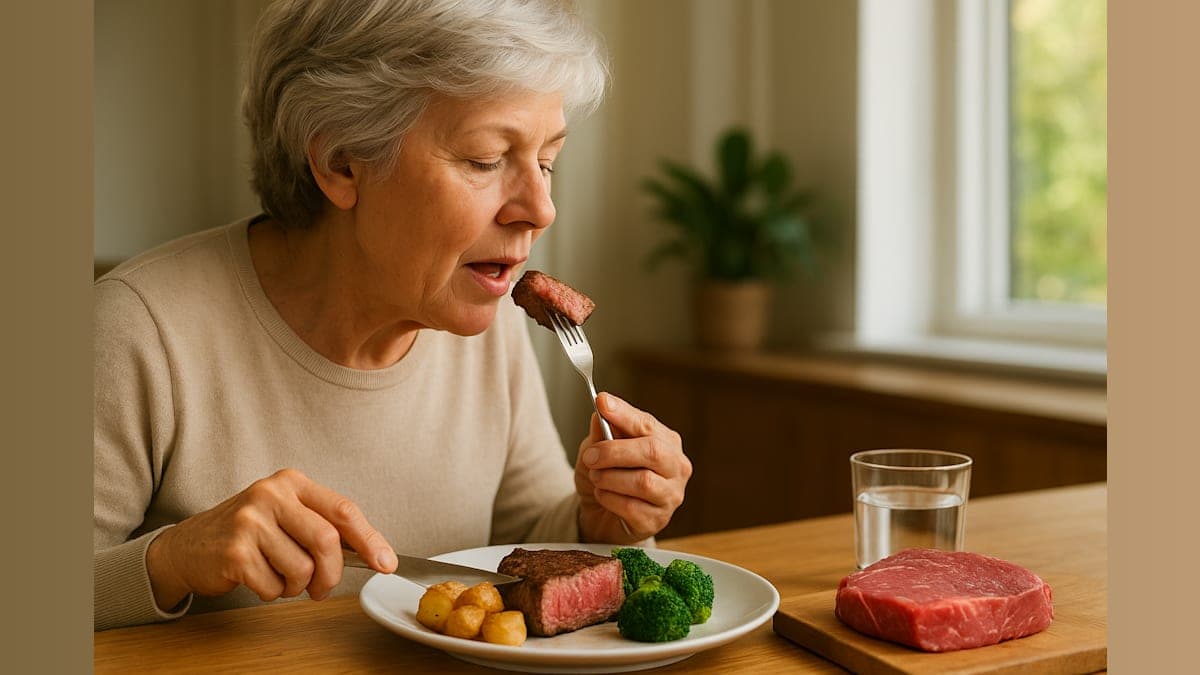
A groundbreaking study from the Karolinska Institute in Sweden has revealed that seniors carrying specific genetic variants may significantly reduce their risk of developing dementia by consuming higher amounts of meat, a finding that challenges traditional dietary guidance and suggests the need for personalized nutritional recommendations.
The research, published in JAMA Network Open, focused on individuals carrying the APOE 3/4 or APOE 4/4 gene combinations, which are associated with increased Alzheimer's disease risk. These genetic variants are present in approximately 30 percent of the Swedish population, yet account for 70 percent of Swedish Alzheimer's patients.
Dr. Jakob Norgren, the study's lead author, explained the research hypothesis in a press release: "This study tested the hypothesis that people with APOE 3/4 and 4/4 would have a reduced risk of cognitive decline and dementia with higher meat intake, based on the fact that APOE4 is the evolutionarily oldest variant of the APOE gene and may have arisen during a period when our evolutionary ancestors ate a more animal-based diet."
Comprehensive Long-Term Analysis
The investigation followed more than 2,100 Swedish residents aged 60 and older over a period extending up to 15 years. None of the participants had received a dementia diagnosis at the study's inception. Researchers analyzed the relationship between self-reported dietary habits and cognitive health measurements while controlling for age, sex, education, and lifestyle factors.
The results demonstrated a striking pattern. Among participants who consumed less meat, those carrying the APOE 3/4 or APOE 4/4 genetic variants faced more than twice the risk of developing dementia compared to individuals without these gene combinations. However, this elevated risk disappeared among the top 20 percent of meat consumers, who averaged approximately 870 grams of meat weekly when standardized to a daily energy intake of 2,000 calories.
The second-highest consumption group also showed favorable outcomes, though less pronounced, suggesting a dose-dependent relationship between meat intake and cognitive protection in this genetic subgroup.
Quality Matters as Much as Quantity
The research revealed important distinctions regarding meat type. Study co-author Dr. Sara Garcia-Ptacek noted that processed meat consumption patterns significantly influenced outcomes. "A lower proportion of processed meat in total meat consumption was associated with a lower risk of dementia regardless of APOE genotype," she stated.
Furthermore, carriers of the APOE 3/4 and APOE 4/4 variants who consumed higher quantities of unprocessed meat demonstrated a significant reduction in early mortality risk, adding another dimension to the potential benefits of this dietary pattern for genetically susceptible individuals.
Implications for Personalized Medicine
Dr. Norgren emphasized the potential for lifestyle modification in at-risk populations. "Those who ate more meat overall had significantly slower cognitive decline and a lower risk of dementia, but only if they had the APOE 3/4 or 4/4 gene variants," he explained. "For those who are aware that they belong to this genetic risk group, the findings offer hope; the risk may be modifiable through lifestyle changes."
The researchers acknowledged the observational nature of their study and called for intervention trials to establish causal relationships definitively. "Clinical trials are now needed to develop dietary recommendations tailored to APOE genotype," Dr. Norgren stated, noting that Nordic countries possess a unique advantage for such research due to the higher prevalence of APOE4 variants in their populations compared to Mediterranean regions.
Broader Context and Future Directions
This research emerged following a request from the Swedish Food Agency for additional investigation into potential links between meat consumption and dementia development. The findings suggest that blanket dietary recommendations may not serve all population segments equally, particularly those with specific genetic predispositions.
The study also intersects with established research on aging and muscle mass preservation. The aging process is characterized by muscle loss, which contributes to increased morbidity. High-protein diets, particularly those providing approximately one gram of protein per kilogram of body weight, support muscle maintenance in older adults. The potential connection between adequate protein intake, muscle preservation, and cognitive health represents an important avenue for future investigation.
While dietary research faces inherent challenges—including reliance on self-reported consumption data rather than controlled metabolic ward conditions—this study adds valuable evidence to the growing understanding that nutritional needs may vary significantly based on individual genetic profiles. The findings underscore the importance of personalized medicine approaches in developing effective prevention strategies for age-related cognitive decline.