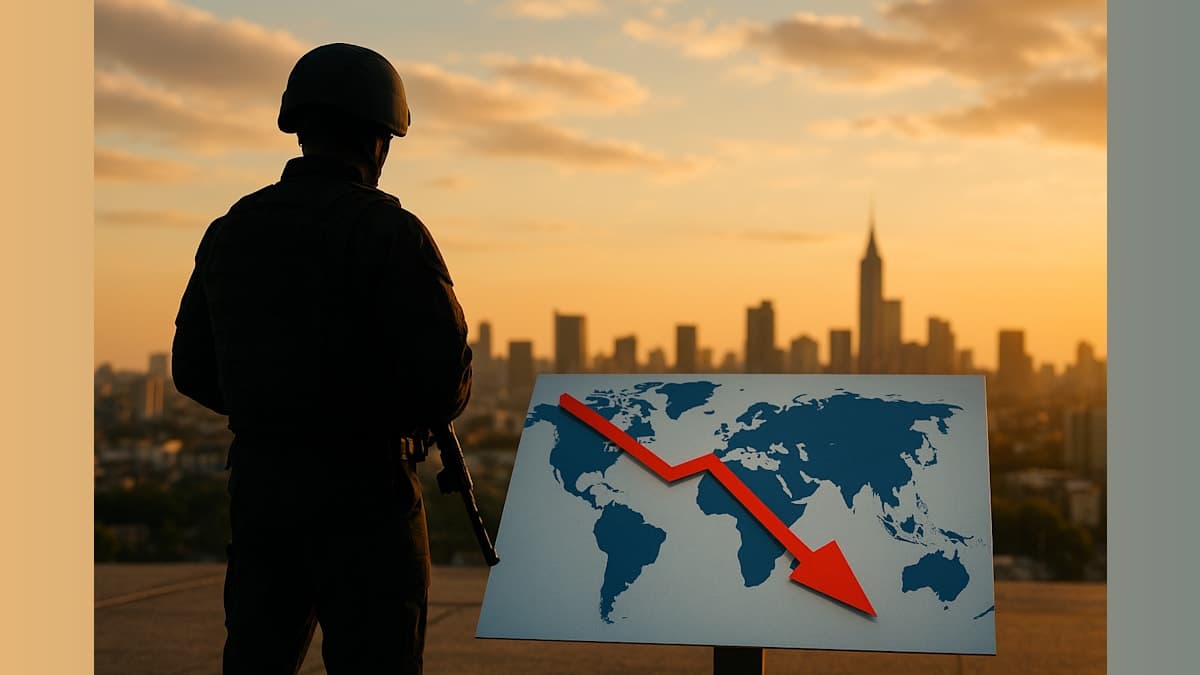
International terrorism has declined to its lowest level in fifteen years, according to the annual Global Terrorism Index published by the Institute for Economics and Peace. The comprehensive assessment documents a 22 percent reduction in terrorist attacks during 2025, accompanied by a 28 percent decrease in fatalities resulting from such incidents.
These figures represent the most favorable security conditions observed since 2007, with 2025 registering the single largest annual reduction in attacks and incidents since the 2020-2021 period. The positive trend reflects stabilization efforts across multiple geographical regions, with 81 countries worldwide experiencing reductions in both attack frequency and casualty rates.
The report defines terrorism narrowly as violence perpetrated by stateless, transnational actors pursuing political or religious objectives. Under this framework, terrorist activity remains concentrated primarily in Africa's Sahel and Sub-Saharan regions, though even these areas have shown improvement compared to previous assessment periods.
Regional Improvements Signal Diplomatic Progress
Several nations that previously experienced significant terrorist activity demonstrated substantial progress toward peace and stability. Turkey improved four positions in the rankings following the resolution of a four-decade conflict between the government in Ankara and the Communist Kurdish guerilla movement known as the PKK. The organization's founder and leader, Abdullah Öcalan, ordered the group to dissolve, acknowledging that violence had reached its limits as a strategic tool.
Afghanistan continued its upward trajectory from the previous year's report, when it departed the top ten worst-affected countries for the first time since the American occupation commenced in 2002. Iraq improved three positions, corresponding with ongoing socio-economic advancement that the United Nations chief coordinator in the country characterized as "unrecognizable and remarkable" following four decades of warfare.
Tunisia, which has confronted an ongoing terrorist insurgency in its southwestern mountainous regions, achieved major improvement with an incidence rating comparable to the Netherlands, Austria, and Canada. Libya, formerly classified as a failed state, advanced another four positions to reach parity with Italy—an achievement the report deemed outstanding given the nation's recent history.
Additional nations demonstrating substantial progress include Algeria, Oman, Bangladesh, and Jordan. The Ivory Coast improved eleven positions and now maintains a terrorist threat level lower than nearly every Western nation.
Remaining Challenges Concentrated in Five Nations
Despite the encouraging global trend, seventy percent of all terrorism-related fatalities occurred in just five countries: Burkina Faso, Nigeria, Niger, the Democratic Republic of Congo, and Pakistan. However, even within this concentration, Burkina Faso and Niger experienced 900 fewer deaths from terrorism compared to the previous year.
The situation in Pakistan presents a unique case, with approximately half of terrorist activity driven by conflict with the Balochistan Liberation Army, a militant organization representing ethnic Balochs in the nation's southwestern desert regions. The BLA maintains a specific political objective of separating their region from Islamabad and has never conducted attacks outside Pakistani territory, making the conflict more analogous to historical separatist movements than transnational terrorist campaigns.
Decline in Large-Scale Attacks
The year 2025 proved notable for recording only one attack resulting in more than 100 deaths, representing a major reduction in what the Institute for Economics and Peace classified as "large-scale" terrorist attacks. This metric indicates not only a decrease in the frequency of terrorist incidents but also a reduction in their severity and operational sophistication.
The comprehensive data suggests that international diplomatic efforts, regional stabilization initiatives, and security cooperation have contributed to creating conditions less conducive to terrorist operations. While challenges persist in specific regions, the overall trajectory indicates sustained progress toward reducing political violence and improving global security conditions.