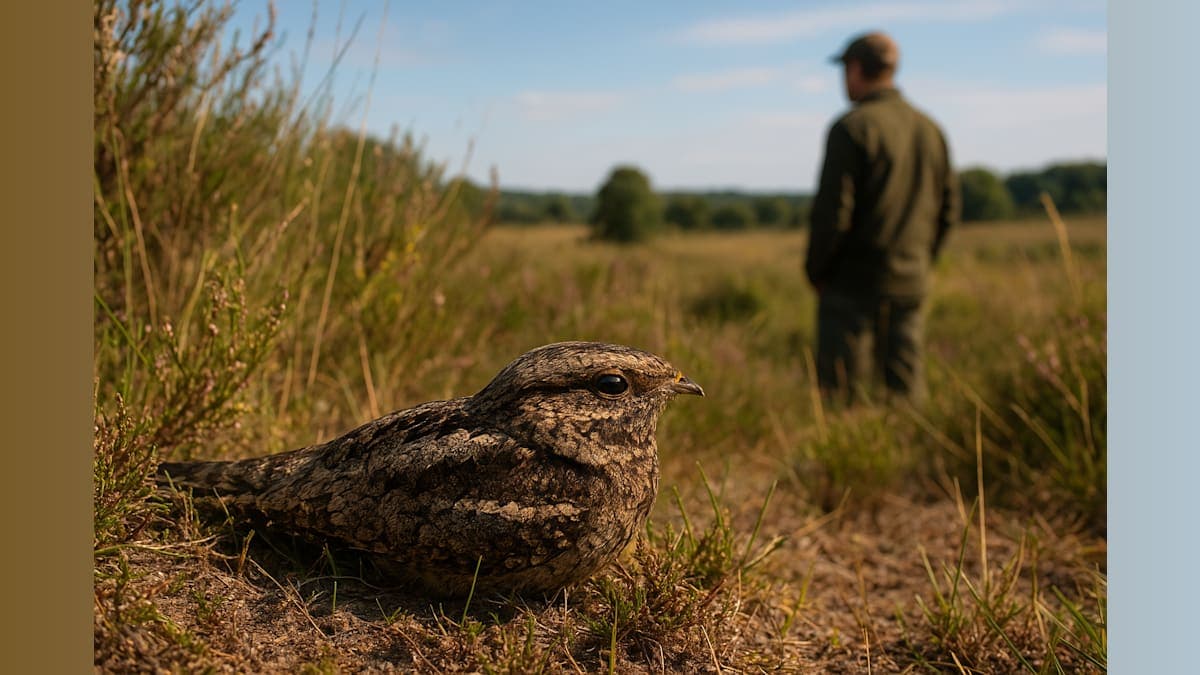
A nocturnal bird species that had experienced catastrophic population losses over recent decades is now experiencing a remarkable resurgence, according to conservationists monitoring wildlife populations in southern England.
The nightjar, also known as the nighthawk, has doubled its population numbers over a five-year period following targeted conservation interventions. This represents a significant reversal of fortune for a species that had declined by approximately 51 percent between the 1970s and 2000s due to extensive forest habitat loss.
The nightjar remains one of England's most elusive avian species, becoming active only at twilight hours. The birds are distinguished by their distinctive chortling vocalizations and exceptional camouflage capabilities, which allow them to blend seamlessly into their woodland environments.
The species' dramatic decline through the late twentieth century alarmed wildlife experts, who attributed the population crash primarily to the loss of suitable forest habitat. The degradation and fragmentation of woodlands eliminated critical nesting and foraging areas that nightjars require for successful breeding.
Conservation organizations working in southern England have implemented habitat restoration programs designed to recreate the specific environmental conditions nightjars need to thrive. These efforts appear to have created the foundation for the species' recovery, allowing populations to rebound to levels not seen in decades.
The doubling of nightjar numbers over just five years represents one of the most successful bird conservation outcomes in recent memory. Wildlife experts characterize the population recovery as a testament to the effectiveness of science-based habitat management and the resilience of species when provided with appropriate environmental conditions.
This conservation success story offers valuable lessons for protecting other declining bird species facing similar threats from habitat loss. The nightjar's recovery demonstrates that targeted interventions, when properly designed and implemented, can reverse even severe population declines and restore ecological balance to affected regions.