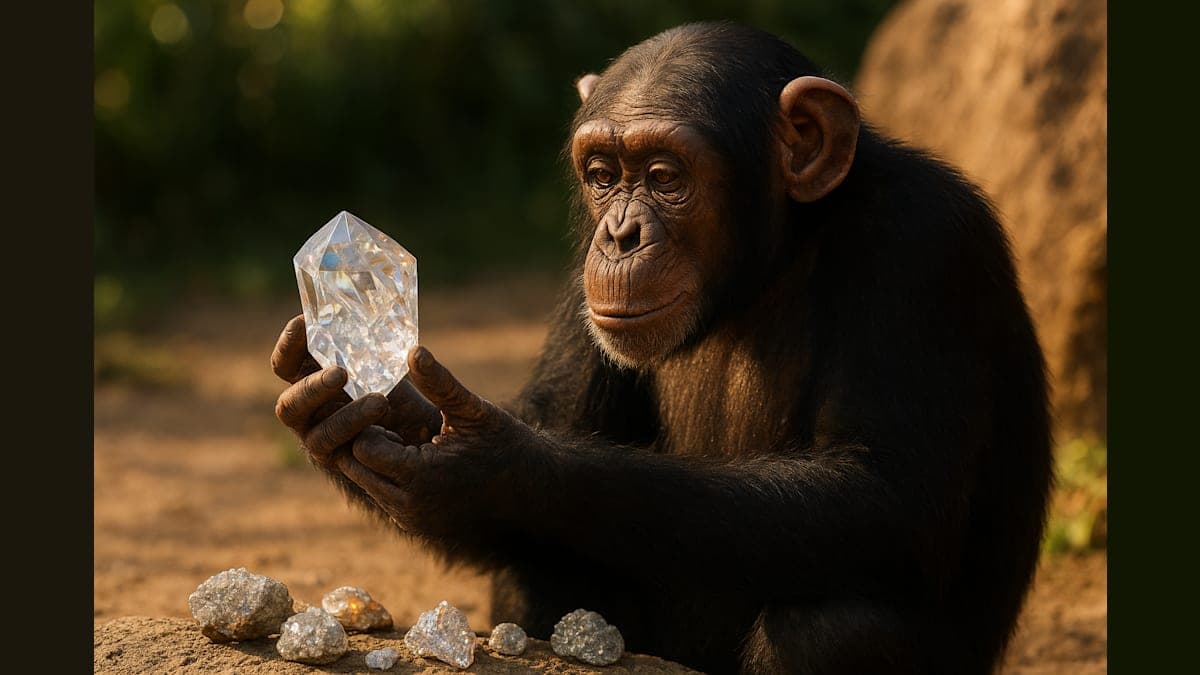
A fascinating discovery in primate behavior research has revealed that chimpanzees exhibit a marked attraction to crystals and shiny stones, a finding that may illuminate the deep evolutionary roots of human fascination with precious gems and minerals.
Scientists conducting behavioral studies have observed that chimpanzees not only show preference for crystals over ordinary stones but actively collect and keep these glittering objects in their sleeping areas. The primates demonstrate a remarkable ability to distinguish stones that shine or glitter from those that do not, suggesting a sophisticated level of visual discrimination and preference.
The research team undertook this investigation to explore whether the human species' well-documented appreciation for crystals, gems, and precious stones—an attraction that throughout history has often bordered on obsession—might have deeper evolutionary origins shared with our closest living relatives.
This apparent valuing of crystals by chimpanzees represents a significant finding in comparative psychology and evolutionary anthropology. The behavior suggests that the aesthetic appreciation for shiny, reflective materials may predate human evolution and could be rooted in shared primate cognition.
Throughout human history, cultures across the globe have attributed special significance to crystals and gemstones, using them for adornment, trade, religious purposes, and symbols of status. Archaeological evidence shows that early humans collected and valued such materials tens of thousands of years ago. The chimpanzee findings suggest this attraction may stem from cognitive traits that evolved in our common ancestors millions of years before modern humans emerged.
The implications of this research extend beyond simple curiosity about primate behavior. Understanding what drives chimpanzees to seek out and keep crystals could provide valuable insights into the cognitive and perceptual mechanisms that underlie aesthetic preferences in primates, including humans. It raises questions about whether the attraction stems from visual appeal, tactile properties, or perhaps some deeper cognitive appreciation for rare or unusual objects.
Further research will likely explore the specific characteristics of crystals that attract chimpanzees, whether this behavior varies among different chimpanzee populations, and how it compares to similar behaviors observed in other primate species. Such studies could ultimately help scientists construct a more complete picture of how aesthetic preferences and material culture evolved in the human lineage.