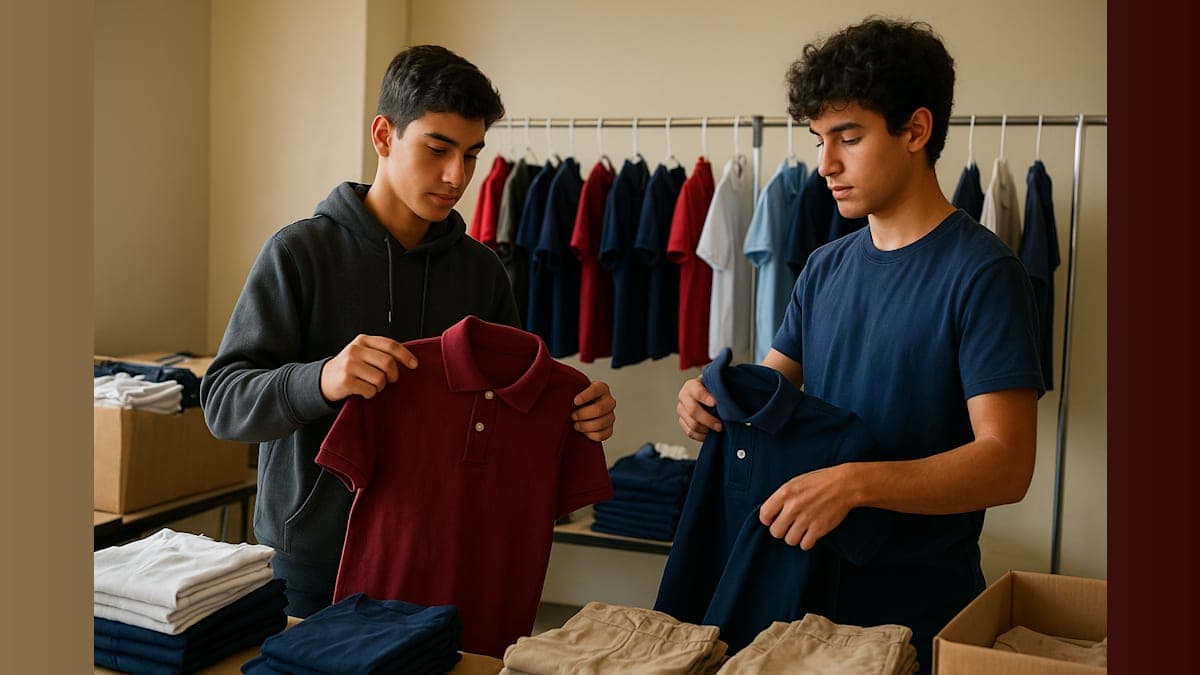
A pair of entrepreneurial brothers in the San Francisco area have developed an innovative solution to address both environmental waste and economic hardship facing local families. Through their school uniform redistribution program, the teenagers have successfully channeled donated clothing to approximately 1,400 families, generating an estimated $140,000 in savings for households struggling with education-related expenses.
The initiative operates on a straightforward premise: collecting gently used school uniforms from families whose children have outgrown them and redistributing these items to low-income families who need them. This model addresses a significant financial burden for many households, as school uniforms represent a recurring expense that can strain family budgets, particularly for those with multiple school-age children.
Beyond the economic impact, the program delivers substantial environmental benefits. By diverting usable clothing from waste streams, the brothers are preventing textiles from entering landfills, where synthetic and natural fabrics decompose over extended periods. The environmental significance extends further, as textile waste in landfills contributes to methane emissions, a greenhouse gas that, while shorter-lived than carbon dioxide, possesses significantly greater heat-trapping capacity in the atmosphere.
The success of this youth-led initiative demonstrates how community-based solutions can simultaneously address multiple challenges. The program reduces financial pressure on families, promotes sustainable consumption patterns, and minimizes environmental impact through the principles of reuse and redistribution.
School uniform requirements, while intended to promote equality and reduce distractions in educational settings, can create unintended financial hardships for economically disadvantaged families. The cost of purchasing new uniforms each academic year, combined with the need to replace items as children grow, represents a substantial portion of back-to-school expenses. Programs such as this uniform exchange provide practical relief while fostering community connections and resource sharing.
The brothers' work exemplifies the growing trend of youth activism focused on practical, community-level interventions. Rather than merely identifying problems, these young organizers have implemented a functional system that delivers measurable results. Their approach combines social entrepreneurship with environmental stewardship, creating a model that could be replicated in other communities facing similar challenges.
The scale of impact achieved by this program underscores the potential for grassroots initiatives to effect meaningful change. Serving 1,400 families represents a significant reach within the local community, suggesting robust participation from both donors and recipients. The $140,000 in estimated savings translates to an average of $100 per family, a meaningful sum that can be redirected toward other essential expenses such as school supplies, nutritious meals, or extracurricular activities.
This initiative also highlights the importance of circular economy principles at the local level. By extending the useful life of clothing items, the program reduces demand for new manufacturing, which carries its own environmental costs including water consumption, chemical processing, and transportation emissions. The redistribution model creates value from existing resources while building community resilience and social cohesion.