An urban waterway flowing through Oakland has emerged as a remarkable environmental success story, sustained by three decades of volunteer dedication and community commitment to ecological restoration.
Thirty years ago, Michael Thilgen and his neighbors established Friends of Sausal Creek, a nonprofit organization dedicated to restoring the waterway from its source in the Oakland Hills to its terminus in the San Francisco Bay. What began as a grassroots effort has evolved into one of the region's most successful urban watershed restoration projects.
The three-mile creek may lack the dramatic scale of California's major water sources, yet its ecological significance cannot be overstated. Sausal Creek stands as one of the only urban creeks in the state to support a wild population of rainbow trout. The waterway also provides critical habitat for pallid manzanita, a federally endangered plant species clinging to survival in the region.
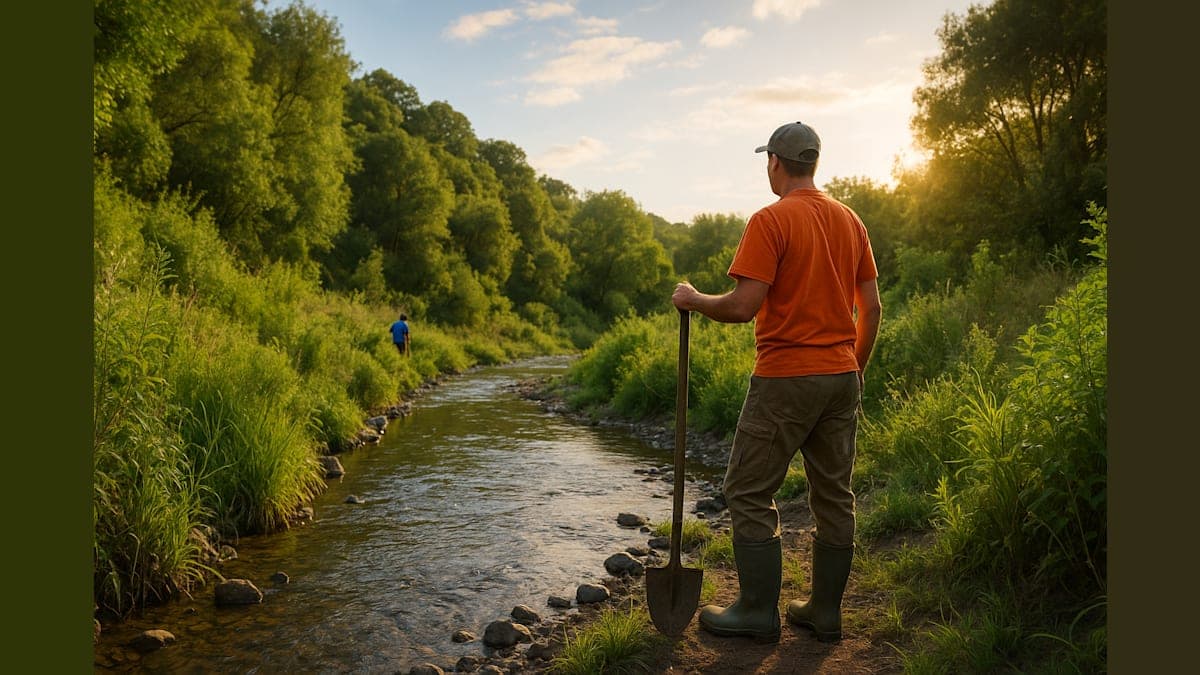
The organization's all-volunteer workforce has maintained the watercourse through consistent, methodical efforts. Volunteers clear invasive vegetation, remove weeds from trails, plant native species, and conduct regular wildlife health monitoring to ensure the creek's continued vitality.
"Is the water clear? Does it look like something's been dumped?" volunteer and board member Kristy Brady explained to CBS News. "We monitor fish quality and so forth, making sure it stays healthy so everyone can enjoy it."
Friends of Sausal Creek operates a native plant nursery and organizes seed collecting expeditions to support long-term reforestation objectives. The organization has successfully reintroduced tens of thousands of native plants throughout both wild and developed sections of the creek corridor.
Among the organization's most ambitious undertakings is the ongoing restoration of Fern Ravine, where a second-growth coastal redwood forest meets Oakland's residential neighborhoods. Since 2010, volunteers have worked to reverse decades of environmental degradation at this unique site.
The city designated Fern Ravine as a park in 1920, creating a sanctuary where a tributary of Sausal Creek flows away from urban noise. However, more than a century of heavy recreational use, both on designated trails and off them, resulted in substantial loss of undergrowth vegetation.
The disappearance of ground cover plants triggered a cascade of environmental problems. Soil dried out, erosion accelerated, sedimentation increased, and invasive species established dominance throughout Fern Ravine, outcompeting native vegetation that had thrived for generations.
Through persistent weeding and strategic planting efforts, the nonprofit has achieved what organizational documents describe as "extraordinary progress" in restoring the ravine's ecological balance.
Board member Dr. Robert Leidy emphasized the significance of Oakland's redwood forests in organizational materials, stating that "Oakland's ancient redwoods are as unique and valuable as the old-growth redwood forests in California's state and national parks."
"Their ability to recover from centuries of abuse with proper management is a remarkable testament to their resilience," Dr. Leidy continued. "Oakland's redwoods deserve the same reverence..."
The transformation of Sausal Creek demonstrates the profound impact that sustained community engagement can achieve in urban environmental restoration. What two generations of volunteers have accomplished serves as a model for watershed protection efforts throughout California and beyond, proving that dedicated citizens can reverse environmental decline and create thriving ecosystems within city limits.