
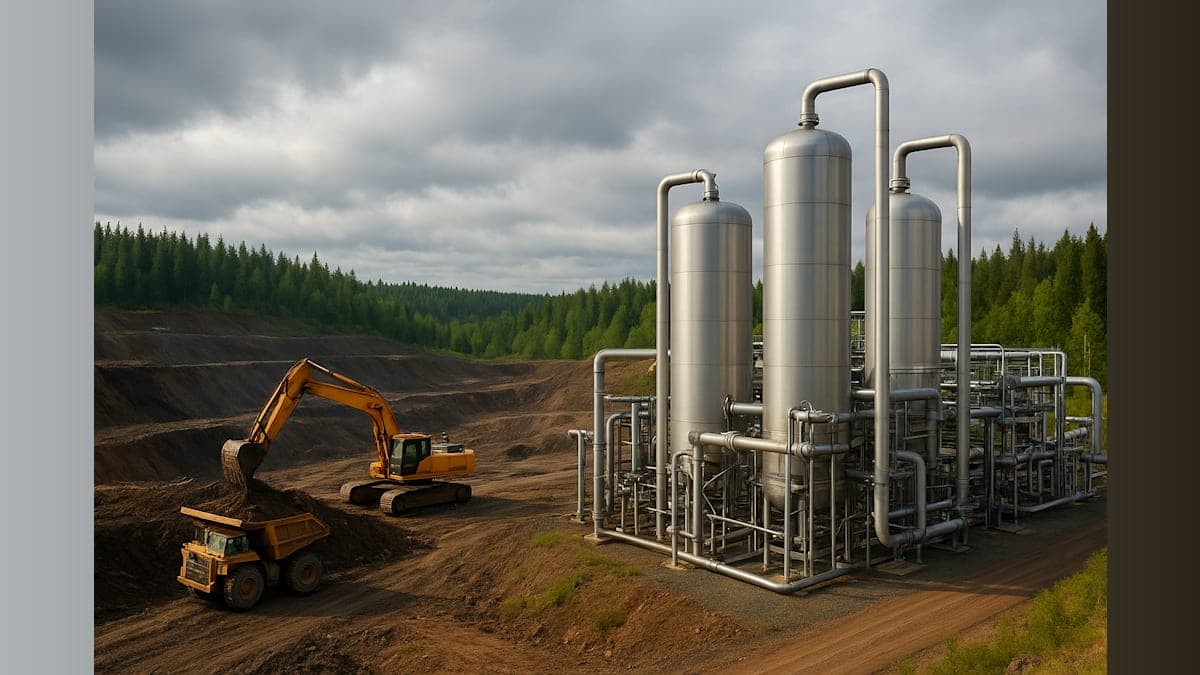
A groundbreaking nickel mining operation that promises to capture massive amounts of carbon dioxide while extracting critical minerals has received the green light from Ontario regulators, marking a significant milestone in Canada's approach to resource development.
Canada Nickel Company announced on July 31 that it had obtained final permitting approval from the Ontario government for its large-scale nickel mining and carbon capture project. The facility is designed to sequester 1.5 million tons of carbon dioxide each year during active operations, representing an innovative approach to reducing the environmental impact of mineral extraction.
The approval carries additional significance as the first permit granted under Canada's amended Impact Assessment Act. This legislative reform was crafted to streamline the regulatory process for extractive industry projects that meet rigorous quality standards, allowing superior proposals to advance more rapidly through the approval pipeline.
The project represents a convergence of two critical economic priorities: securing domestic supplies of nickel, a metal essential for electric vehicle batteries and renewable energy infrastructure, while simultaneously addressing climate change through carbon sequestration technology. By integrating carbon capture directly into mining operations, the facility aims to demonstrate that resource extraction and environmental stewardship need not be mutually exclusive objectives.
The annual carbon storage capacity of 1.5 million tons is equivalent to removing hundreds of thousands of gasoline-powered vehicles from roadways each year. This scale of carbon capture integrated into an active mining operation positions the project as a potential model for future resource development initiatives across Canada and beyond.
With regulatory approval now secured, Canada Nickel Company can proceed toward the financing and construction phases of the project. The timeline for bringing the mine into production will depend on securing the necessary capital investment and completing infrastructure development.
The approval under the reformed Impact Assessment Act signals a policy shift aimed at accelerating development of projects that combine economic benefits with environmental innovation. The streamlined process is intended to help Canada compete more effectively in global markets for critical minerals while maintaining environmental oversight.