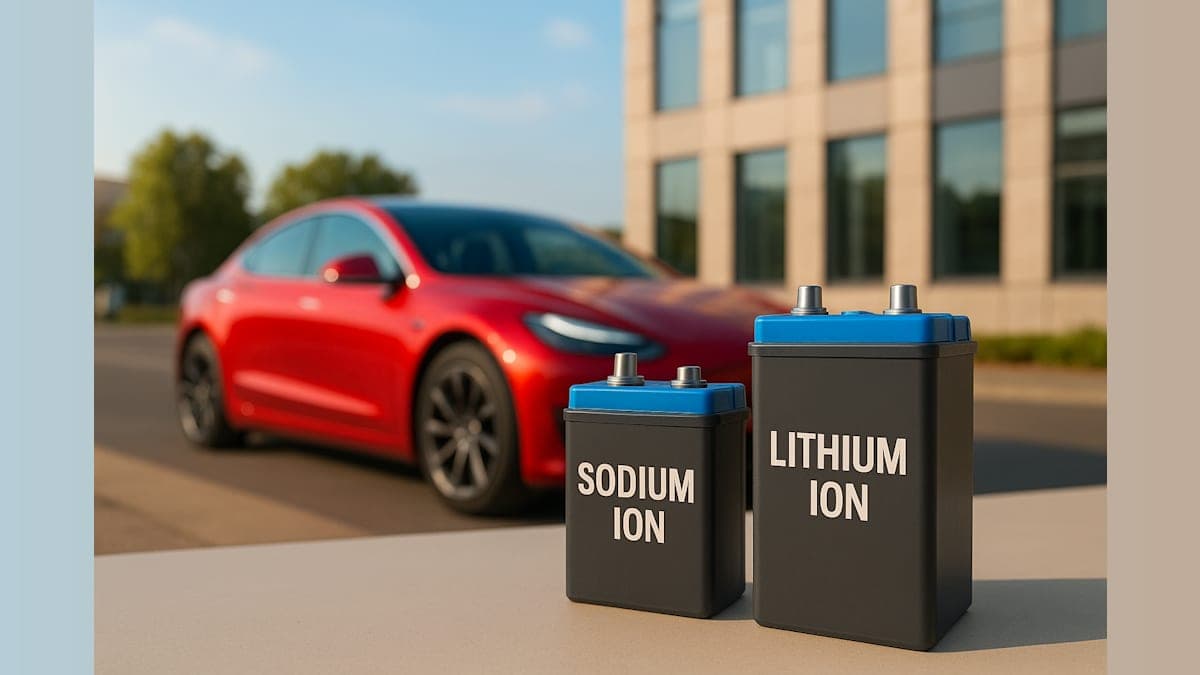
Research published on May 28 in the Cell Press journal Physical Science demonstrates that sodium-ion batteries already powering vehicles and large-scale energy storage systems in China deliver performance comparable to Tesla's lithium-ion technology, potentially revolutionizing the electric vehicle market through significantly reduced costs and improved supply chain security.
The study, conducted by researchers at RWTH Aachen University in Germany, examined batteries designed by HiNa, a spin-off company of the Chinese Academy of Sciences that has partnered with automakers like JAC to provide electric vehicle batteries. The findings suggest that once certain technical challenges are addressed, sodium-ion batteries could provide a viable alternative to the lithium-ion technology that currently dominates the market.
The significance of this development extends beyond mere technical specifications. Sodium represents a far more abundant and widely available element than lithium, which could dramatically reduce raw material costs for manufacturers while simultaneously mitigating supply chain risks associated with precious metals. This abundance could prove particularly important as global demand for electric vehicles and renewable energy storage continues to accelerate.
"The combination of good uniformity, high power capability, and strong low‑temperature performance makes these cells attractive for stationary storage, grid services, and shorter‑range or commercial vehicles where potential lower cost and resource availability matter more than maximum driving range," said Moritz Schütte, a battery researcher at RWTH Aachen University in Germany.
To evaluate how HiNa batteries compare to more advanced Tesla batteries, the research team employed sophisticated testing methodologies. Using a non-destructive technique called impedance spectroscopy, they measured the uniformity of 120 sodium-ion battery cells. The team then subjected the batteries to rigorous real-world testing at varying currents and temperatures ranging from negative 20 degrees Celsius to 45 degrees Celsius. X-ray imaging revealed the battery's internal structure, and physical examination allowed researchers to measure electrode dimensions, compositions, and microstructures.
The investigation revealed that the HiNa battery employs a tabless, double-aluminum current collector design that reduces resistance and ensures uniform temperature distribution. This design mirrors the current architecture of Tesla batteries, representing a significant achievement for the emerging sodium-ion technology.
"We were positively surprised by how uniform the cells are," Schütte noted, highlighting the manufacturing quality achieved by the Chinese company.
Despite these promising results, the technology faces certain limitations that researchers acknowledge must be addressed before widespread adoption. The sodium-ion battery demonstrates constraints in energy density and charging capabilities at low temperatures. While the high-power performance exceeded expectations for an early commercial sodium-ion product, low-temperature charging remains a significant weakness requiring thermal management solutions or modified operating strategies.
"For applications that require frequent charging at low ambient temperatures, appropriate thermal management or operating strategies will be important because low-temperature charging remains a clear weakness," Schütte explained.
The research team also discovered unexpectedly high and unevenly distributed levels of copper in certain cathode regions of the battery. This finding raises questions about the element's role in performance and aging characteristics that warrant further investigation.
"It will be exciting to see future sodium-ion technologies that are free of nickel and copper, as well, while achieving competitive energy density," Schütte said, pointing toward the next generation of battery development.
The batteries demonstrate particular strength in cold-weather performance under load, making them especially appealing for stationary power storage and mobile applications in cold climates. However, current commercial sodium-ion cells generally possess lower energy density than the best lithium-ion cells, and the technology remains less mature overall.
Looking forward, the research team plans to focus on improving the battery's charging capabilities at low temperatures to enable safer and more efficient charging below zero degrees Celsius. Additional research will concentrate on optimizing the materials used in sodium-ion battery construction, with particular emphasis on advances in hard-carbon anodes and electrolyte formulations, which Schütte identified as especially promising areas for development.
The work received support from Germany's Federal Ministry of Research, Technology, and Space and the Federal Ministry for Economic Affairs and Energy, underscoring the strategic importance European nations place on developing alternatives to lithium-dependent battery technologies.
As the global transition to electric vehicles and renewable energy storage accelerates, sodium-ion batteries may offer a crucial pathway toward more sustainable, cost-effective, and geopolitically secure energy solutions. While challenges remain, this research demonstrates that viable alternatives to lithium-ion technology are not merely theoretical possibilities but are already functioning in real-world applications.