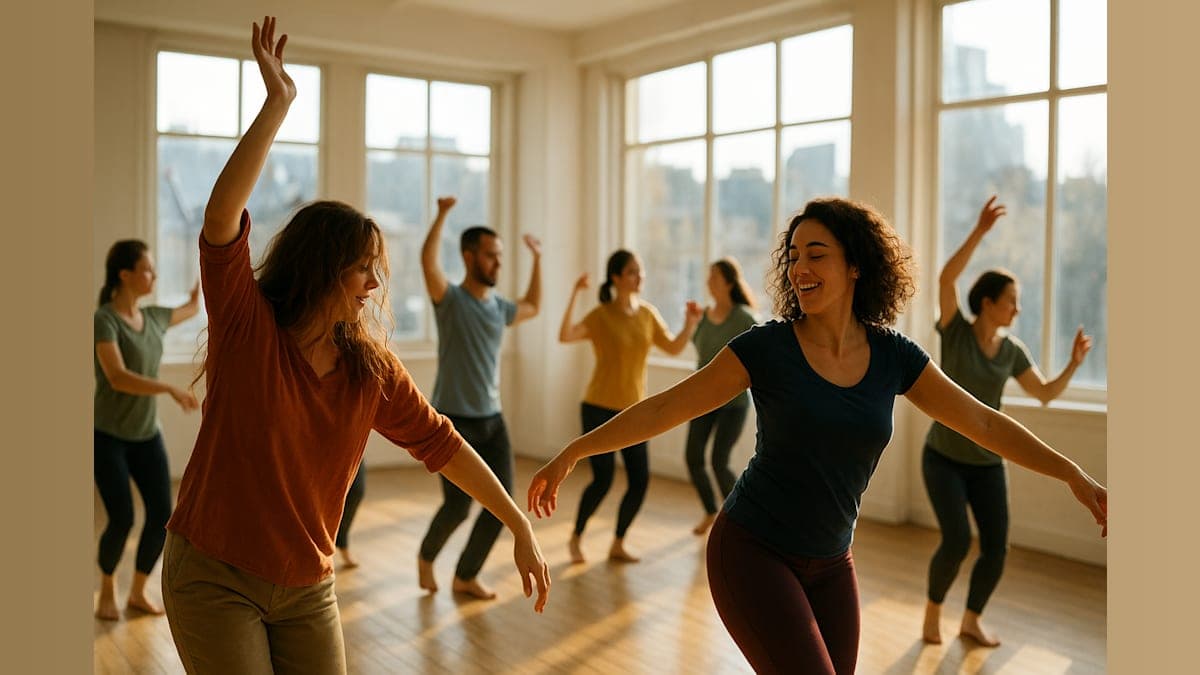
Sunday mornings have traditionally been reserved for leisurely breakfasts and household tasks, but a growing movement is redefining weekend wellness across the United Kingdom. Ecstatic dance events are drawing crowds of more than 100 participants to venues like The Bath House in Hackney Wick, east London, where people gather to dance away the stresses of the week without a drop of alcohol in sight.
This phenomenon represents a convergence of rave culture, mindful meditation, and intensive physical exercise. The practice has gained substantial traction throughout the UK and internationally, attracting participants across all demographics. Young families dance alongside energetic twenty-somethings and older generations, creating an intergenerational community united by movement and music.
Richard Batts, co-founder of Ecstatic Dance UK, explains the fundamental principles governing these gatherings with a simple phrase: "There's a little rhyme: no booze, shoes, no chit chat." The rules establish an environment focused on inclusivity, mindfulness, and emotional expression through movement, deliberately removing the social lubricants and distractions that typically accompany dance events.
Community spaces have embraced the movement, and mainstream fitness facilities are following suit. David Lloyd Clubs now offer 'spirit dance meditation' classes, signaling the practice's transition from niche activity to recognized wellness offering.
A Healthier Alternative to Nightlife
The appeal of ecstatic dance extends beyond simple exercise. For many participants, these events provide a joyous alternative to late-night parties that often leave attendees feeling depleted and dispirited. Parents and individuals pursuing sober lifestyles find particular value in Sunday morning sessions that allow them to release weekly tensions without compromising their wellness goals or family responsibilities.
However, Batts acknowledges that the sober nature of these gatherings can initially feel challenging. "People are sober – it can feel very edgy," he notes, explaining that discomfort forms an integral part of the experience. "You might feel really silly doing this, and that's okay. If you don't want to do it, then don't. But lean in if you can."
Roots in Movement Therapy
Contemporary ecstatic dance draws from the '5Rhythms' style of dance developed during the 1960s and 1970s. This free-form practice centers on exploring one's inner landscape through five distinct stages: flowing, staccato, chaos, lyrical, and stillness. The progression allows dancers to move through different emotional and physical states, creating a comprehensive movement experience.
Regular participant Valerie Chartrand describes the practice as "a kind of engaged, interactive movement therapy session." Disappointed by the structured and serious atmosphere of conventional dance classes, Chartrand sought an outlet that would provide both physical exercise and emotional processing through movement.
"When I'm doing it, it's absolutely wonderful, very liberating, very freeing. You get that dancer's high. For days afterwards I feel I'm in a better state of mental health," Chartrand explains. As an introvert, she particularly values the absence of conversational pressure while still experiencing social connectedness through shared movement.
Pandemic Resilience and Growth
The combination of mental health benefits and social connectivity proved especially valuable during the pandemic, according to Batts. When lockdown restrictions took effect, Ecstatic Dance UK moved operations outdoors, allowing people to dance in groups of six in accordance with government guidelines.
"It was a legal, healthy, fun dance practice outside in nature," Batts recalls. "Some people would literally say, 'this has saved my life'." The events provided crucial social connection and emotional release during a period of widespread isolation and anxiety.
The Complete Experience
Modern ecstatic dance events offer more than just music and movement. Vendors at venues like The Bath House provide 'ceremonial cacao,' a warm beverage made from minimally processed whole cacao beans with South American origins. Paulina Angel Davey, executive assistant for Ecstatic Dance UK, explains that the drink has "activation properties to enable you to be a bit more heart-open or present before you enter a dance." Some versions incorporate cannabidiol (CBD) or blue lotus flower to balance the stimulating effects.
The diversity of participants remains a defining characteristic of these gatherings. Parents dance with babies strapped to their chests alongside solo dancers of all ages and backgrounds. Davey emphasizes this inclusive atmosphere: "It is intergenerational and it's multicultural, and I think there's something quite special about that – you can celebrate and be in full expression, across generations, cultures and backgrounds."
As wellness culture continues evolving beyond traditional fitness models, ecstatic dance represents a holistic approach that addresses physical health, mental wellbeing, and social connection simultaneously. The movement demonstrates that celebration and community need not depend on alcohol or late nights, offering instead a sustainable practice that leaves participants energized rather than depleted.