
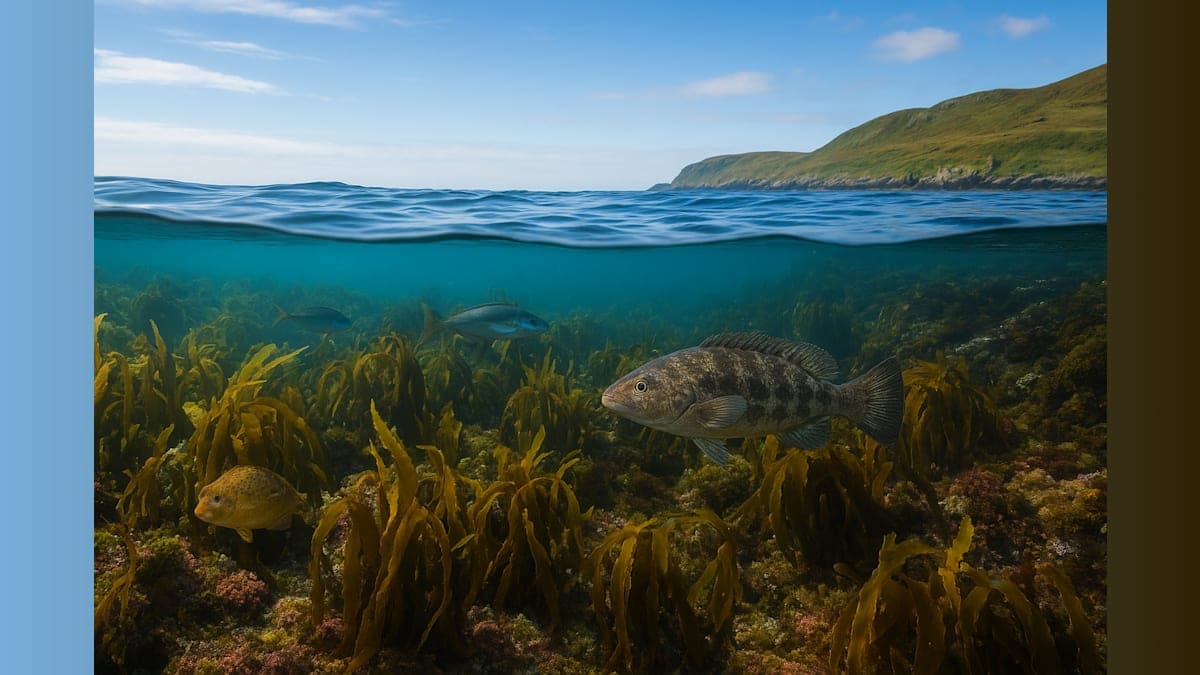
A comprehensive survey of Scotland's South Arran Marine Protected Area has revealed the remarkable ecological benefits of long-term fishing restrictions, documenting a thriving underwater ecosystem that stands in stark contrast to nearby commercially fished waters.
Ten years after Scotland implemented a ban on bottom trawling and dredging in the protected zone, researchers have identified flourishing populations of no less than 1,500 species critical for seabed integrity. The findings demonstrate the capacity of marine ecosystems to recover when given adequate protection and time.
The survey compared the protected area with nearby fished zones, revealing dramatic differences in marine biodiversity. Scientists identified twice as many species within the protected waters and documented thrice as much abundance of life compared to areas where commercial fishing continues.
Dr. Ben Harris from the University of Exeter, who served as a lead researcher on the survey, emphasized the hidden richness of these underwater environments. "These seabeds may appear empty, but they are anything but," Dr. Harris stated. "They can recover when protected, but much more slowly than fish communities in protected areas. That means long-standing, well-enforced protection is needed to realize their full ecological and biodiversity benefits."
Dr. Harris led the team from Convex Seascape Survey in examining both the marine life populations and the integrity of the muddy seabed itself. This dual focus reflects evolving scientific understanding of these underwater environments, which were once dismissed as barren areas of little ecological significance.
Contemporary research has revealed that muddy seabed depths contain not only substantial wildlife populations but also significant carbon reserves trapped beneath them, forming part of the marine component in the global carbon cycle. This discovery adds another dimension to the importance of seabed protection beyond traditional biodiversity concerns.
The survey findings indicate that marine life proved capable of recolonizing the protected area comparatively quickly, as evidenced by both the diversity and abundance of life recorded. However, the carbon stocks presented a different recovery timeline. Researchers estimated that these carbon reserves had been disturbed in such a way that may require substantially more time to rebuild than the biological communities above them.
The research team expressed hope that their survey results will serve as a catalyst for broader adoption of marine seabed protection measures. Currently, only a small fraction of the 17 percent of EU territorial waters that have been designated as protected extend those protections down to the seabed level, leaving vast underwater areas vulnerable to destructive fishing practices.
The South Arran Marine Protected Area case study provides compelling evidence for the effectiveness of comprehensive, long-term marine protection. The decade-long timeline demonstrates that meaningful ecological recovery requires sustained commitment and enforcement, rather than short-term or partial measures. As marine scientists continue to document the complex relationships between seabed health, biodiversity, and broader environmental systems, the Scottish experience offers valuable insights for coastal communities and policymakers worldwide considering similar protective measures.