
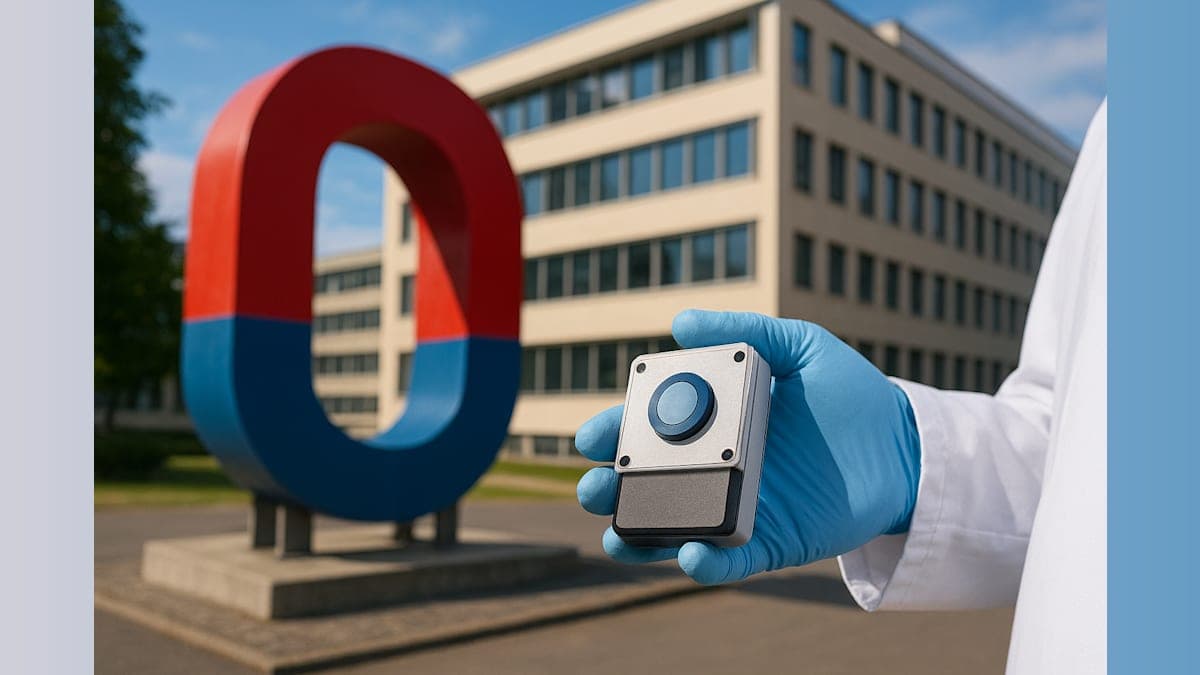
A groundbreaking achievement in physics has emerged from ETH Zurich, where scientists have successfully miniaturized superconducting magnet technology to an unprecedented degree. The research team has managed to compress the capabilities of a magnet that would normally occupy a structure the size of a small building into a compact device that fits comfortably in the palm of a human hand.
This dramatic reduction in scale represents a significant leap forward in materials science and engineering. Superconducting magnets have long been essential tools in advanced scientific research, but their enormous size and infrastructure requirements have limited their accessibility and application. The ability to achieve comparable magnetic field strength in such a compact form factor opens new avenues for both research and practical applications.
The implications of this technological advancement extend across multiple scientific disciplines. Nuclear fusion research, which relies heavily on powerful magnetic fields to contain superheated plasma, could benefit substantially from more compact and potentially more affordable magnet systems. Similarly, nuclear magnetic resonance technology, which forms the foundation of modern medical imaging techniques such as MRI scanners, may see transformative improvements in accessibility and portability.
The miniaturization achievement by the ETH Zurich team demonstrates how advances in materials science can fundamentally alter the landscape of scientific instrumentation. Traditional superconducting magnets require extensive cooling systems, structural support, and dedicated facilities to operate effectively. By condensing this capability into a handheld device, researchers have effectively democratized access to high-field magnetic technology.
While the specific technical details of how the research team achieved this remarkable compression remain to be fully disclosed, the breakthrough represents years of dedicated work in superconducting materials and magnetic field engineering. The development could accelerate progress in clean energy research, particularly in the pursuit of practical fusion power, which has remained an elusive goal despite decades of international effort.
Beyond its scientific applications, this technology could eventually influence medical diagnostics, materials analysis, and fundamental physics research. The ability to generate powerful magnetic fields without massive infrastructure could enable new experimental setups and research methodologies that were previously impractical or impossible. As the technology matures and becomes more widely available, it may catalyze innovations that extend far beyond the laboratory setting where it was first developed.