
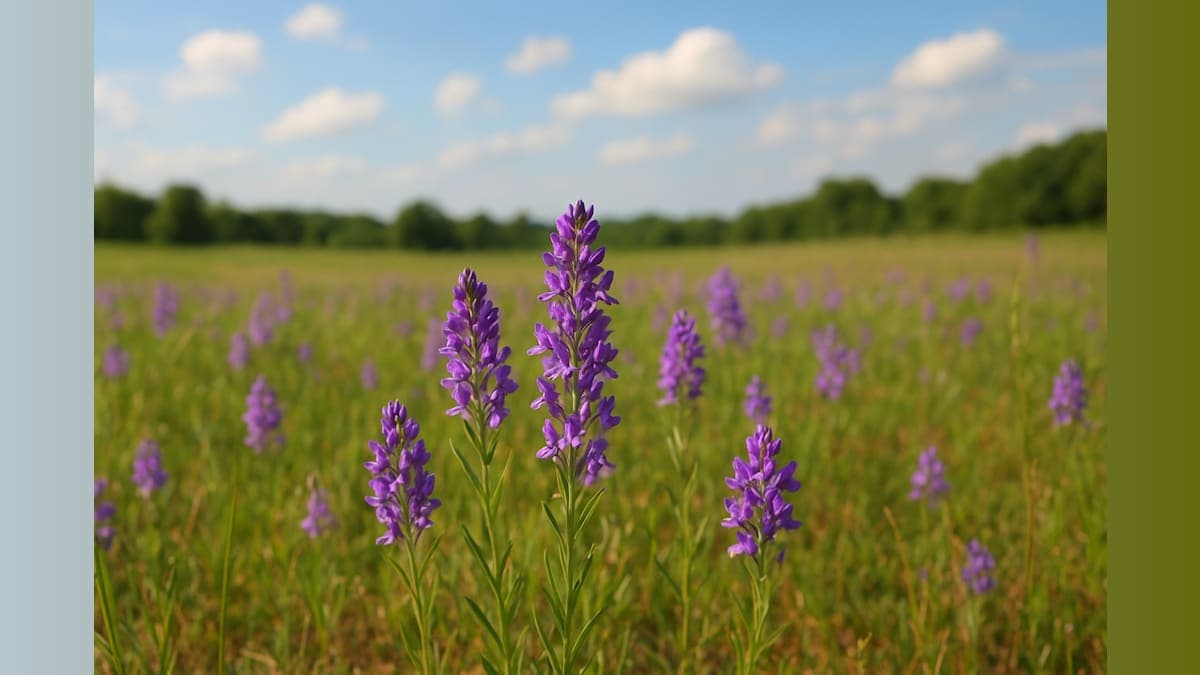
Conservationists are celebrating an extraordinary conservation success story as Kentish milkwort, a rare British flower once facing extinction, has recorded a seven-fold population increase during the recent growing season. The dramatic recovery represents more than a decade of careful scientific work and collaborative conservation efforts.
A total of 1,245 self-sown plants were recorded this year at Queendown Warren, now the largest population of the species in the United Kingdom. The surge marks a remarkable turnaround for a plant that existed at only three sites in Kent by 2010 and faced imminent extinction without intervention.
Kentish milkwort (Polygala amarella) became the focus of urgent conservation action more than a decade ago. The recovery project began in 2013 when what was then known as dwarf milkwort existed as two separated populations in northern England and Kent. Subsequent taxonomic work recognized the Kent population as a distinct subspecies, increasing the urgency of conservation action and establishing the plant as a unique component of British biodiversity.
The recovery strategy involved careful seed collection from the strongest surviving individuals, which were then cultivated by partners at the Royal Botanical Gardens Kew. This approach established a secure seed stock for future restoration without placing additional pressure on the fragile wild populations.
Between 2018 and 2019, further seed collections enabled the production of plants for reintroduction. In 2021, trial introductions were carried out at Fackenden Down and Queendown Warren, both grasslands with chalk bedrock where the species had been absent for over 50 years.
While Fackenden Down did not succeed, Queendown Warren has demonstrated remarkable growth. Numbers rose from 17 plants in 2022, to 47 in 2023, 86 in 2024, and 177 in 2025. This year's count of 1,245 self-sown plants represents a dramatic acceleration in the population's recovery and establishes the strongest population of Kentish milkwort in the United Kingdom.
"The scale of this year's increase has been incredible to see," said Rob Pennington, an officer at Kent Wildlife Trust. "The plants are clearly thriving at the site and last year's population must have produced a huge amount of seed that has now successfully germinated."
Pennington expressed optimism about the future trajectory of the recovery effort. "We hope the population will continue to spread in the coming years and eventually become a donor site, allowing us to collect seed for future restoration work at other suitable locations," he said.
The recovery represents the culmination of diligent work by the Kent Wildlife Trust in partnership with The Species Recovery Trust, Royal Botanical Gardens Kew, and local volunteers. The collaborative effort has not only rescued the species from the brink of extinction but has also revealed key insights into its ecological requirements.
Research has shown that Kentish milkwort thrives in open, disturbed ground created by grazing and natural soil disturbance from animals such as rabbits and badgers. This understanding of the species' habitat preferences will inform future restoration efforts and site management strategies.
The success at Queendown Warren demonstrates the effectiveness of science-based conservation approaches that combine seed banking, careful reintroduction protocols, and habitat management. The dramatic population increase suggests that with appropriate conditions and protection, even critically endangered plant species can recover and establish self-sustaining populations.
The recovery of Kentish milkwort offers hope for other endangered plant species and underscores the importance of sustained conservation efforts. As the population continues to expand, the site may eventually serve as a source for seeds to establish additional populations at other suitable locations, further securing the future of this unique British flower.