
The death of a child represents an unimaginable loss, one that typically leaves parents consumed by grief and anger. For Joan Scourfield, that devastating reality arrived when her son James died from a single punch delivered over a pair of sunglasses. The senseless nature of the violence left her grappling with rage and a torrent of unanswered questions about the person responsible for taking her son's life.
What followed, however, defied conventional expectations of how such tragedies unfold. Through a restorative justice program, Joan Scourfield made the extraordinary decision to meet Jacob Dunne, the man whose punch had killed James. The encounter would fundamentally alter her understanding of both the crime and the person who committed it.
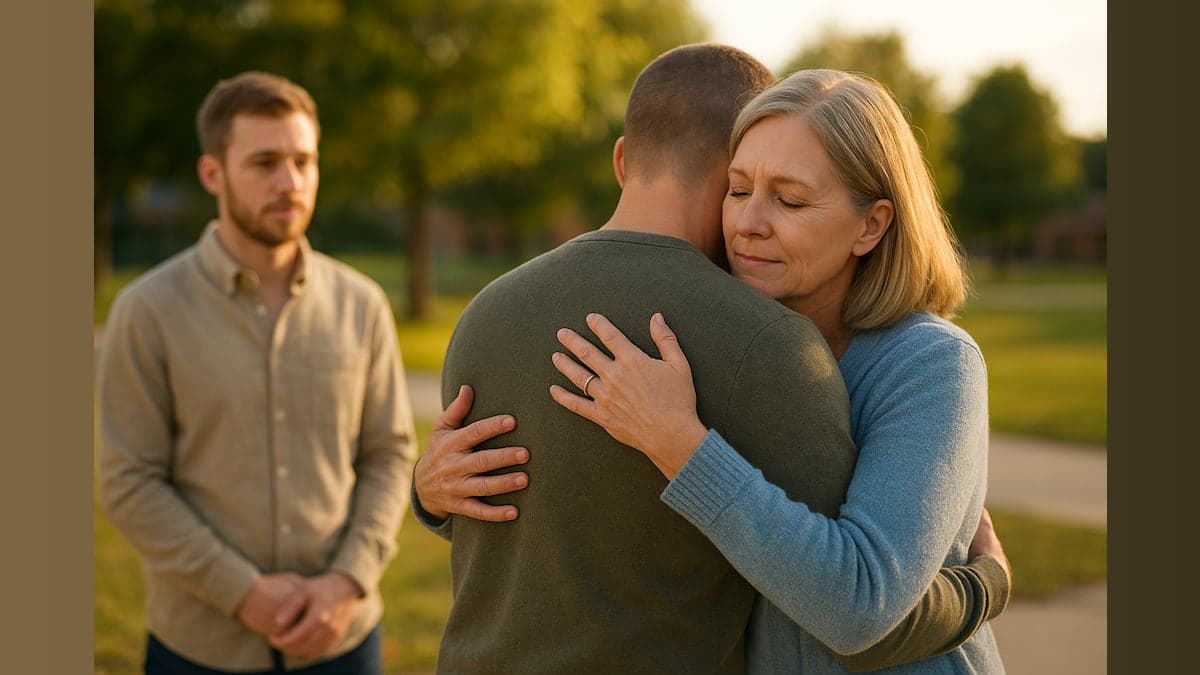
When Joan Scourfield finally came face-to-face with Jacob Dunne, she discovered something unexpected. Rather than encountering the monster she had imagined from his mugshot, she found herself sitting across from what she described as "a vulnerable young man" who genuinely wanted to answer for his actions. This moment of human connection, stripped of preconceptions and mediated through honest dialogue, opened a pathway that neither party could have anticipated.
The process of forgiveness did not arrive suddenly or completely. Joan Scourfield's journey toward releasing her anger unfolded gradually, shaped by witnessing Jacob Dunne's genuine transformation and by her own realization that harboring bitterness "would not end well" for her own wellbeing. This acknowledgment reflects a profound understanding that forgiveness often serves the forgiver as much as the forgiven.
Importantly, Joan Scourfield draws a careful distinction in her forgiveness. She differentiates between forgiving Jacob Dunne for the death of her son and forgiving the punch itself. This nuanced approach reveals a sophisticated understanding of forgiveness as something that need not be absolute or all-encompassing to provide liberation. Her forgiveness does not erase the past or minimize the loss, but rather creates space for healing and forward movement.
Today, Joan Scourfield and Jacob Dunne have forged an unlikely partnership. They share stages together, speaking to young people about violence and redemption. For Joan Scourfield, this collaboration represents more than personal healing. She views their joint advocacy work as a way of honoring her son James's legacy, particularly his commitment to helping others from difficult backgrounds. By transforming her tragedy into education and prevention, she has created meaning from loss.
Their story challenges conventional narratives about justice and accountability. Rather than viewing punishment as the sole response to violence, restorative justice programs create opportunities for dialogue, understanding, and transformation. The encounter between Joan Scourfield and Jacob Dunne demonstrates how such programs can facilitate healing for victims while simultaneously offering perpetrators genuine opportunities for redemption and change.
The collaboration between a grieving mother and the man responsible for her grief stands as a testament to human capacity for growth, change, and reconciliation. Their work speaking to young audiences about violence prevention carries weight precisely because of their lived experience. They offer authentic voices that can reach young people in ways that traditional authority figures cannot, potentially preventing future tragedies by addressing the roots of violence before it occurs.
Joan Scourfield's journey illustrates that forgiveness remains a deeply personal choice, one that cannot be prescribed or rushed. Her ability to forgive Jacob Dunne emerged not from forgetting or minimizing her loss, but from witnessing genuine remorse and transformation. In choosing to work alongside the man who killed her son, she has created a legacy that extends James's impact far beyond his lifetime, turning personal tragedy into a force for positive change in the lives of others.