
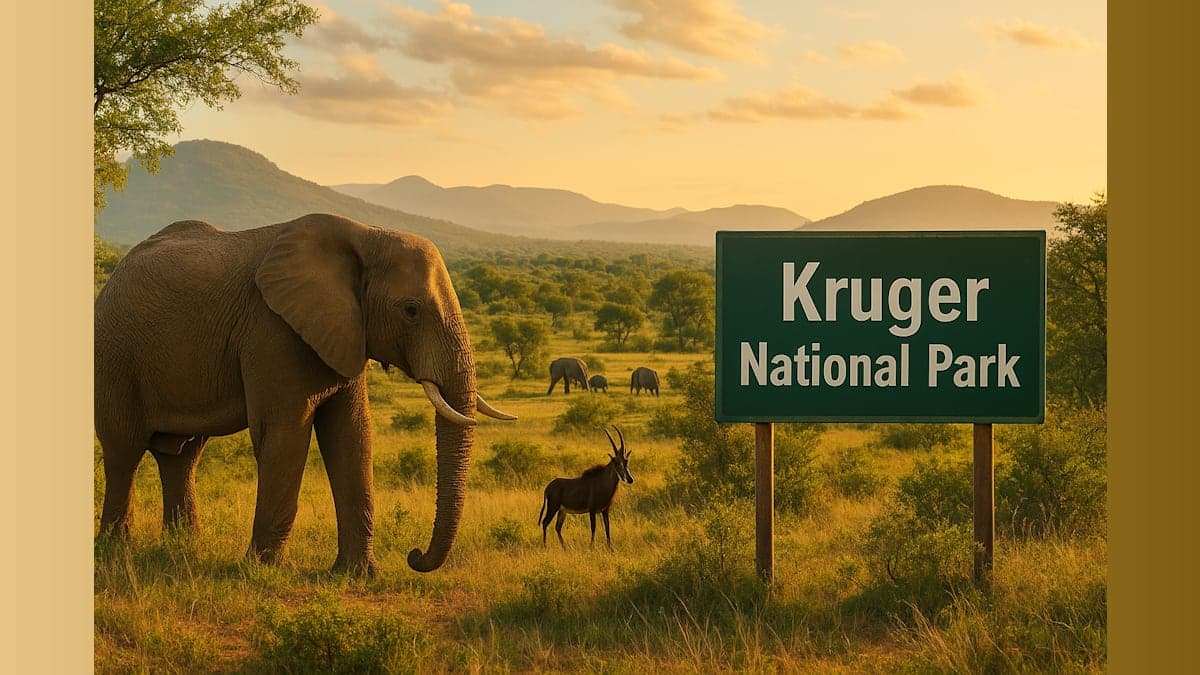
On May 31, 1926, South Africa established Kruger National Park in Limpopo and Mpumalanga in the northeastern region of the country, creating what would become one of Africa's premier wildlife conservation areas. The park spans 7,576 square miles (19,623 square kilometers), making it more than twice the size of Yellowstone National Park and larger than the entire nation of Belgium.
Today, Kruger National Park forms part of the Great Limpopo Transfrontier Park, a protected area that crosses international borders with Mozambique and Zimbabwe. This expansive conservation zone provides wildlife with unprecedented freedom to migrate and roam across their natural habitats without the constraints of political boundaries.
Unparalleled Biodiversity
With 147 species of large game animals, Kruger National Park boasts more biodiversity than any other African game reserve. The park supports the largest populations of wild hunting dogs and white rhino in southern Africa. At certain periods in its history, the elephant population has grown so large that park officials have needed to relocate animals to other reserves and parks to maintain ecological balance.
The park's origins trace back to an unexpected conservation success story involving Dutch farmers and their livestock management practices. Alexander Marsh Robertson, a pioneer who owned two adjacent farms named Rolfontein and Elandsberg, originally constructed fencing to corral his horses. This inadvertent enclosure created conditions that allowed wild game populations to thrive, protected from hunters who had been taking animals from farmlands.
Presidential Vision
President Paul Kruger, the first State President of Transvaal South Africa, regularly toured rural areas to connect with constituents. Upon hearing about Robertson's successful game camp, Kruger arranged a visit to Rolfontein to observe the conservation experiment firsthand. The president was impressed by the unexpected success and maintained interest in these conservation efforts for years, ultimately leading to the establishment of the park that would bear his name.
The centennial anniversary of Kruger National Park represents a milestone in global conservation efforts. The park has demonstrated that large-scale wildlife protection can succeed when given adequate space and resources, serving as a model for conservation initiatives worldwide. Its continued operation provides critical habitat for endangered species while supporting research, education, and sustainable tourism that benefits local communities and the broader South African economy.
As the park enters its second century, it faces modern challenges including climate change, poaching pressures, and balancing conservation with community needs. However, its hundred-year track record of adapting to changing circumstances while maintaining its core mission of wildlife protection suggests that Kruger National Park will continue serving as a vital sanctuary for African wildlife for generations to come.