
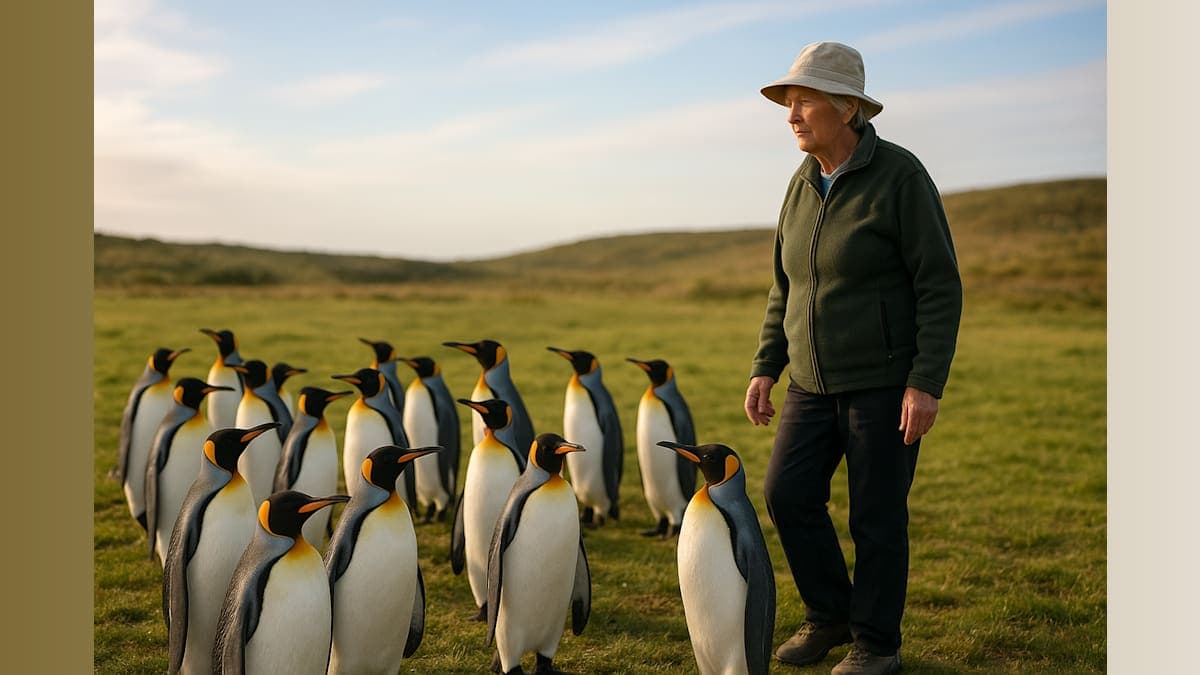
When king penguins first arrived on Cecilia Durán Gafo's windswept Chilean farm in 2010, she could not have anticipated the decade-long commitment that would follow. What began as casual observation evolved into a full-time guardianship that has created something unprecedented in the natural world.
The 72-year-old former kindergarten teacher witnessed the colony's near collapse firsthand. Tourists dressed the birds in caps for selfies, and the population plummeted from 90 penguins to just eight within a single year. The crisis demanded immediate action.
Durán Gafo's response was simple but exhausting. She began spending entire days on the frozen beach, armed only with a thermos and sandwich. "I'd spend the whole day, frozen to the bone … making sure people didn't disturb the penguins," she recalled. Her physical presence became the barrier between the vulnerable birds and human interference.
The work extended far beyond daytime patrols. Durán Gafo fenced off 30 hectares of her property and spent years working through the night to lure invasive predators like mink away from vulnerable chicks. The nocturnal efforts proved as critical as the daylight vigils, protecting the youngest and most defenseless members of the colony.
Her vigilance has yielded remarkable results. What had been an impossible place for penguins to survive has become the world's only continental king penguin colony, now nearly 200 strong. The transformation represents years of unrelenting dedication to a cause that required no formal training or institutional support.
"Last year, 23 chicks survived -- a record," Durán Gafo noted. The milestone reflects not just population growth but successful reproduction in an environment that once seemed hostile to the species. Each surviving chick represents countless hours of protection and intervention.
The thriving colony stands as testament to a quiet devotion that has persisted through harsh weather, long nights, and physical exhaustion. Conservation sometimes requires nothing more than one person deciding to show up, every single day. Durán Gafo's commitment demonstrates that protecting vulnerable species does not always demand sophisticated technology or large organizations. Sometimes it requires only presence, persistence, and an unwavering refusal to look away when creatures need help.
The farm that once saw penguins dressed in caps for tourist photographs now serves as sanctuary for a colony that exists nowhere else on the continental mainland. The transformation occurred not through policy changes or scientific intervention, but through the daily actions of one woman who chose to stand guard.