
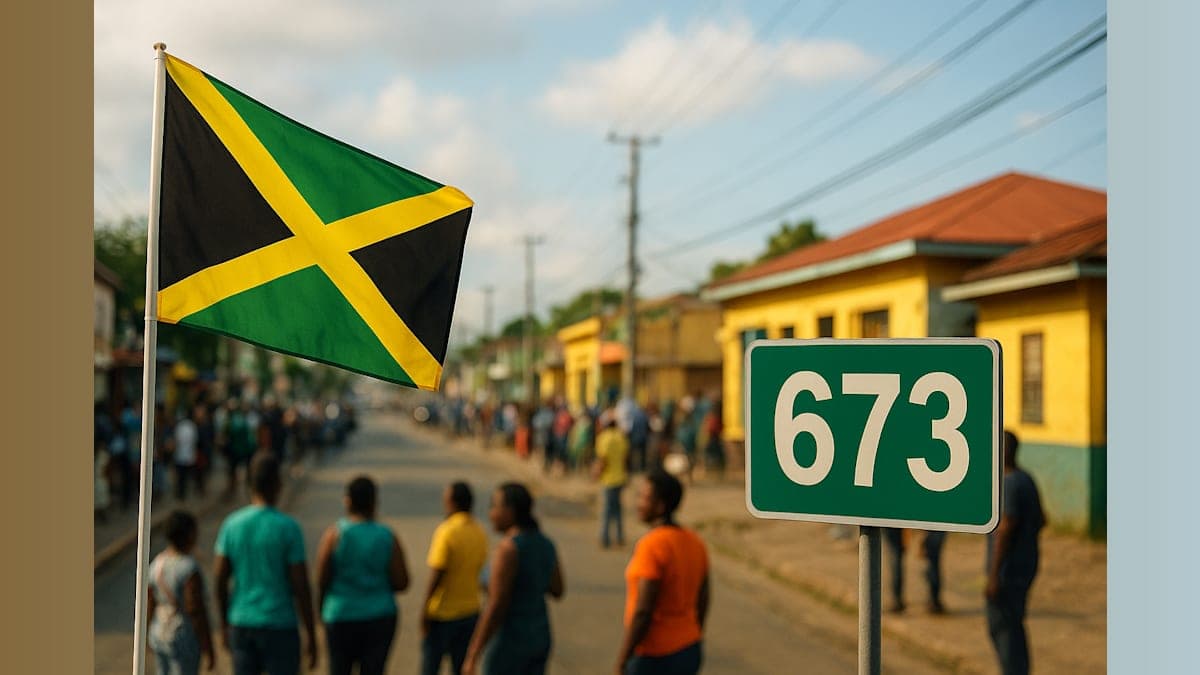
Jamaica has recorded a historic decline in violent crime, achieving its lowest annual murder count in more than three decades. The island nation's Minister of National Security and Peace, Dr. Horace Chang, announced that homicides fell 40% in 2025, dropping to 673 total murders compared to over 1,100 in 2024. This marks the first time since 1993 that annual murders have fallen below 700.
The dramatic improvement appears driven largely by unprecedented citizen cooperation with law enforcement. Police tip-offs increased by 94% during the same period, with many Jamaicans choosing to forgo posted reward money when submitting information about criminal activity. Dr. Chang, who also serves as deputy prime minister, characterized this phenomenon as an act of civic duty rather than financial motivation.
Addressing the 2026 Sectoral Debate in Parliament, Dr. Chang emphasized the significance of citizens voluntarily leaving reward money unclaimed. "This shows that it is not about money. It is about patriotism. It is about trust. It is about citizens taking a stand for their communities. This is something we must celebrate," he stated.
The minister framed the development as evidence of fundamental social transformation. "This partnership between citizens and law enforcement is one of the strongest signals that Jamaica is not only becoming safer, but that Jamaicans themselves are leading that change," Dr. Chang said.
Beyond citizen engagement, Dr. Chang credited enhanced border security measures with contributing to the decline in violence. Improvements in port and border control, including advanced cargo screening systems designed to detect illicit firearms and ammunition, have helped reduce the flow of weapons into the country. The interdiction of illegal arms represents a critical component of the government's violence reduction strategy.
Dr. Chang described the anticipated benefits of reduced violence as a "peace dividend" for Jamaican society. This dividend includes safer streets for residents, improved opportunities for children and businesses, and stronger family structures less disrupted by violence and incarceration.
Despite the substantial progress, Jamaica continues to face significant public safety challenges. With a homicide rate of 23 per 100,000 residents, the nation remains among the more violent countries globally. However, this rate represents a major improvement from previous years when Jamaica ranked as one of the most dangerous nations worldwide. The country now positions itself as one of the safer nations within Central and South America and the Caribbean, a region that experiences the highest national murder rates on the planet.
The statistical achievements reflect broader efforts to address systemic violence that has plagued Jamaica for decades. The willingness of citizens to actively participate in crime prevention, even without financial incentive, suggests a potential shift in community attitudes toward law enforcement and public safety. Whether this trend can be sustained and further developed remains a critical question for Jamaican policymakers as they work to consolidate recent gains and continue reducing violence across the island.