
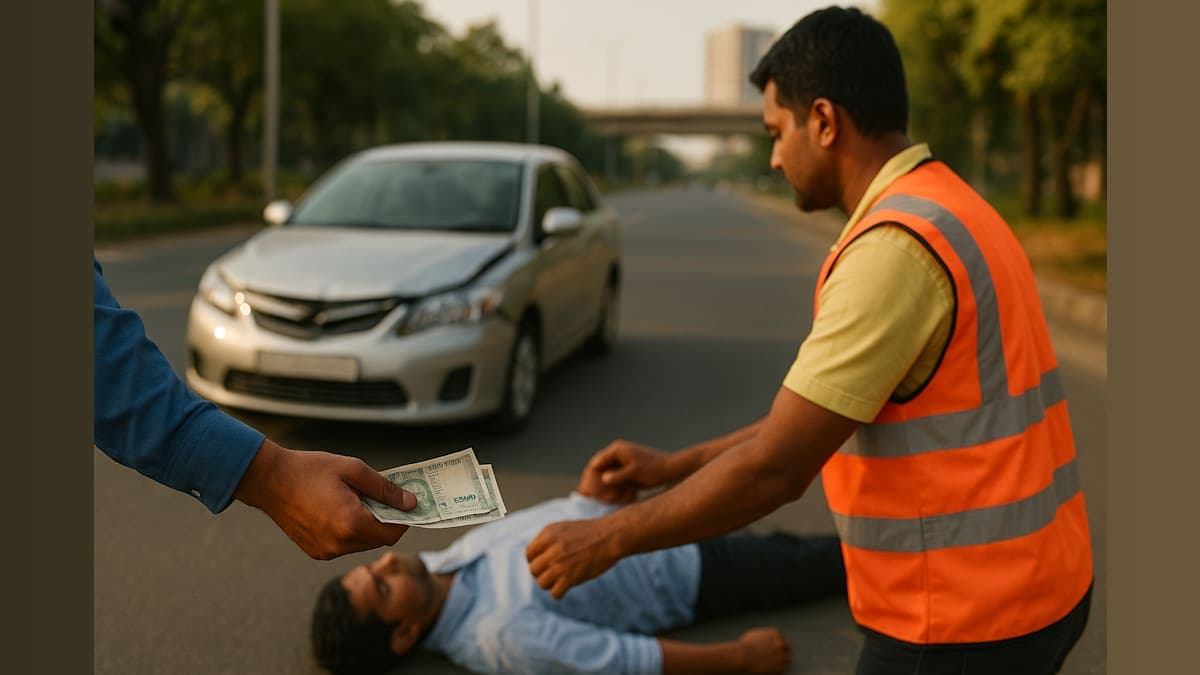
In a nation grappling with one of the world's highest rates of traffic fatalities, India has introduced an innovative approach to emergency response that transforms ordinary citizens into potential lifesavers. The Ministry of Road Transport and Highways has launched the Rah-Veer program, which offers substantial financial rewards to anyone who stops to assist victims of road accidents during the crucial first hour following an injury.
The program addresses a critical gap in emergency medical response across the country, particularly in rural areas where ambulances must often traverse considerable distances to reach accident scenes. Medical professionals have long emphasized the importance of the "golden hour" immediately following traumatic injury, during which prompt intervention can dramatically improve survival rates. Yet convincing bystanders to provide assistance at accident scenes has proven challenging, with many hesitant to become involved due to legal concerns or the distressing nature of such emergencies.
Under the Rah-Veer initiative, Good Samaritans who stop to help will receive 25,000 Indian rupees—approximately $250—for their intervention. The reward applies to all citizens regardless of medical training, and will be divided among multiple helpers if several people stop to assist. The program recognizes that even basic actions such as applying a tourniquet, stabilizing a limb with a splint, or positioning an injured person in the recovery position can prove lifesaving when professional medical personnel are delayed.
Perhaps equally significant are the legal protections built into the program. The Ministry of Road Transport and Highways has explicitly stated that citizens who help accident victims are shielded from legal complexities. Helpers are not required to disclose personal information and will not be detained at the scene. Their privacy remains protected, and if a statement becomes necessary, it will be taken quickly and simply at a time and location convenient to the witness.
These protections directly address longstanding concerns that have deterred potential helpers. In many jurisdictions, witnesses to accidents have feared becoming entangled in lengthy legal proceedings or facing liability for their assistance. By removing these barriers, Indian authorities hope to cultivate a culture of mutual aid on the nation's roadways.
The program includes an additional recognition component: each year, the Ministry will identify the 10 most vital or courageous Rah-Veer interventions and award those helpers a bonus $1,000 along with a certificate of appreciation. This element serves both to honor exceptional acts of courage and to publicize the program's impact.
The same legislation that established Rah-Veer also reformed hospital funding protocols for accident victims. Under the new regulations, no victim of a road collision may be refused treatment due to inability to pay upfront. Hospitals must provide cashless treatment for the first seven days following admission and cannot demand advance payment or refuse admission based on financial considerations.
The financial framework supporting this guarantee draws from multiple sources. In cases involving insured vehicles, general insurance companies will cover the expenses. For accidents involving uninsured vehicles or hit-and-run incidents, a dedicated government fund will assume the costs. This dual-stream approach ensures that medical facilities can provide immediate care without concern for payment, while victims receive treatment regardless of their insurance status or the circumstances of their accident.
The initiative represents a comprehensive reimagining of emergency response that acknowledges both the severity of India's road safety crisis and the potential of its vast population to serve as a distributed network of first responders. By combining financial incentives with legal protections and guaranteed medical care, the program creates a system designed to maximize survival rates in the critical minutes and hours following traffic accidents.
As the Rah-Veer program takes effect, its success will likely be measured not only in lives saved but in its ability to shift cultural attitudes toward civic responsibility and mutual assistance. The program's architects have wagered that India's greatest resource—its human capital—can be mobilized to address one of its most persistent public safety challenges.