Training exercises became reality for a group of high school students who successfully rescued an injured hiker using emergency skills they had rehearsed as part of their educational program. The incident demonstrates the practical value of wilderness preparedness training and the capability of young people to respond effectively in crisis situations.
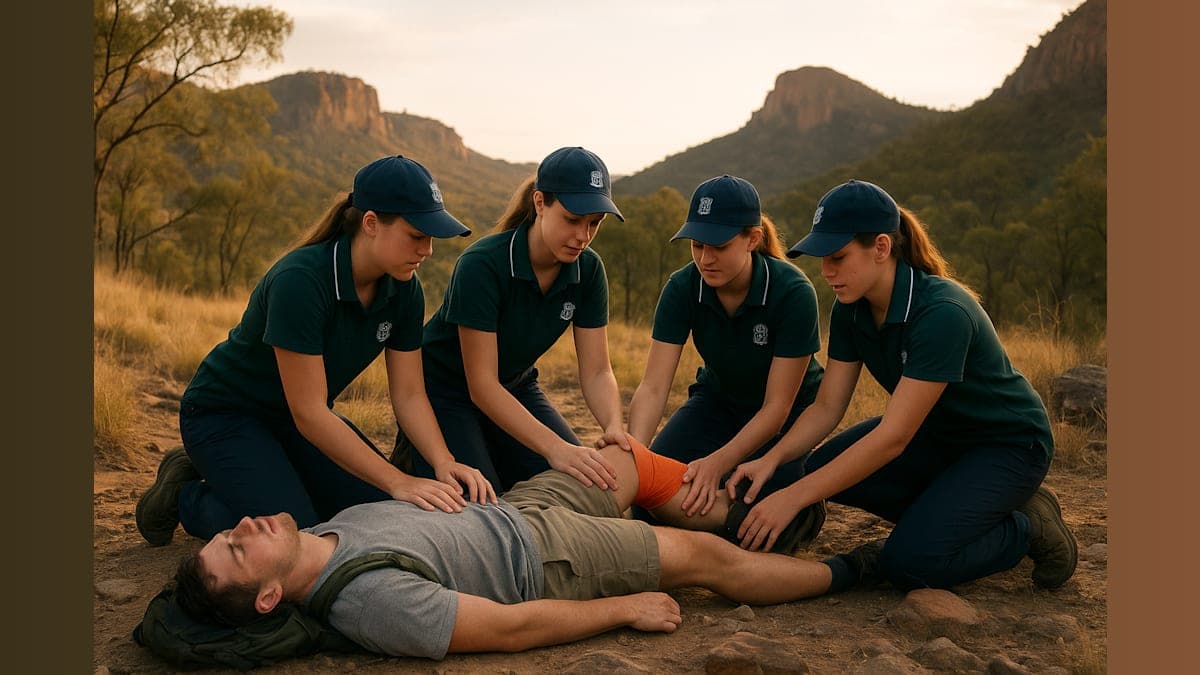
Students from Presbyterian Ladies' College in Armidale encountered Thomas Wendland on the third day of a four-day hiking expedition in Warrumbungle National Park. Wendland, an experienced hiker, had suffered a broken leg after slipping on the trail. The injury worsened after a second fall, leaving him unable to continue on his own.
The students, who were participating in a Duke of Edinburgh Award project, recognized the situation as matching a scenario they had specifically trained for. After conferring with their program leaders, the group implemented their emergency response protocol with precision and determination.
Using available materials—tarp poles and a hammock—the students constructed a functional gurney. The improvised stretcher allowed Wendland to position himself for transport along the challenging terrain. What followed was a demanding two-hour rescue operation that tested the students' physical endurance and teamwork.
Eleventh grader Stephanie Blake described the systematic approach the team employed. The students would count to three, lift the gurney in unison, and carry Wendland for sixty-second intervals. After each carry, they would lower the stretcher, rotate positions to distribute the physical burden, take recovery breaths, and repeat the process.
"The path just seemed to keep getting longer and longer," Stephanie said. "You don't realize how far [2.1 miles] is until you're shuffling along carrying someone."
The students maintained this exhausting rhythm until they reached a location accessible to professional medical teams. The rescue covered 2.1 miles of trail, a distance that proved far more challenging under the circumstances than any of the students had anticipated during their training exercises.
For Wendland, the experience highlighted both the unpredictability of wilderness activities and the profound impact of community assistance. Despite his hiking experience, he found himself in a vulnerable position after hearing something snap during his initial fall.
"I felt quite useless while they got it all set up," Wendland told ABC News Australia. "It absolutely means the world that they were able to offer the assistance they did. I'm forever grateful for them."
The Duke of Edinburgh Award program, which facilitated this remarkable outcome, operates as a non-formal education initiative for young people. The program emphasizes physical recreation, outdoor skills, voluntary service, and what organizers term an "adventurous journey." These components combine to develop practical competencies alongside character development.
Program organizers for Presbyterian Ladies' College, Amanda and Marty Burney, confirmed that the makeshift gurney technique had been practiced during training sessions. When the real emergency arose, the students demonstrated both excitement and focus as they recognized an opportunity to apply their learned skills in a meaningful context.
The physical demands of the actual rescue far exceeded what the students had experienced during practice scenarios. However, Stephanie Blake reflected that having the knowledge and having rehearsed the technique provided "such a good sense of achievement" when the skills proved essential.
This incident underscores the importance of comprehensive outdoor education programs that prepare young people for real-world emergencies. The students' successful response demonstrates that proper training, combined with teamwork and determination, enables even young individuals to provide critical assistance in wilderness emergencies. Their actions likely prevented a difficult situation from becoming far more serious, as Wendland's condition could have deteriorated significantly without timely intervention and transport to medical care.