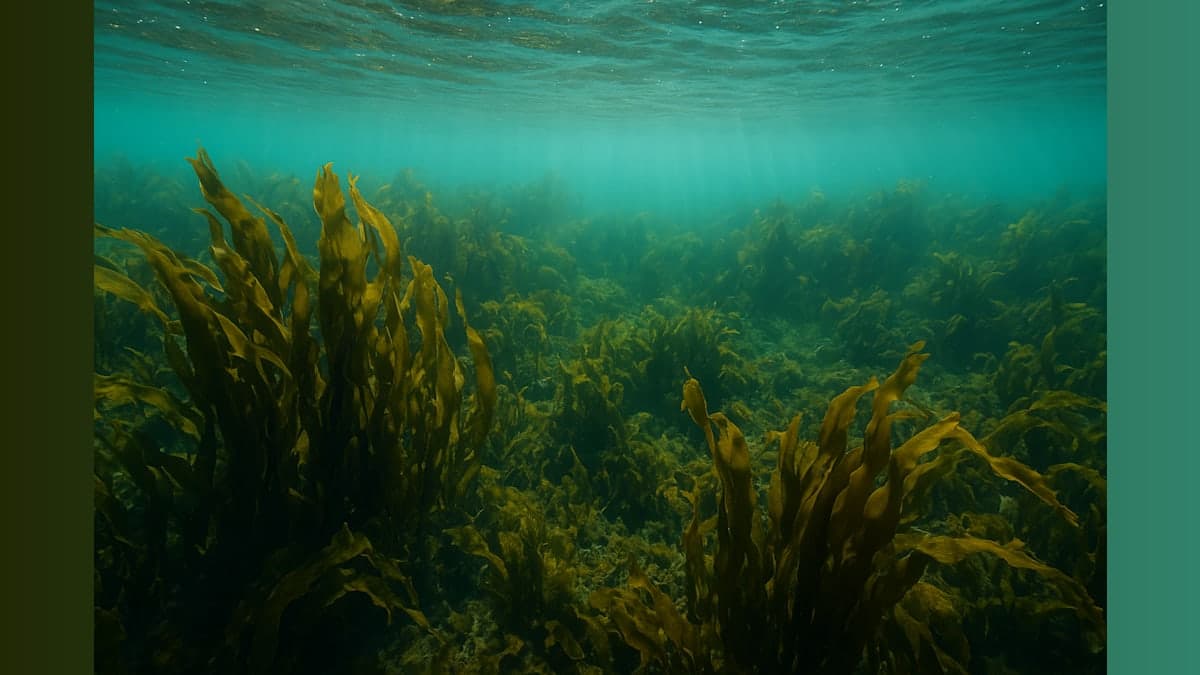
An international research team has uncovered compelling evidence that coastal seaweed forests play a far more substantial role in capturing and storing atmospheric carbon than scientists previously recognized. The groundbreaking study focused on massive underwater kelp ecosystems off the coast of southwest Greenland, revealing a natural carbon sequestration system that operates on a scale researchers are only beginning to understand.
The collaborative effort brought together scientists from Germany, Portugal, Saudi Arabia, Denmark, and the United Kingdom to examine how large seaweeds, scientifically known as macroalgae, function as critical carbon sinks. These underwater forests absorb enormous quantities of carbon dioxide from the atmosphere through photosynthesis, effectively removing greenhouse gases that would otherwise contribute to global warming.
Previous scientific estimates suggested that between 4 million and 44 million tonnes of macroalgae-derived carbon descend annually to ocean depths of up to 200 metres, where the carbon remains sequestered for at least a century. However, the mechanisms by which this carbon reaches such depths have remained poorly understood until now.
The research team employed an innovative combination of satellite imagery, sophisticated computer modeling, and ocean current monitoring devices to track 8,000 individual seaweed rafts growing in the waters off southwest Greenland. This marked the first comprehensive tracking effort of its kind in the region, providing unprecedented data on how these marine plants move through ocean systems.
The findings revealed a remarkable natural process. Offshore ocean currents transport floating seaweed vegetation across distances spanning hundreds of kilometres from their coastal origins. As these rafts drift into colder surface waters, temperature changes cause the buoyant vegetation to sink below the surface. Once submerged, the seaweed begins to decompose and continues descending, effectively transporting captured carbon into the deep ocean where it becomes locked away from the atmosphere.
"Our findings illustrate a tangible oceanic conveyor belt that links thriving coastal macroalgal forests with the deep ocean's carbon reservoir," said Prof Ana Queirós, marine climate change ecologist and climate change lead at Plymouth Marine Laboratory, speaking to Positive News. "Recognising these natural transport and mixing pathways enhances how we understand macroalgae's vital role in the Earth's carbon cycle."
The research carries significant implications for climate science and policy. Understanding the full scope of natural carbon sequestration systems enables more accurate climate modeling and may inform conservation strategies aimed at protecting and expanding these vital marine ecosystems. Coastal seaweed forests, often overlooked in climate discussions dominated by terrestrial forests, emerge from this research as critical allies in the effort to mitigate atmospheric carbon accumulation.
The study also highlights the importance of preserving coastal marine environments where macroalgae thrive. These ecosystems face threats from warming ocean temperatures, pollution, and coastal development. Protecting existing seaweed forests and potentially cultivating new ones could represent a nature-based climate solution with measurable impact.
As scientists continue to map the complex interactions between marine ecosystems and global carbon cycles, research like this Greenland study provides essential data for understanding how the planet naturally regulates atmospheric composition. The discovery of this oceanic conveyor belt system demonstrates that significant gaps remain in scientific knowledge of Earth's climate systems, even as researchers race to develop comprehensive strategies for addressing climate change.