
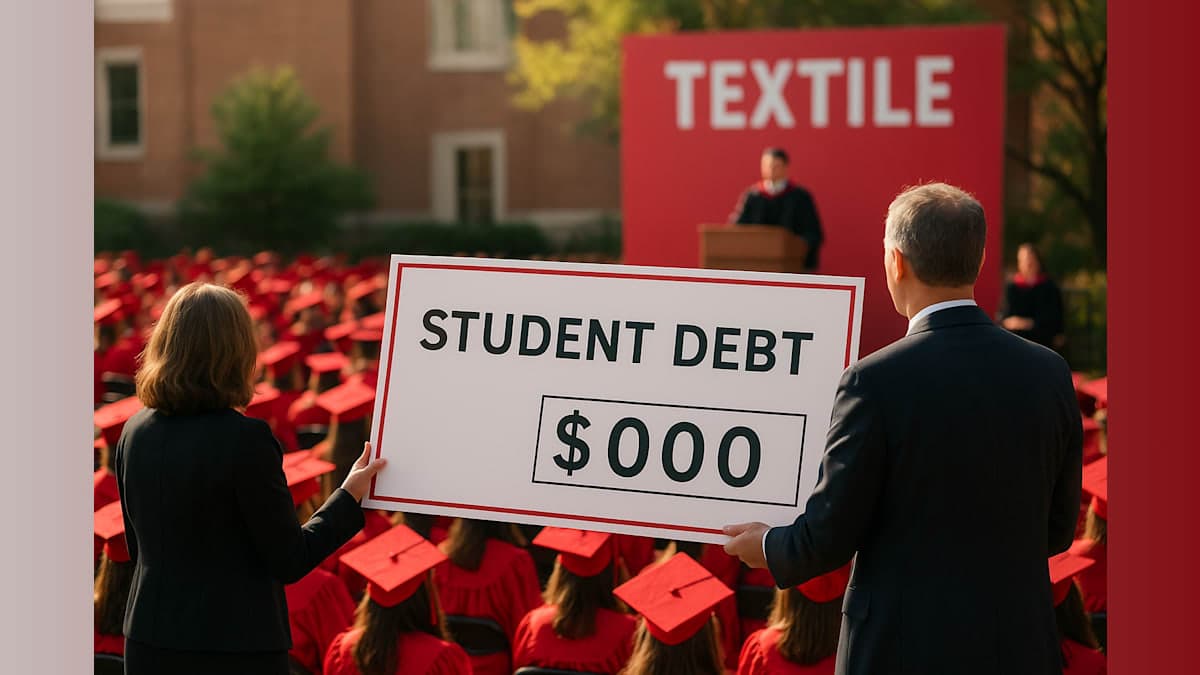
What began as a traditional graduation ceremony transformed into an unforgettable moment of generosity when commencement speaker Anil Kochhar announced that he and his wife, Marilyn, would eliminate the final year student loan debt for all graduating students of North Carolina State University's Wilson College of Textiles.
The announcement, delivered during the May 8, 2026 ceremony, immediately moved the audience to applause and tears as graduates absorbed the life-changing news. The extraordinary gift carries deep personal significance for the Kochhar family, serving as a tribute to Anil Kochhar's father, who journeyed from Punjab, India in 1946 to pursue his education at North Carolina State as only the second Indian student ever enrolled at the university.
During his address, Kochhar reflected on his father's pioneering journey to Raleigh, North Carolina nearly eight decades ago, noting that he "could not have known where that journey would lead." This historical connection between past and present underscored the profound impact that educational opportunity can have across generations.
For many graduates, the financial relief represents far more than numbers on a balance sheet. Fashion and textile management major Alyssa D'Costa expressed the immediate significance of the gift, stating: "As a daughter of immigrants, this money helps me and my family a lot, and I'm really fortunate to have an opportunity like this."
The gesture exemplifies how one generation's success and gratitude can create pathways for the next. By eliminating senior year debt, the Kochhars have freed these young professionals to pursue career opportunities, further education, or entrepreneurial ventures without the immediate burden of loan repayment—a constraint that often shapes critical early-career decisions.
Kochhar's message to the graduates emphasized their shared connection through the "same spirit of possibility" that brought his father to North Carolina State decades earlier. This spirit of possibility, now renewed through the family's generosity, will enable the Wilson College of Textiles graduating class to begin their professional journeys with greater financial freedom and opportunity.
The announcement stands as a powerful reminder of how educational institutions serve as bridges between cultures, generations, and aspirations. What Kochhar's father began in 1946 as a solitary student from India has come full circle, benefiting an entire class of graduates who will now carry forward their own legacies of achievement and, perhaps one day, similar acts of generosity.