In the remote regions of the Himalayas, a child entered the world under circumstances most would consider tragic. Lobsang Phuntsok was born to a young, unmarried mother who gave birth in secret in the family toilet, covering the newborn in dried leaves before abandoning him. His survival came only through the intervention of his grandparents, who heard his cries and discovered him in critical condition.
Throughout his childhood, Lobsang bore a label that reflected his unwanted arrival: "the uninvited guest of this universe." The young boy lived up to his turbulent beginnings, breaking windows, tearing prayer flags, and consistently disregarding rules. His behavior prompted his grandparents to make a decisive intervention when he reached the age of seven, sending him to live in a Buddhist monastery in hopes the structured environment could provide the support he desperately needed.
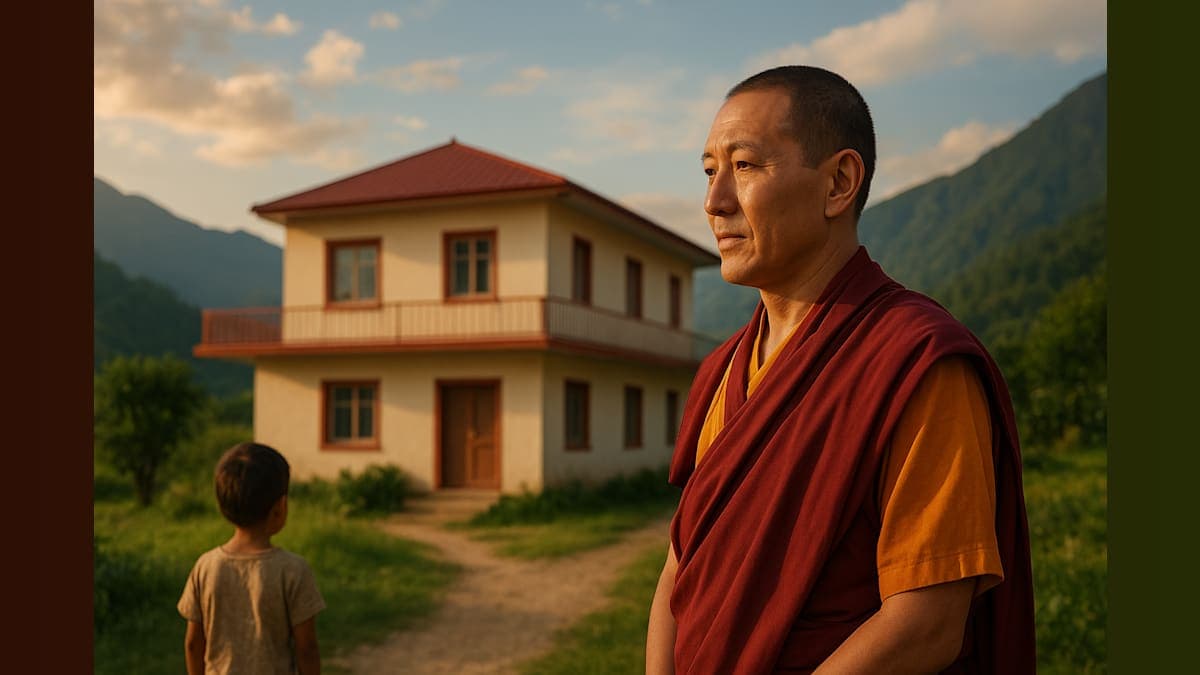
The monastery proved transformative. Lobsang not only found stability but excelled to such a degree that he became one of ten monks selected by the Dalai Lama to teach in the West. This honor represented a remarkable journey from abandoned infant to spiritual teacher, yet Lobsang's story was far from complete.
Despite his success in the West, Lobsang felt a powerful pull back to India. His own experience as an unwanted child had planted a seed of purpose: to serve fellow children facing similar rejection in the remote mountains where he was born. In 2006, he established Jhamtse Gatsal, which translates to "the Garden of Love and Compassion," a children's community and home dedicated to those society has cast aside.
The mission of Jhamtse Gatsal reflects Lobsang's personal understanding of transformation. "Our job is to accept the children nobody else can take care of and nobody else wants, and help this child transform into the most amazing human being," he explains. His approach eschews conventional interventions, relying instead on fundamental human connection. No medication, no psychiatrists — just love, responsibility, and the radical faith that every difficult child carries the seed of something luminous.
Lobsang's philosophy emerges directly from his lived experience. The child once labeled an uninvited guest has become a beacon of hope for others bearing similar wounds. His work demonstrates that the circumstances of birth need not determine the trajectory of a life, and that the most troubled children often possess extraordinary potential waiting to be nurtured.
The story of Jhamtse Gatsal challenges conventional wisdom about healing trauma and behavioral difficulties in children. Rather than relying on clinical interventions, Lobsang has created an environment where unconditional acceptance and genuine compassion serve as the primary therapeutic tools. His success suggests that what many troubled children need most is not treatment, but belonging — not correction, but the unwavering belief that they matter.
From a child covered in dried leaves and left to die, to a teacher selected by one of the world's most revered spiritual leaders, to a father figure for dozens of unwanted children, Lobsang Phuntsok's journey illustrates the transformative power of compassion. His life stands as testament to a simple but profound truth: every child, no matter how unwanted or difficult, carries within them the potential for extraordinary contribution to the world.