
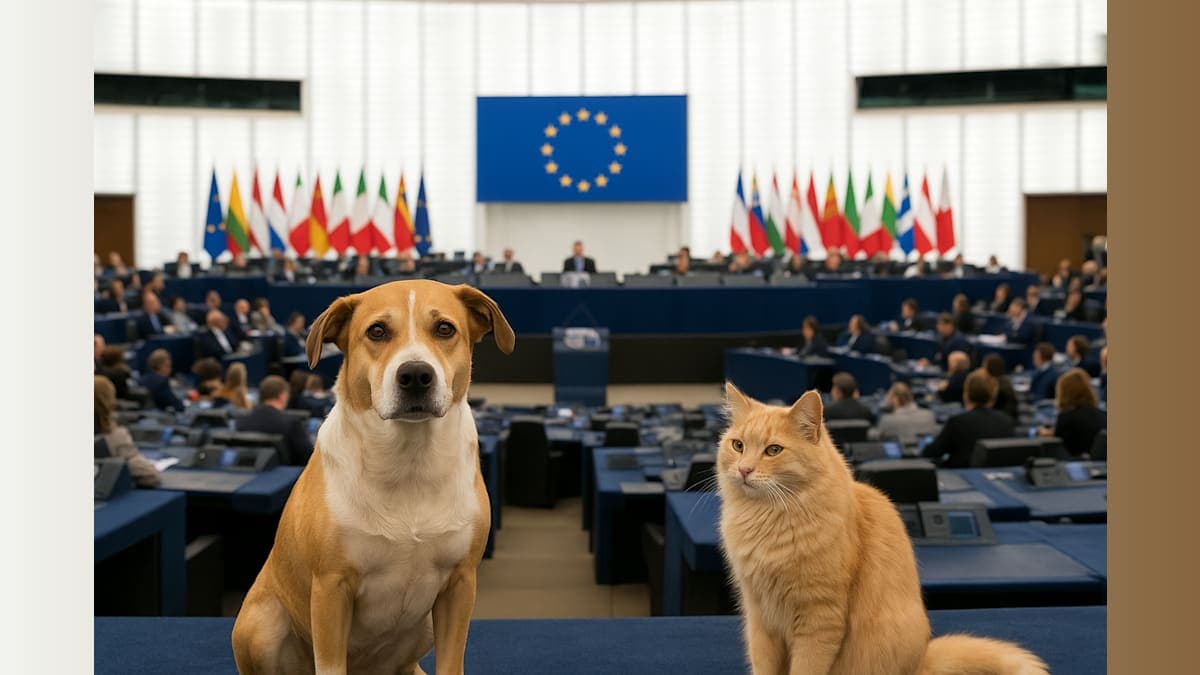
The European Parliament has approved groundbreaking legislation that establishes the first comprehensive set of animal welfare rules across the European Union. The historic vote, which passed with 558 members in favor, 35 against, and 52 abstentions, represents a significant shift in how cats and dogs are bred, sold, and kept throughout the bloc.
The legislation has already received approval from the European Council and will take effect for breeders and organizations that sell or adopt animals within the next four years. This timeline provides industry stakeholders with a transition period to align their practices with the new requirements.
Prohibition of Harmful Breeding Practices
At the core of the new law lies a prohibition on breeding practices that result in physical deformation for aesthetic appeal, including those that produce "exaggerated traits." The legislation acknowledges that breeding strategies driven by marketing objectives have led to certain types of dogs and cats developing excessive conformational traits that compromise their health and quality of life.
The law explicitly states that "breeding strategies motivated by marketing objectives can result in certain types of dogs and cats developing 'excessive conformational traits.'" It continues: "Since such excessive conformational traits can lead to significant health problems for the dogs and cats concerned, breeders should exclude them from breeding programs."
While the legislation does not specify which breeds fall under this prohibition, the implications for popular breeds with known health issues remain unclear. Whether breeds such as pugs, bulldogs, or various purebred cat breeds will be deemed illegal to breed may ultimately require judicial interpretation in the coming years.
The law also prohibits inbreeding practices involving first-order relatives or those once removed, as well as hybridization with non-domestic animals. These provisions aim to protect genetic diversity and prevent the perpetuation of hereditary health conditions.
Market Regulation and Welfare Standards
Beyond breeding restrictions, the legislation addresses the various channels through which cats and dogs enter the European Union market. The law identifies situations where animal welfare has not been prioritized and establishes regulatory frameworks to ensure future exchanges meet welfare requirements.
These regulations target animals coming from countries outside the Union that lack established animal welfare rules, unscrupulous breeders posing as private owners offering animals for adoption, and breeders who acquire animals from sources where welfare standards were not observed.
The Union has adopted the "five domains" concept to define animal welfare, encompassing nutrition, physical environment, health, behavioral interactions, and mental state. This framework aims not merely to eliminate detrimental conditions but to guarantee enriching environments for animals.
Specific Welfare Provisions
The law prohibits tethering a dog or cat to an object except when necessary for medical treatment. It also bans the use of prong and choke collars that lack built-in safety mechanisms, addressing concerns about training methods that can cause physical harm.
Practical exemptions have been incorporated into the legislation. Citizens are released from responsibility for dogs and cats that live symbiotically on farms or in rural areas, providing value through pest control or other means without living domestically. Additional exemptions apply to scientific research conducted for testing veterinary medicine.
Comparison to United States Regulations
Animal welfare laws in the United States vary considerably by jurisdiction but generally conform to or acknowledge the USDA Animal Welfare Act. This federal legislation includes licensing requirements based on the number of breeding females or for selling dogs sight unseen.
Twenty-two states have enacted laws preventing legislation that targets individual dog breeds for any purpose. These statutes are typically advocated by those seeking to protect breeds considered dangerous from legal discrimination, based on the principle that proper upbringing and domestic life determine behavior rather than breed characteristics alone.
Implications for the Future
This legislation represents a fundamental shift in how the European Union approaches animal welfare in the companion animal industry. The four-year implementation period will test the practical application of these standards and likely generate legal challenges as stakeholders seek clarity on specific breed restrictions and welfare requirements.
The law's emphasis on preventing breeding practices that prioritize appearance over health signals a broader cultural reckoning with the consequences of aesthetic-driven animal breeding. As enforcement begins, the legislation may serve as a model for other jurisdictions considering comprehensive animal welfare reform.