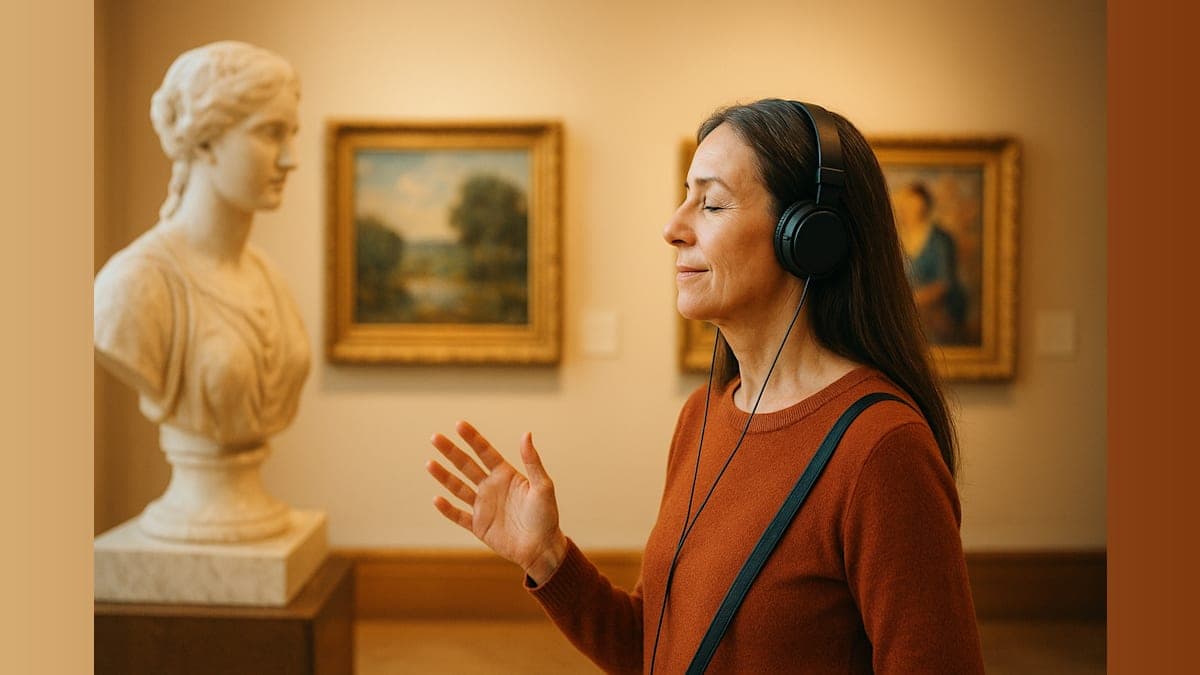
Individuals who regularly engage with arts and cultural activities may be slowing their biological aging process, according to groundbreaking research from University College London. The study suggests that activities such as listening to music, visiting museums, or reading could have anti-aging effects comparable to those achieved through regular exercise.
Researchers analyzed blood test data and survey responses from over 3,500 adults in the UK, examining the relationship between cultural engagement and chemical changes to DNA that influence biological aging without altering the genetic code itself. The findings, published in the journal Innovation in Aging, revealed that frequent and diverse participation in arts activities correlated with a slower pace of aging and younger biological age as indicated by DNA modifications.
The magnitude of these effects proved striking. People who participated in an arts activity at least once a week appeared to age 4 percent more slowly than those who rarely engaged with arts. This rate matched the aging benefits observed in individuals who exercised at least once a week compared to those who did not exercise at all.
"These results demonstrate the health impact of the arts at a biological level," said study lead author Professor Daisy Fancourt. "They provide evidence for arts and cultural engagement to be recognized as a health-promoting behavior in a similar way to exercise."
The protective effects proved particularly pronounced for middle-aged and older adults over 40. These associations remained statistically significant even after researchers controlled for confounding variables including body mass index, smoking habits, education level, and income.
Professor Fancourt emphasized the importance of variety in cultural engagement. "Our study also suggests that engaging in a variety of arts activities may be helpful," she explained. "This may be because each activity has different 'ingredients' that help health, such as physical, cognitive, emotional, or social stimulation."
The research team utilized data from the UK Household Longitudinal Study, a nationally representative sample. Participants' blood samples underwent analysis using seven epigenetic clocks—sophisticated tests that examine age-related DNA changes by measuring methylation at different genomic sites. Two of the newest clocks, DunedinPoAm and DunedinPACE, specifically estimate the pace of aging, with faster scores associated with elevated risk of age-related diseases.
The DunedinPACE clock revealed a dose-response relationship between cultural engagement and aging rates. Participating in arts activities at least three times a year linked to aging 2 percent more slowly, monthly engagement correlated with 3 percent slower aging, and weekly activity showed a 4 percent slower aging rate compared to those who engaged with arts less than three times annually.
Senior author Dr. Feifei Bu noted that the study provides the first evidence linking arts engagement to a slower pace of biological aging. "This builds on a growing body of evidence about the health impact of the arts, with arts activities being shown to reduce stress, lower inflammation and improve cardiovascular disease risk, just as exercise is known to do," Dr. Bu stated.
Another epigenetic clock, PhenoAge, which estimates biological age, revealed even more dramatic results. Individuals who engaged in arts and cultural activities at least weekly measured a year younger on average compared to those who rarely participated. By comparison, people who exercised at least weekly appeared just over half a year younger on average.
The researchers noted that the difference in aging pace proved comparable to that observed in previous studies between current smokers and ex-smokers, underscoring the substantial biological impact of cultural engagement.
These findings carry significant implications for public health policy and individual lifestyle choices. The research suggests that communities should prioritize access to cultural institutions and arts programming not merely for entertainment or educational value, but as legitimate health interventions. Museums, concert halls, libraries, and other cultural venues may serve functions beyond their traditional roles, acting as venues for health promotion alongside gymnasiums and recreational facilities.
The study adds to a growing body of evidence demonstrating measurable health benefits from arts engagement, positioning cultural participation as a scientifically validated approach to healthy aging that deserves recognition alongside conventional health behaviors.