
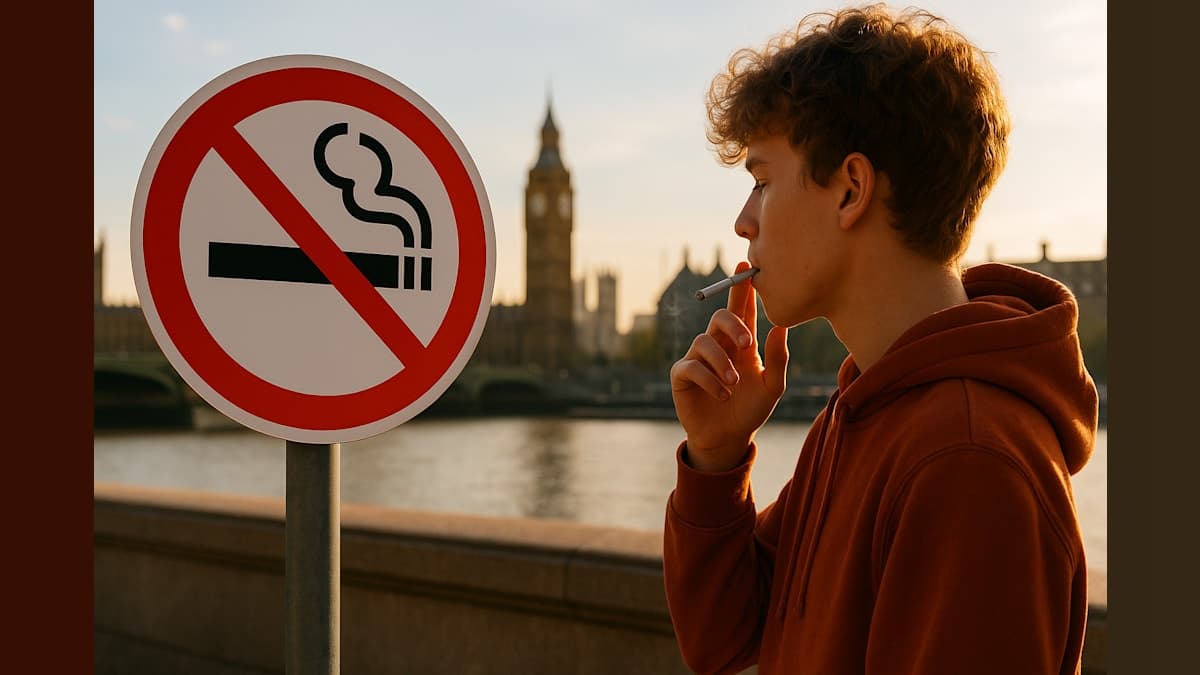
The United Kingdom has enacted one of the most ambitious anti-smoking measures in modern public health history, approving legislation that will progressively eliminate tobacco sales to future generations through an innovative age-escalation mechanism.
Under the new law passed by the UK Parliament, the legal smoking age will increase by one year every year, creating what officials are calling a smoke-free generation. The practical effect is unprecedented: a teenager born in 2009 who turns 18 next year will be prohibited from purchasing cigarettes not only at that milestone birthday, but at age 40, at age 70, and for their entire lifetime.
The legislation represents a radical departure from traditional tobacco control strategies. Rather than implementing an outright prohibition that would apply to all citizens simultaneously, Britain has chosen a gradual legislative approach that phases out legal tobacco sales one birth year at a time. This means current adult smokers retain their legal right to purchase cigarettes, while future generations will never acquire that right.
The public health imperative driving this policy is substantial. Smoking claims 74,600 lives annually in the United Kingdom, making it the leading cause of preventable death in the nation. Health Secretary Wes Streeting defended the measure with straightforward logic: "Prevention is better than cure -- this reform will save lives."
The legislation extends beyond traditional cigarettes to address the growing prevalence of vaping among young people. New restrictions ban vaping in cars when children are present, on playgrounds, and outside schools. These provisions acknowledge the evolving landscape of nicotine consumption and aim to protect minors from exposure to both traditional and electronic smoking products.
Britain is not alone in pursuing this generational approach to tobacco elimination. New Zealand and the Maldives have passed similar generational bans, suggesting a potential shift in global tobacco control strategy. These nations are effectively serving as laboratories for a policy experiment that could reshape public health interventions worldwide.
The policy raises complex questions about personal liberty, government authority, and the role of legislation in shaping public health outcomes. Critics may argue that adults should retain the right to make their own choices about tobacco consumption, while proponents contend that preventing addiction before it starts represents sound public policy, particularly given the well-documented health consequences and societal costs of smoking.
The long-term success of this legislative experiment will depend on enforcement mechanisms, public compliance, and whether it achieves its stated goal of dramatically reducing smoking-related deaths without creating unintended consequences such as black market tobacco sales. As the first cohorts affected by this law come of age, public health researchers worldwide will be watching closely to assess whether this gradual prohibition model offers a viable path toward eliminating one of the most persistent public health challenges of the modern era.