
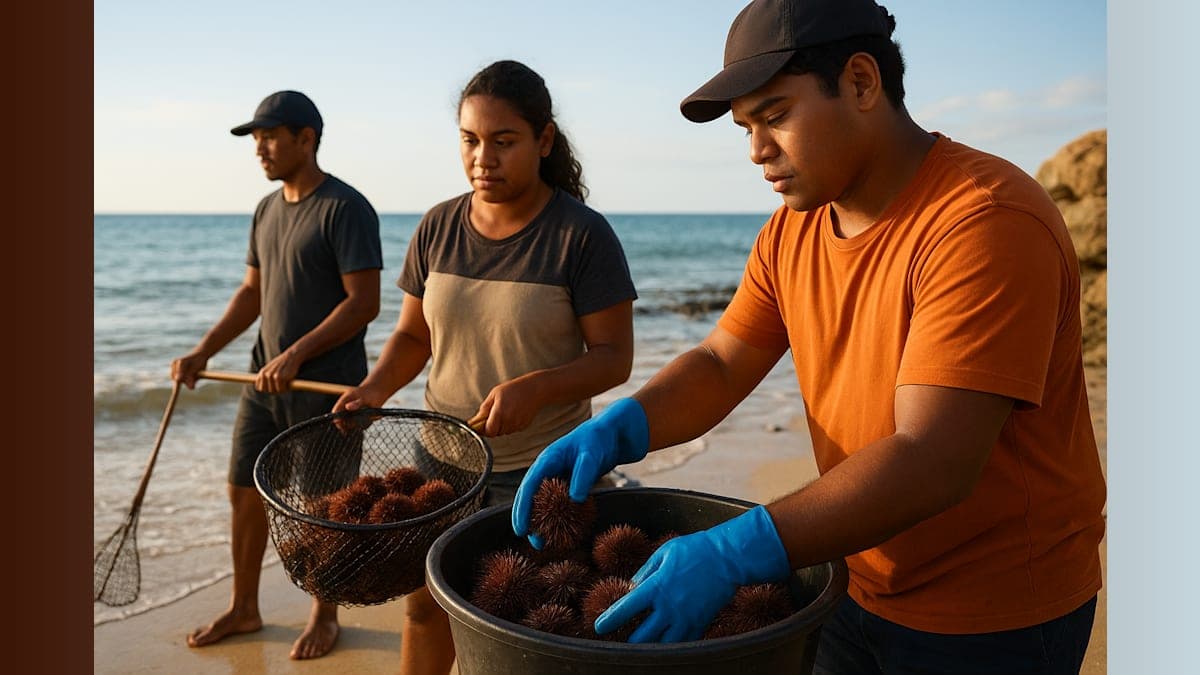
A dramatic shift in Australian fisheries policy has transformed the relationship between indigenous coastal communities and government authorities. Young people from the Walbunja indigenous community, who once faced potential arrest for traditional fishing practices, are now being recruited, trained, and compensated to lead an emerging industry designed to combat an ecological crisis.
The initiative represents a fundamental reversal in how Australia approaches both indigenous rights and environmental management. Rather than criminalizing traditional fishing knowledge, authorities are now recognizing its value in addressing a significant marine ecosystem challenge: a proliferation of sea urchins that threatens coastal waters.
According to reporting from ABC News, the program reconnects Walbunja youth with ancestral fishing practices while simultaneously addressing an environmental problem. The sea urchin population explosion has created what officials describe as a plague affecting marine biodiversity and coastal ecosystems. These invertebrates, when present in excessive numbers, can devastate kelp forests and disrupt the balance of underwater habitats.
The policy transformation carries profound implications for indigenous communities who have maintained fishing traditions for thousands of years. Where government enforcement once threatened prosecution and imprisonment for practicing cultural fishing methods, the same authorities now offer employment and training opportunities. This shift acknowledges both the ecological knowledge embedded in indigenous practices and the economic potential of sustainable harvesting.
The commercial viability of sea urchin harvesting adds an economic dimension to the environmental solution. Sea urchin roe, known as uni in Japanese cuisine, commands premium prices in international markets. By creating a legitimate fishing industry around sea urchin collection, the program addresses multiple objectives: controlling an invasive population, creating employment in indigenous communities, and generating economic value from what would otherwise be an ecological liability.
For the Walbunja community, the initiative represents more than economic opportunity. It offers a pathway for younger generations to engage with traditional knowledge and cultural practices that connect them to their heritage. The training programs incorporate both ancestral fishing wisdom and modern commercial fishing techniques, creating a bridge between traditional and contemporary practices.
The program's success could establish a model for how governments engage with indigenous communities on environmental management issues. Rather than imposing external solutions or restricting traditional practices, the approach leverages indigenous knowledge and provides economic incentives for environmental stewardship. This collaborative framework recognizes that communities with deep historical connections to land and sea often possess sophisticated understanding of ecosystem management.
The sea urchin control initiative also highlights the complex relationship between traditional fishing rights and modern conservation efforts. For decades, indigenous fishing practices have existed in legal gray areas, with communities asserting ancestral rights while facing restrictions designed to protect marine resources. The current program suggests a path forward that honors both cultural traditions and ecological sustainability.
As the program develops, it will provide valuable data on whether indigenous-led harvesting can effectively control sea urchin populations while maintaining ecosystem health. The outcomes will inform future policies regarding indigenous participation in fisheries management and environmental conservation efforts across Australia's extensive coastline.