
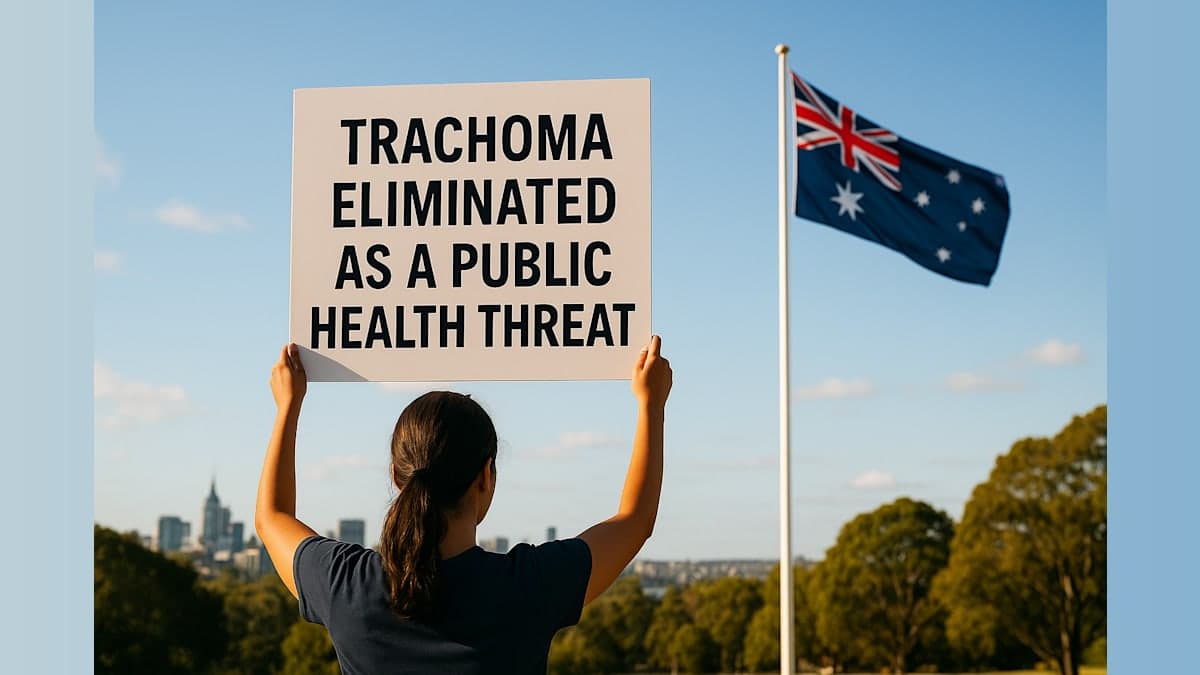
Australia has officially eliminated trachoma as a public health concern, joining 29 other nations in eradicating the leading cause of infectious blindness worldwide. The announcement represents a significant victory in global health efforts and marks the culmination of sustained intervention programs targeting vulnerable populations.
Trachoma, a bacterial infection that can lead to irreversible blindness, had persisted in Aboriginal and Torres Strait Islander communities long after disappearing from other parts of the country. These communities faced disproportionate risk from the disease, which thrives in conditions of poverty, inadequate sanitation, and limited access to clean water.
The disease is caused by the bacterium Chlamydia trachomatis and spreads through direct contact with eye or nose discharge from infected individuals, as well as through contaminated objects and flies. Repeated infections can cause the eyelid to turn inward, leading to the eyelashes scratching the cornea and eventually causing permanent blindness if left untreated.
The elimination of trachoma as a public health problem represents a triumph of coordinated public health strategy. Successful eradication typically requires a multi-faceted approach including antibiotic treatment, improved facial hygiene, environmental sanitation, and surgical intervention for advanced cases. The World Health Organization has established specific criteria that countries must meet to be validated as having eliminated trachoma, including maintaining prevalence below critical thresholds for sustained periods.
Australia's achievement is particularly noteworthy given the historical challenges of delivering healthcare services to remote Indigenous communities. The success demonstrates that with adequate resources, political commitment, and culturally appropriate interventions, even deeply entrenched infectious diseases can be conquered.
Globally, trachoma remains a significant concern in many developing nations, particularly in Africa and parts of Asia. An estimated 1.9 million people worldwide are visually impaired or blind due to trachoma. The disease predominantly affects the poorest and most marginalized populations, making elimination efforts both a medical and social justice imperative.
As the 30th country to achieve this milestone, Australia joins a growing coalition of nations that have successfully eliminated trachoma through sustained public health efforts. The accomplishment serves as a model for other countries still battling the disease and reinforces the possibility of achieving the World Health Organization's goal of global trachoma elimination by 2030.