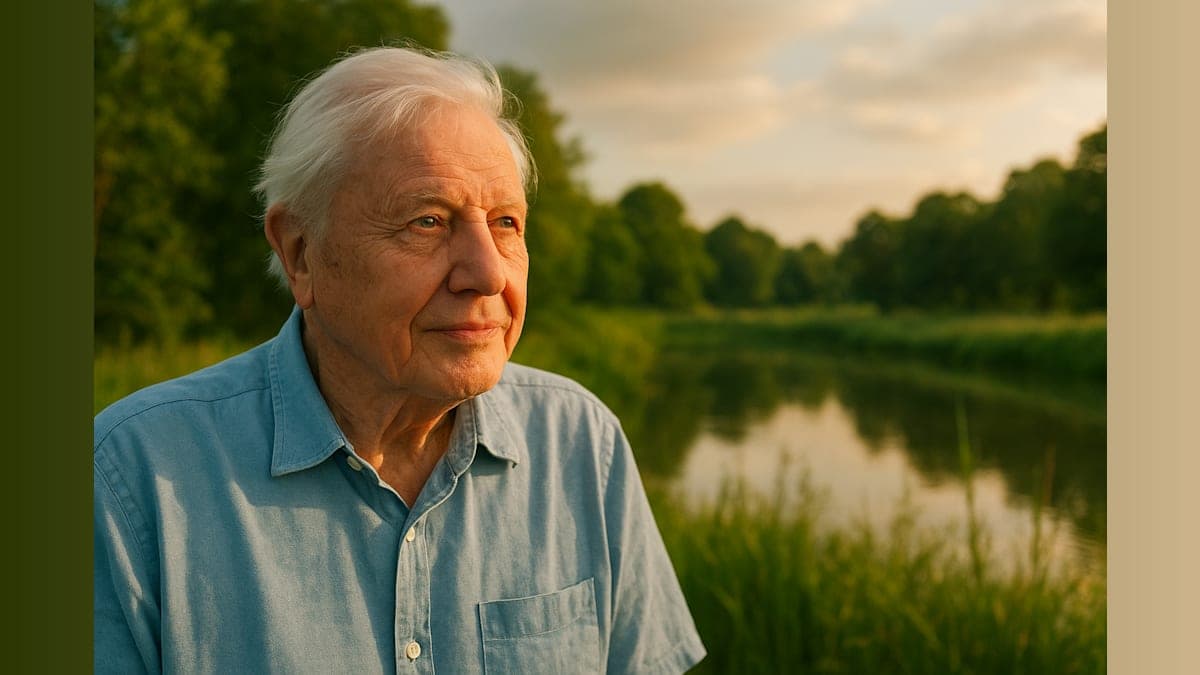
Sir David Attenborough has reached a milestone that few achieve: his 100th birthday. The occasion provides an opportunity to reflect on the wisdom accumulated over a century of life, much of it spent documenting and advocating for the natural world that has defined his extraordinary career.
The broadcaster and natural historian has never shied from self-deprecating humor, once remarking, "You know, it's a terrible thing to appear on television, because people think you actually know what you're talking about." Yet his knowledge has proven both vast and vital, shaping public understanding of environmental issues for generations.
Attenborough's philosophy centers on humanity's relationship with nature. "It seems to me that the natural world is the greatest source of excitement; the greatest source of visual beauty, the greatest source of intellectual interest," he has stated. "It is the greatest source of so much in life that makes life worth living." This perspective has informed his life's work, translating complex ecological concepts into accessible narratives that resonate across cultures and age groups.
The natural historian has observed profound shifts during his lifetime. "When I first saw the sea as a young boy, it was thought of as a vast wilderness to be tamed and mastered for the benefit of humanity," he reflected. "Now, as I approach the end of my life, we know the opposite is true." This transformation in understanding represents both scientific progress and a sobering recognition of environmental limits.
Attenborough has expressed particular faith in younger generations. "Young people – they care," he noted. "They know that this is the world that they're going to grow up in, that they're going to spend the rest of their lives in. But, I think it's more idealistic than that. They actually believe that humanity, human species, has no right to destroy and despoil regardless."
His message balances urgency with optimism. "If working apart we are a force powerful to destabilise our planet, surely working together we are powerful enough to save it," he has argued. "In my lifetime I've witnessed a terrible decline. In yours, you could and should witness a wonderful recovery." This statement encapsulates both the damage done and the possibility of restoration.
The broadcaster has emphasized that individual actions, while important, require systemic support. "Many individuals are doing what they can," he observed. "But real success can only come if there is a change in our societies and in our economics and in our politics." This recognition of structural barriers distinguishes his advocacy from simplistic calls for personal responsibility alone.
Practical wisdom accompanies his broader vision. "The best motto to think about is not to waste things," Attenborough has advised. "Don't waste electricity; don't waste paper; don't waste food. Live the way you want to live but just don't waste. Look after the natural world and the animals in it and the plants in it too. This is their planet as well as ours. Don't waste them."
His concern extends to future generations and their connection to nature. "The question is, are we happy to suppose that our grandchildren may never be able to see an elephant except in a picture book?" he has asked. The query challenges complacency about species loss and habitat destruction, framing conservation as an intergenerational responsibility.
Education remains central to his vision for change. "Bringing nature into the classroom can kindle a fascination and passion for the diversity of life on earth and can motivate a sense of responsibility to safeguard it," he has stated. This emphasis on early environmental education reflects understanding that lasting change requires cultural transformation beginning in childhood.
The natural historian has never lost his sense of wonder. "There are some four million different kinds of animals and plants in the world," he marveled. "Four million different solutions to the problems of staying alive." He has also acknowledged the limits of human knowledge: "We only know a tiny proportion about the complexity of the natural world. Wherever you look, there are still things we don't know about and don't understand."
This curiosity has driven a career spanning decades of exploration and documentation. "I just wish the world was twice as big and half of it was still unexplored," Attenborough has remarked, revealing the explorer's spirit that has animated his work from the beginning.
As he reaches his centennial, Attenborough's message remains clear and urgent. "The truth is: the natural world is changing. And we are totally dependent on that world. It provides our food, water, and air. It is the most precious thing we have and we need to defend it." Yet he refuses to surrender to despair, insisting instead on human agency: "The final chapter is ours to write. We know what we need to do. What happens next is up to us."
These words, accumulated over a century of observation and advocacy, offer both diagnosis and prescription for the environmental challenges facing humanity. They represent the distilled wisdom of a life spent in service to understanding and protecting the natural world, a legacy that extends far beyond any single birthday milestone.