
Alberta has deployed an unconventional weapon in its fight against invasive aquatic species: three highly trained detection dogs capable of sniffing out mussel infestations before they take hold in the province's rivers and lakes.
Hilo, Jane, and Winnie — two black Labrador retrievers and one black Labrador cross — have been part of the provincial government's conservation strategy for more than ten years. The canines work at mandatory boat inspection stations throughout Alberta, where they detect the presence of zebra and golden mussels that threaten local ecosystems.
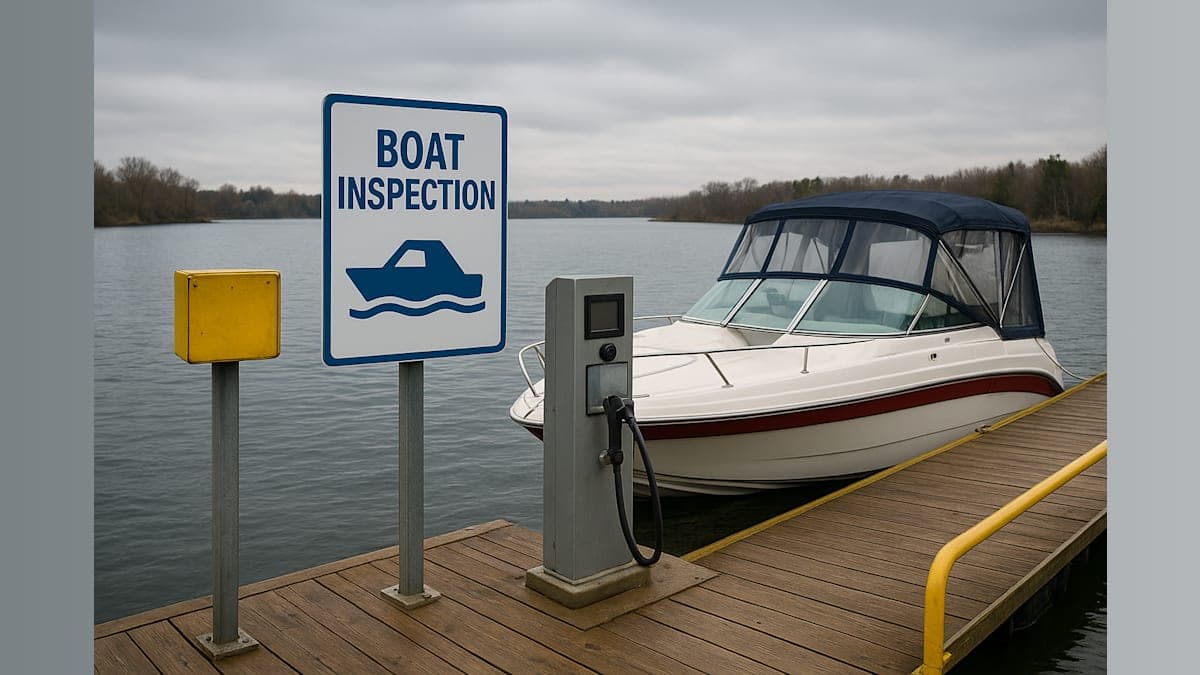
Provincial law now requires all watercraft entering or leaving Alberta to stop at inspection stations. The dogs provide a critical layer of detection that human inspectors cannot match, particularly when searching for developing mussel larvae. These microscopic organisms can be so small that they produce only a faint sandpaper-like texture on boat hulls and dock surfaces.
"The dogs are really complementing that human inspection and giving us kind of a better idea about what could be on that boat," Cindy Sawchuk, leader of the province's Aquatic Invasive Species Operations and Conservation Canine Program, told Good News Network.
The threat has grown more urgent with golden mussels recently establishing populations in California, creating another potential invasion route through British Columbia to Alberta's west, Sawchuk explained to the Canadian Press.
"These mussels really like to hide in damp, dark places (and) a lot of them are hard to see," Sawchuk told Good News Network.
The invasive mussels, native to Southeast Asia, function as filter feeders that compete directly with native bottom-dwelling and filter-feeding fish species. By consuming the same food sources, the mussels can devastate local aquatic populations and disrupt entire ecosystems.
For the canine conservationists, the work provides mental stimulation and reward. Each time the dogs successfully locate a mussel patch, handlers reward them with special toys. The search activity triggers dopamine release in the animals, making the detection work inherently satisfying for them.
While the dogs may find their assignments enjoyable, the stakes remain extraordinarily high for provincial officials. In comparable jurisdictions where mussels have established themselves, annual management costs can reach seventy-five million dollars. Once entrenched, the invasive species prove virtually impossible to eradicate completely.
Beyond their duties at inspection stations, the conservation dogs are receiving additional training to patrol shorelines, expanding their capability to detect mussel colonies in natural waterway environments. This proactive approach aims to identify and address infestations before they spread throughout Alberta's extensive network of lakes and rivers.
The program represents a growing recognition that biological detection methods can outperform traditional inspection techniques when confronting microscopic threats. The dogs' olfactory capabilities allow them to identify mussel presence in locations and life stages that would otherwise escape notice until populations reach damaging levels.