A groundbreaking conservation effort is underway in San Francisco Bay, where scientists are deploying artificial intelligence technology to protect grey whales from one of their most significant threats: collisions with ships.
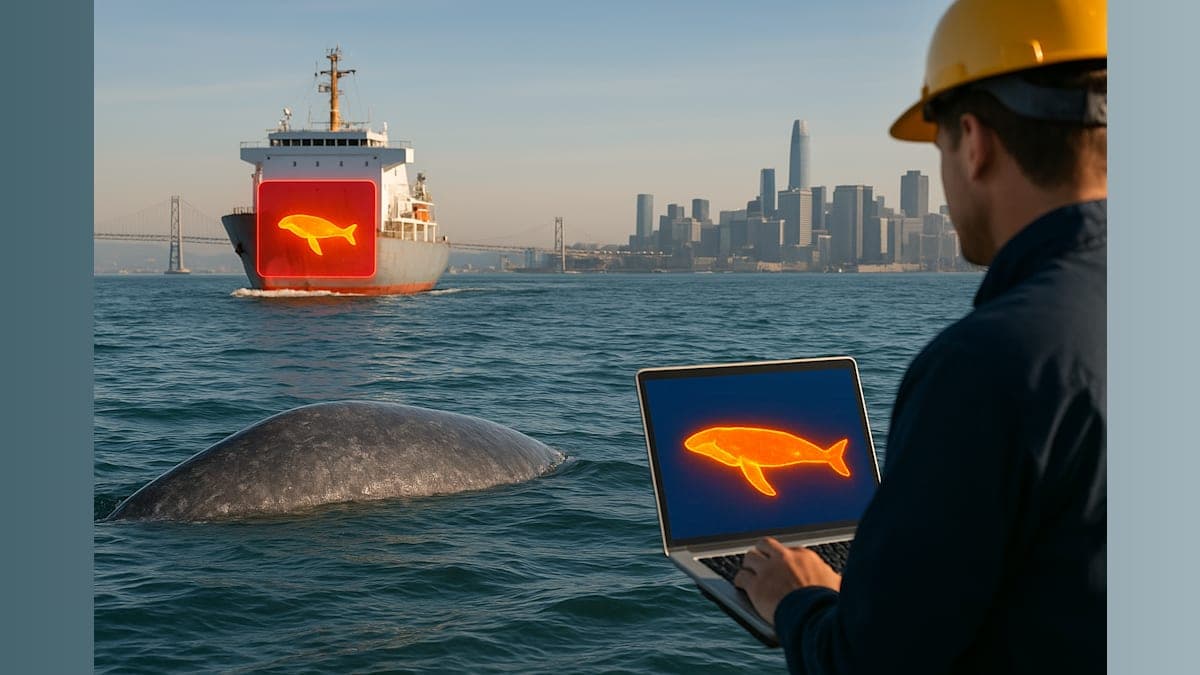
The innovative system, called Whale Spotter, uses thermal imaging to detect the heat signatures of whale blows and immediately transmits location data to mariners navigating the bay. The technology represents a critical response to increasing grey whale sightings in local waters and the corresponding rise in potentially fatal ship strikes.
Dr. Douglas McCauley, director of the Benioff Ocean Science Laboratory, emphasized the urgency of the situation. "The problem has been getting worse," Dr. McCauley told CBS News. "This is a problem we can solve right now, that this new data and the community came around it can solve."
Marine mammal experts recently gathered in San Francisco to launch the program, installing the first detection device on Angel Island and a second on a routine transit ferry to Vallejo. The results were immediate and striking.
"About an hour after plugging it in, we saw 180 blows," Dr. McCauley reported. "That's not 180 whales, but a handful of whales being active in the bay. It blows, it's a warm breath so the thermal sensing system sees the heat of the breath against the cold ocean."
The technology works by capturing the thermal contrast between a whale's warm exhalation and the cold ocean surface. These heat signatures are instantly uploaded to a digital map accessible to ship captains and navigators, allowing them to adjust their routes in real-time to avoid the animals.
Grey whales, medium-sized baleen whales that can reach lengths between 40 and 50 feet, have been appearing in San Francisco Bay with increasing frequency. While this represents a positive sign for the species' recovery, it also creates new challenges for maritime safety and conservation.
Ship strikes remain one of the largest causes of whale mortality worldwide. The confined waters of San Francisco Bay, combined with heavy commercial and recreational vessel traffic, create particularly hazardous conditions for these marine mammals during their seasonal migrations.
The Benioff Ocean Science Laboratory expects to determine within a few months whether the Whale Spotter devices are successfully reducing whale deaths. This assessment period is crucial, as not every technological intervention has proven effective at preventing ship strikes, necessitating continued innovation in both detection methods for humans and deterrence strategies for whales.
The San Francisco Bay initiative joins a growing portfolio of technological solutions being deployed globally to protect whales. Similar efforts include powerful imaging satellites monitoring shipping lanes in the North Atlantic and acoustic buoy systems in the Mediterranean that detect sperm whale vocalizations and alert nearby vessels.
The deployment of artificial intelligence for marine conservation represents a significant shift in how scientists and maritime authorities approach wildlife protection. By providing real-time data rather than relying on historical sighting patterns or seasonal predictions, the technology offers mariners the precise information needed to make immediate navigational decisions.
For Bay Area residents and maritime stakeholders, the success of Whale Spotter could establish a model for balancing commercial shipping operations with environmental stewardship. The system demonstrates that technological advancement and conservation goals need not be in conflict, but can instead work in concert to protect the region's marine ecosystem while maintaining vital shipping corridors.