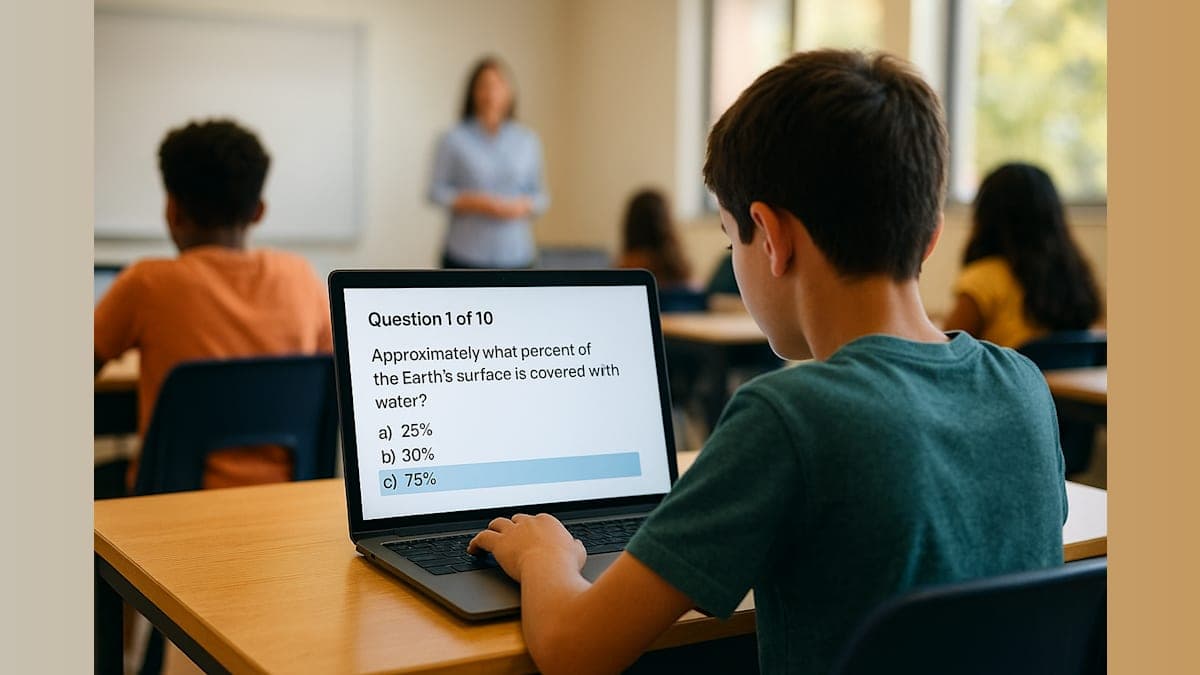
A major shift is coming to our classrooms this spring as students across Cape May County prepare for a completely reimagined state testing experience. The transition to computer-adaptive testing represents one of the most significant changes to educational assessment in recent years, and it's happening right now in our local schools.
Recent information sessions — held both in person and via Zoom — gave education professionals and community members their first detailed look at what's ahead. The new system, developed by testing company Cambium in partnership with the state Education Department's assessment office, promises to deliver a more personalized testing experience for each student.
How Adaptive Testing Works
Unlike traditional standardized tests where every student receives identical questions, adaptive testing uses computer algorithms that respond to each student's performance in real-time. As students answer questions, the system draws from a massive inventory — potentially up to 1,000 questions per subject — to adjust the difficulty level based on their demonstrated knowledge and skills.
State officials argue this approach reduces student frustration and anxiety while providing teachers and administrators with more precise data about where individual students need support. Every student will still answer the same total number of questions, but those questions will be tailored to their ability level.
What Students Can Expect
The testing format includes several student-friendly features. Beyond the standard Texas Instrument calculator, multiple calculator types will be available. Students can highlight portions of questions and use digital notepads. All testing remains aligned with state learning standards through a detailed blueprint system.
Performance assessments and graduation proficiency tests will run 150 minutes total, split into two 75-minute sessions with a break in between. Writing tests are scheduled for a straight 90-minute period. Schools have some flexibility in scheduling, though officials recommend completing both test units in a single day when possible.
The Role of Technology and Human Oversight
While artificial intelligence plays a role in the system — including machine-scoring of writing portions — human oversight remains crucial. School personnel are receiving specialized training in test administration. The system automatically flags unique answers for human review, and a random 10 percent of all responses are routed to human scorers for verification.
Cambium's approach emphasizes using AI "when appropriate," though specific details about the extent of AI integration weren't fully outlined in recent presentations.
Timeline and Results
High school students will begin taking the new adaptive tests this month. However, families and educators should prepare for a longer wait for results — scores won't be available until sometime this fall, significantly later than the traditional testing timeline.
This transition reflects a broader national trend in educational assessment, as testing companies and state departments move away from one-size-fits-all exams toward more individualized approaches. For our community, it represents both an opportunity to better understand each student's needs and a learning curve as schools, students, and families adapt to the new system.
As our local schools navigate this first year of implementation, the true measure of success will be whether the promised benefits — better data for educators and reduced stress for students — materialize in our classrooms.