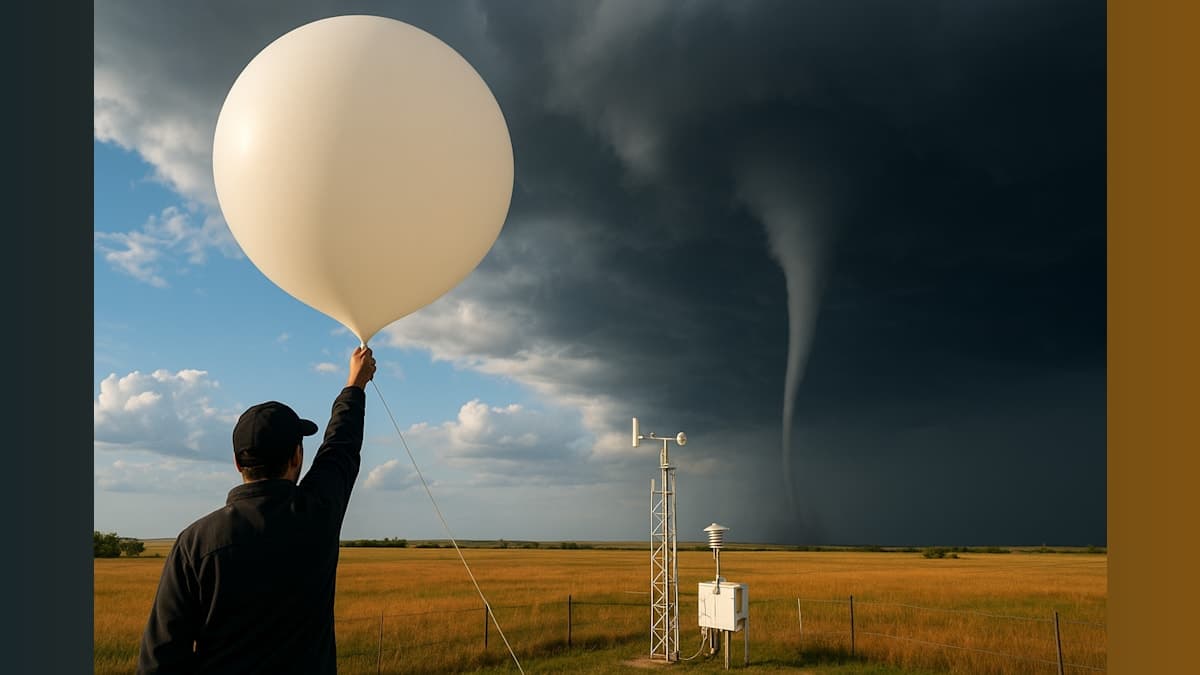
The National Weather Service is facing scrutiny after staffing cuts led to the elimination of critical early morning weather balloon launches, a change that preceded two unexpected tornado outbreaks this spring that caught forecasters off guard.
The connection between reduced operational capacity and diminished forecast accuracy has emerged as a significant concern for meteorologists and emergency management officials nationwide. Weather balloons, which carry instruments into the upper atmosphere to measure temperature, humidity, wind speed, and atmospheric pressure, provide essential data that feeds into computer models used to predict severe weather events.
The elimination of early morning launches represents a substantial gap in data collection during a critical time window. Atmospheric conditions in the pre-dawn hours often set the stage for severe weather development later in the day. Without this foundational data, forecasters must rely on incomplete information when issuing warnings and advisories that communities depend upon for life-saving decisions.
The consequences of these operational changes became apparent this spring when two separate tornado outbreaks developed with insufficient advance warning. These events underscore the direct relationship between adequate staffing levels, comprehensive data collection, and the National Weather Service's ability to fulfill its core mission of protecting life and property.
Tornado forecasting relies on a complex interplay of observational data, computer modeling, and expert analysis. When any component of this system is compromised, the entire forecasting chain suffers. The surprise nature of these recent outbreaks suggests that critical atmospheric signals may have been missed due to the data gaps created by reduced balloon launches.
The staffing reductions that precipitated these changes reflect broader budgetary pressures facing federal agencies. However, the National Weather Service occupies a unique position in the federal infrastructure, providing services that cannot be easily replicated by private sector alternatives and that directly impact public safety across every community in the nation.
For local communities, the implications extend beyond abstract concerns about data collection. Accurate tornado warnings provide the critical minutes or hours needed for residents to seek shelter, for schools to implement safety protocols, and for emergency services to position resources appropriately. When forecasts fail to materialize or severe weather develops unexpectedly, the consequences can be measured in lives lost and property destroyed.
The timing of these forecast failures during active severe weather season raises questions about whether additional operational compromises may lie ahead. Spring and early summer represent the peak period for tornado activity across much of the country, making reliable forecasting particularly crucial during these months.
As communities assess their preparedness for severe weather, the reduced capacity at the National Weather Service adds a new variable to emergency planning calculations. Local officials and residents may need to place greater emphasis on personal weather monitoring, multiple information sources, and conservative decision-making when threatening conditions develop.