
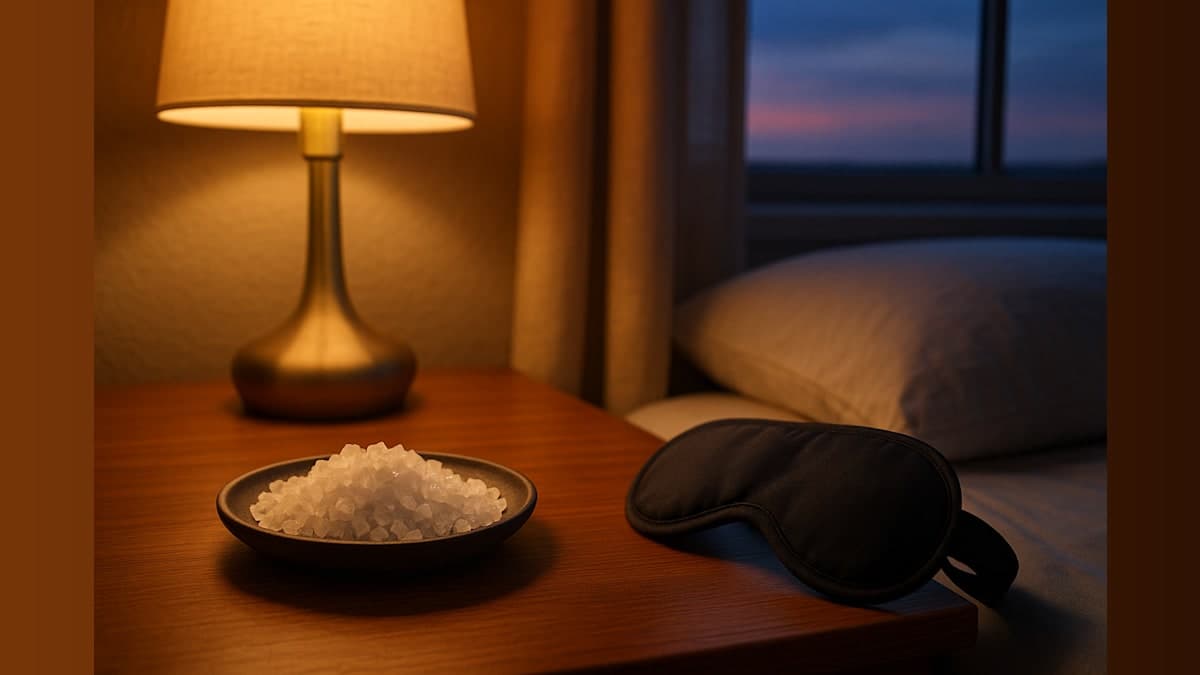
A viral wellness trend promoting the practice of standing on salt before bedtime has gained significant traction on social media, with proponents claiming the technique offers benefits ranging from stress reduction to improved sleep quality. However, medical experts are urging caution, stating that the purported health claims lack scientific foundation.
The practice, often referred to as salt grounding, involves pouring Epsom salt onto a surface and standing barefoot on the crystals before sleep. Wellness TikTok user Tammy Weatherhead has popularized the technique, claiming in videos that the practice not only exfoliates feet but reduces inflammation and shifts the nervous system into rest mode by curbing cortisol and spiking serotonin levels.
"If you are not standing on salt before bed, you are missing out," Weatherhead states in her viral content, adding that the experience "feels insane in the best way." Other social media users have echoed these sentiments, with some describing the practice as an ancient energetic cleaning method that helps relieve anxiety and reset the body's systems.
Despite the enthusiastic testimonials circulating online, medical professionals are expressing skepticism about the claimed benefits. Internist Dr. Yoshua Quinones advised taking the information with a grain of salt, telling the New York Post that no solid scientific evidence exists demonstrating that standing on Epsom salt can increase serotonin levels or lower cortisol levels.
While Quinones acknowledged that the practice can effectively exfoliate skin, he emphasized that any calming effects likely stem from the sensory experience and relaxation ritual itself rather than from a chemical reaction occurring in the body. The sensation may be soothing and promote relaxation and mindfulness, helping some individuals unwind before bedtime, but this represents a psychological rather than physiological response.
Furthermore, Quinones cautioned that the technique is not appropriate for everyone. Individuals with cuts, wounds, cracked skin, diabetic foot conditions, or neuropathy should avoid the practice, as it can cause irritation or discomfort.
Board-certified sleep physician Dr. Saema Tahir offered an even more critical assessment, telling the New York Post that no evidence supports the claim that standing on salt calms the nervous system. In fact, scientific research suggests the opposite may be true. High salt exposure activates the sympathetic nervous system, raising heart rate, blood pressure, and cortisol levels while promoting inflammation rather than reducing it, according to Tahir.
A psychiatrist speaking to the New York Post explained that while some validity may exist regarding the mental health benefits of sensory grounding practices, the specific claims about salt's effects on brain chemistry are wildly inflated. The salt itself does not alter the nervous system through the skin. However, the acts of standing still, focusing on unique textures under the feet, and slowing down before bed represent classic sensory grounding exercises that may provide genuine relaxation benefits.
The psychiatrist noted that serotonin is produced in the gut and brain, while cortisol is managed by the adrenal glands. Zero clinical evidence exists that localized pressure on dry salt crystals commands the brain or endocrine system to alter these chemicals. Any actual drop in cortisol would result from the general relaxation response rather than a magical chemical reaction with the salt.
The foot contains a dense concentration of nerve endings, and stimulating them through texture can promote microcirculation and potentially shift the nervous system from fight-or-flight mode to rest-and-digest mode. However, the same physiological shift can be achieved through alternative methods such as walking barefoot on grass, stepping on smooth pebbles, or practicing deep breathing exercises.
For individuals seeking genuine therapeutic benefits from salt for their feet, medical professionals recommend a different approach. A warm Epsom salt soak offers vastly superior results, as the warm water dilates blood vessels to improve circulation, softens the skin for actual exfoliation, and allows the muscles in the feet to truly relax.
The salt grounding trend represents the latest in a series of viral wellness practices that have gained popularity on social media platforms despite limited scientific validation. While the practice appears relatively harmless for most individuals, medical experts emphasize the importance of distinguishing between genuine therapeutic interventions and rituals that may provide primarily placebo or psychological benefits. Those considering incorporating salt grounding into their bedtime routine should consult with healthcare providers, particularly if they have existing foot conditions or health concerns.