
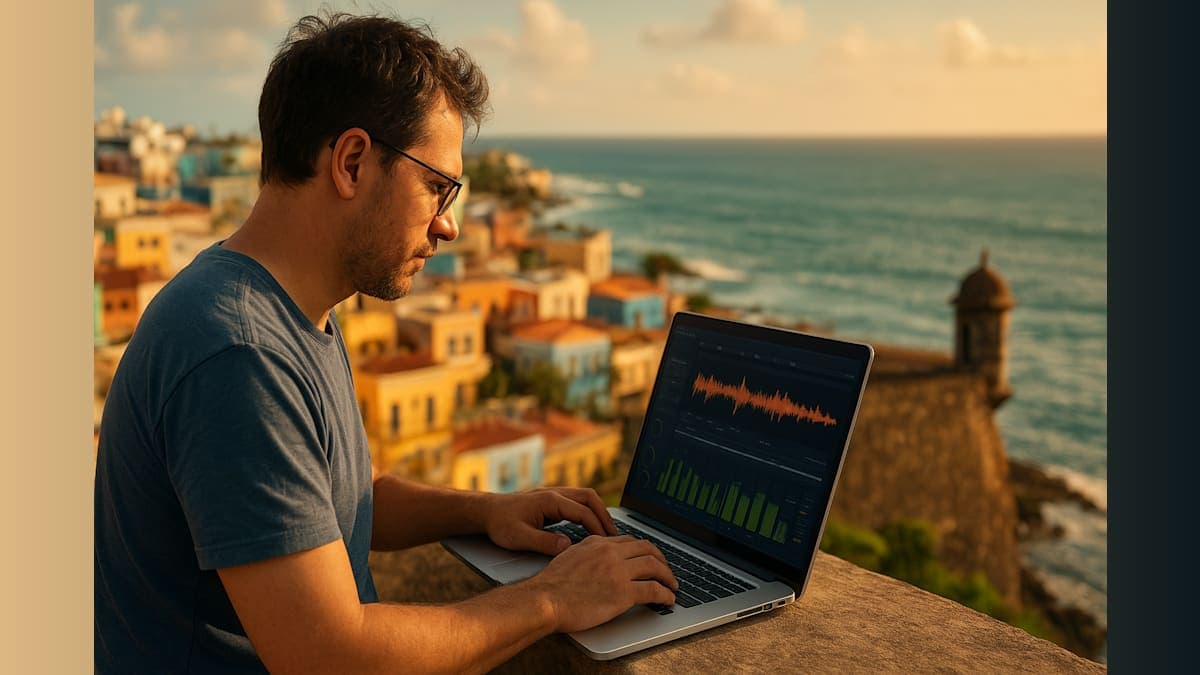
The man behind one of social media's most unexpected viral sensations insists he is not a musician at all. William Stiteler, who operates the Saxboy Billy account across TikTok and Instagram, created the artificial intelligence-generated track 'First Time in San Juan' as nothing more than a humorous addition to his travel content. The song has since exploded into a cultural phenomenon, accumulating over 1.6 million streams on Spotify and climbing to number six on the iTunes Chart this week.
In a candid interview, Stiteler made his position clear regarding his unexpected success. "I'm not a musician, baby. I'm a slob," he stated. "I don't claim this to be music." The creator emphasized that while he writes all the lyrics himself, the songs were never intended as serious musical endeavors. Rather, they served as comedic elements designed to enhance his travel videos with what he describes as cheesy 1980s sitcom theme music mixed with yacht rock vibes.
Stiteler has been utilizing the artificial intelligence music platform Suno for nearly two years to generate these campy, catchy compositions. His approach remained casual and non-commercial until 'First Time in San Juan' achieved viral status. The creator had deliberately avoided placing his songs on streaming platforms like Spotify, viewing them as unserious creative exercises rather than legitimate musical releases.
The turning point came when British music distributors approached Stiteler following the song's explosion in popularity. Their message was pragmatic and forward-looking. "Mate, you knew it was coming," they told him, suggesting that the artificial intelligence music wave represented an inevitable shift in the industry. This conversation prompted Stiteler to reconsider his stance on commercial distribution.
The social media response to 'First Time in San Juan' has been extraordinary. Influencers and celebrities alike have posted lip-sync videos featuring the track, with country music star Luke Combs delivering what many consider the most significant endorsement when he performed his own rendition. The boy band O-Town also joined the trend, posting their own lip-sync video to the song.
Looking toward future possibilities, Stiteler expressed openness to collaborating with actual musicians, particularly boy bands. The O-Town video appears to have sparked his imagination regarding potential partnerships that could bridge the gap between artificial intelligence-generated content and traditional musical performance.
Despite achieving remarkable commercial success and widespread cultural penetration, Stiteler reports a surprising lack of industry interest. According to the creator, only one person from the music industry has reached out since the song went viral. That individual allegedly attempted to obtain Stiteler's artificial intelligence prompt rather than discuss legitimate business opportunities, an ironic footnote to a story already filled with unexpected developments.
The success of 'First Time in San Juan' raises broader questions about the intersection of artificial intelligence technology and creative expression. Stiteler's journey from casual content creator to accidental chart-topper illustrates how rapidly the landscape of music creation and distribution continues to evolve. His insistence that he remains "not a musician" despite producing a legitimate hit suggests that traditional definitions of musicianship may require reconsideration in an era where technology democratizes creative output.
The Puerto Rico-themed track continues to generate engagement across social media platforms, with new lip-sync videos appearing daily. Whether Stiteler embraces his role as an accidental musician or maintains his position as a self-described slob who stumbled into viral success, 'First Time in San Juan' has secured its place in the ongoing conversation about artificial intelligence's role in creative industries.