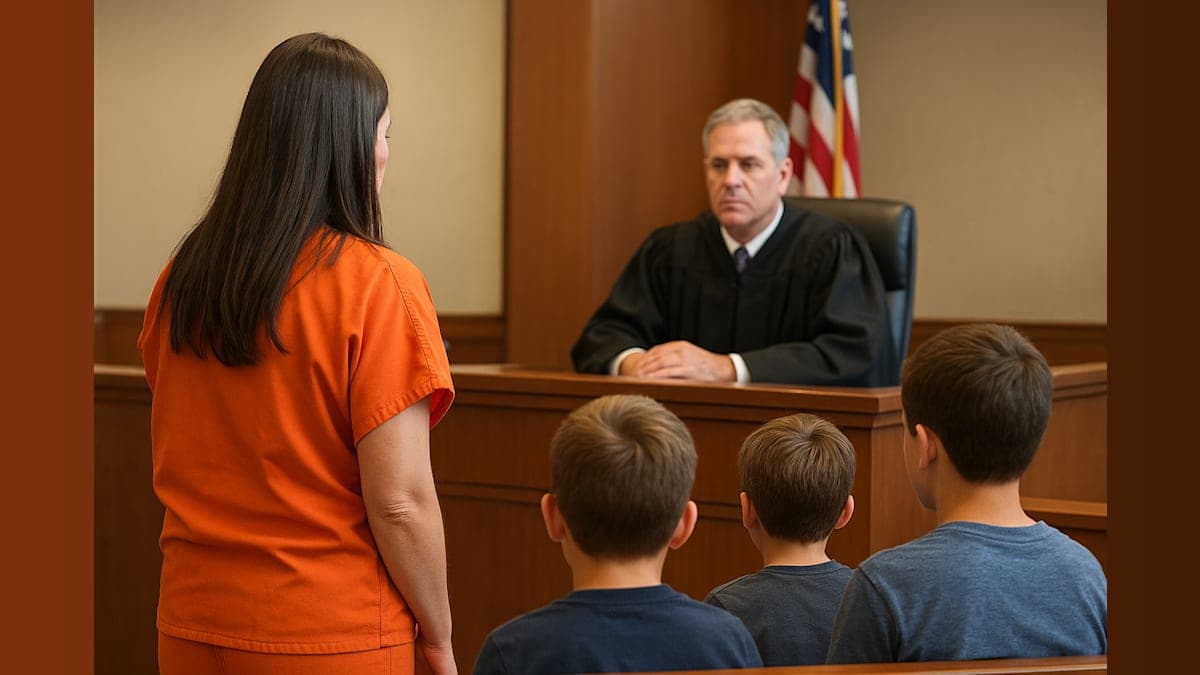
A Utah courtroom witnessed a disturbing moment Thursday as Kouri Richins, a mother and children's book author convicted of murdering her husband, offered parting words to the three sons she shares with the man she killed. Standing before the judge, Richins told her children to 'be like your dad' before receiving a sentence of life in prison without the possibility of parole.
The sentencing concludes a case that has gripped Utah since March 2022, when Richins allegedly poisoned her husband's drink with five times the lethal dose of fentanyl. A jury found her guilty of aggravated murder, marking the end of a prosecution that revealed a calculated pattern of violence and deception.
The conviction encompasses multiple charges beyond the murder itself. Prosecutors successfully argued that Richins had attempted to kill her husband once before on Valentine's Day 2022, allegedly using a fentanyl-laced sandwich. The jury also found her guilty of insurance fraud and forgery related to his life insurance policy, painting a picture of premeditated financial gain alongside the homicide.
During the sentencing hearing, the emotional toll on the victim's family became evident. The boys' paternal grandfather addressed the court, advocating for the maximum sentence. He told the judge that Richins deserved life without parole so his grandsons would 'never have to live with the fear that the person responsible for taking their father could ever harm them again.'
The prosecution presented evidence suggesting a motive rooted in infidelity and escape. According to prosecutors, Richins was planning to leave her husband for another man when she committed the murder. The timing of the attempted Valentine's Day poisoning, followed by the successful March killing, suggested a deliberate escalation when the initial attempt failed.
The case carries particular irony given Richins' public persona as a children's book author. The contrast between her role as a creator of content for young readers and her actions as a convicted murderer underscores the shocking nature of the crimes. Her advice to her sons during sentencing—to emulate the father she killed—adds another layer of complexity to an already disturbing narrative.
The life sentence without parole ensures that Richins will spend the remainder of her days in prison, unable to influence or contact her children as they grow up without either parent. The three boys now face the dual trauma of losing their father to violence and their mother to incarceration, a burden that will shape their lives for years to come.
This case serves as a stark reminder of the devastating impact of domestic violence and the lengths to which some individuals will go to escape their circumstances. The use of fentanyl, a powerful synthetic opioid responsible for countless overdose deaths across the nation, as a murder weapon also highlights the accessibility and danger of such substances in communities throughout Utah and beyond.