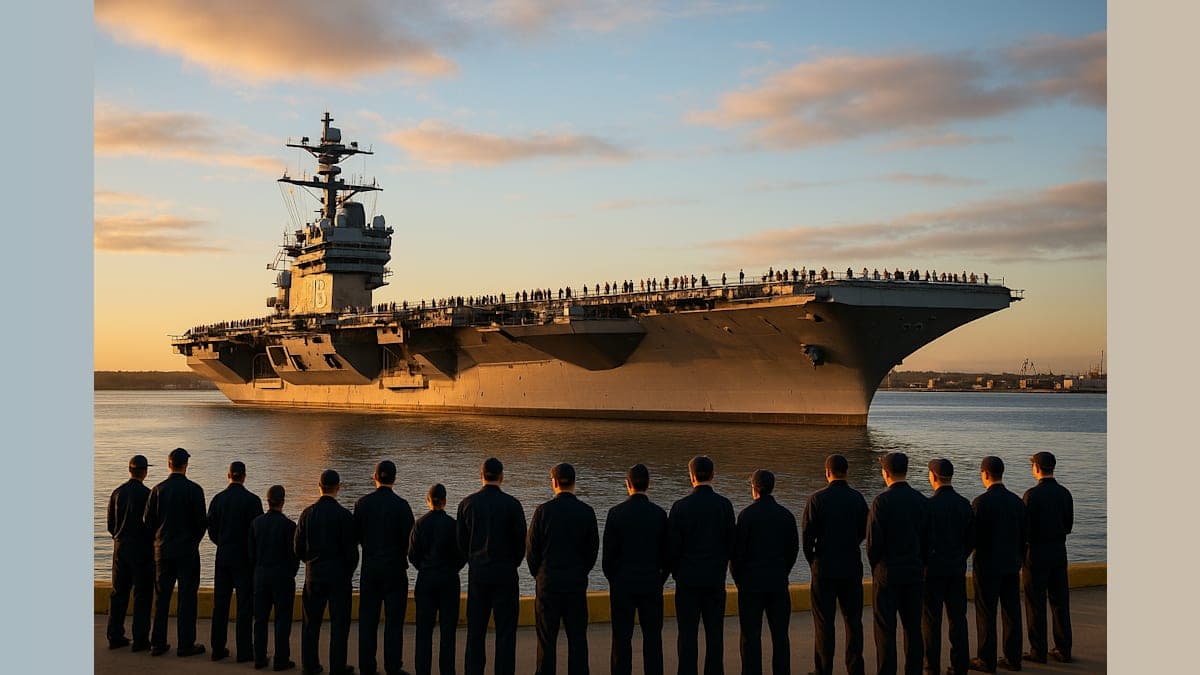
After an extended deployment lasting nearly a year, the USS Ford has returned to its home port, marking the end of a challenging mission for the crew of the nation's most expensive aircraft carrier.
The homecoming brings relief not only to the sailors who have been at sea for an extended period, but also provides an opportunity to address significant maintenance issues that have plagued the $13 billion vessel during its deployment. Chief among these concerns are plumbing problems that could not be fully resolved while the carrier remained operational at sea.
The USS Ford represents the lead ship of the Navy's newest class of aircraft carriers, incorporating advanced technologies and systems designed to improve operational efficiency. However, the vessel has faced various technical challenges since its commissioning, and the plumbing issues discovered during this deployment add to the list of systems requiring attention.
With the carrier now docked at its home port, maintenance crews will have full access to the ship's infrastructure to conduct comprehensive repairs. The complexity of plumbing systems aboard a modern aircraft carrier, which must serve thousands of personnel in a confined space, makes such issues particularly challenging to address while at sea.
The crew's return also means sailors will finally receive well-deserved leave time after their extended deployment. Long deployments place significant strain on military families and personnel, making homecoming periods crucial for rest, recuperation, and reconnection with loved ones.
The timing of the repairs will be critical as the Navy works to maintain its carrier fleet's operational readiness. Aircraft carriers serve as the centerpiece of naval strike groups and represent a significant projection of American military power globally. Any extended maintenance period must be balanced against operational requirements and deployment schedules for other vessels in the fleet.