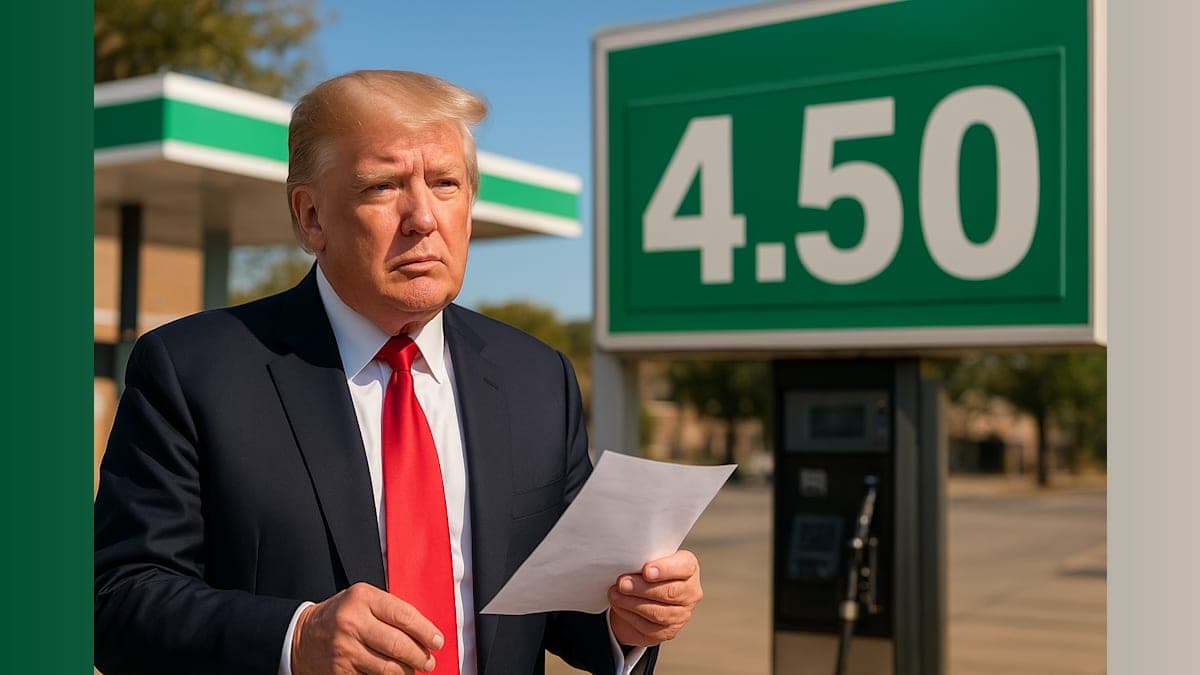
President Trump announced Monday, May 11, that he is seeking a temporary suspension of the federal gas tax as fuel prices continue to surge amid ongoing military conflict in Iran. The proposal represents a significant policy response to economic pressures facing American consumers at the pump.
Speaking to CBS News Monday morning, the president indicated he wants the tax suspended "for a period of time" and would seek its reinstatement "when gas goes down." When pressed by reporters in the Oval Office later that day regarding the duration of the proposed suspension, Trump responded, "'Til it's appropriate."
The federal gas tax currently stands at 18.4 cents per gallon for regular gasoline and 24.4 cents per gallon for diesel fuel. Any suspension would require congressional approval, setting up a potential legislative battle as lawmakers weigh the economic relief against the loss of revenue that funds highway infrastructure and transportation projects.
Dramatic Price Increases Strain Household Budgets
The economic impact on consumers has been substantial. According to AAA, regular gasoline averaged just under $3 per gallon before U.S. military operations against Iran commenced. Current prices have soared by more than 50 percent to $4.52 per gallon nationally. In some markets, including Los Angeles, prices have exceeded $6 per gallon, as evidenced by a Mobil station photographed on May 4.
The price surge stems directly from disruptions in global oil supply chains. Blockades imposed during the Iran war have effectively stalled the passage of oil tankers through the Strait of Hormuz, a critical chokepoint through which approximately one-fifth of the world's crude oil typically travels. The 11-week conflict has created sustained pressure on energy markets with no immediate resolution in sight.
Political Implications and Public Sentiment
The gas tax suspension proposal represents an implicit acknowledgment from the White House of the political and economic challenges posed by elevated fuel costs. Recent polling data from NPR/PBS News/Marist reveals the breadth of public concern: eight in ten Americans report that gas prices are straining their household budgets. This sentiment cuts across partisan lines, with overwhelming majorities of Democrats, independents, and Republicans expressing financial stress.
The political ramifications are equally significant. The same poll found that 63 percent of Americans blame Trump "a great deal" or "a good amount" for the higher gas prices. This includes more than six in ten independents and nearly one-third of Republicans, suggesting vulnerability even within the president's own political base.
Congressional Action Required
The path forward for the gas tax suspension remains uncertain. Congress must pass legislation to implement the change, and lawmakers will need to address how to replace the lost revenue that funds critical transportation infrastructure. The Highway Trust Fund, which relies heavily on gas tax receipts, finances road construction and maintenance projects nationwide.
As the Iran conflict continues with no clear timeline for resolution, the pressure on both fuel prices and political leaders is likely to intensify. The administration's proposal signals recognition that economic relief measures may be necessary to address the cascading effects of the military engagement on American households. Whether Congress will act swiftly on the request, and what conditions might be attached to any suspension, will determine how quickly consumers might see relief at the pump.