President Donald Trump and the Islamic Republic of Iran have reached an agreement designed to conclude more than three months of warfare and restore access to one of the world's most critical oil shipping routes. The announcement, made Sunday evening, represents a significant diplomatic breakthrough in a conflict that has disrupted global energy markets and heightened tensions across the Middle East.
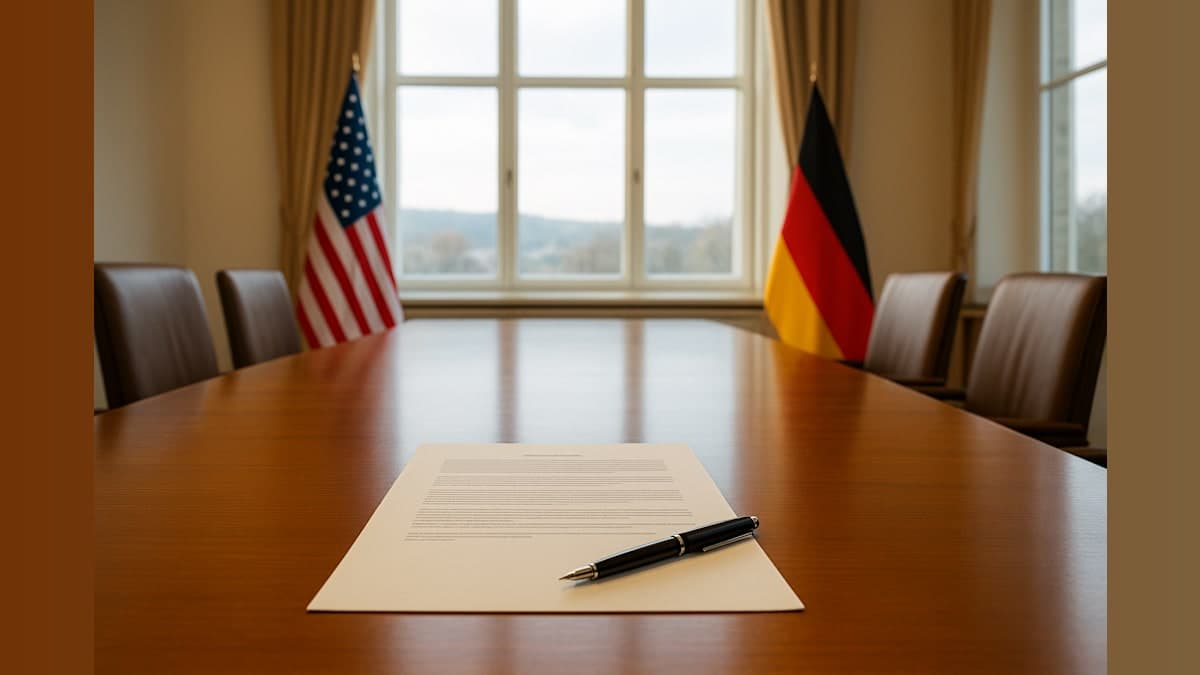
The memorandum of understanding is scheduled for formal signing on Friday, June 19, 2026, in Switzerland. The ceremony will mark the culmination of what Iran's Supreme National Security Council described as a difficult and intensive period of negotiations lasting several months.
"The Deal with the Islamic Republic of Iran is now complete. Congratulations to all!" Trump wrote on social media Sunday evening. In a subsequent post addressing the maritime blockade that has strangled global oil supplies, he declared: "Ships of the World, start your engines. Let the oil flow!"
The agreement addresses several immediate concerns that have defined the conflict since fighting erupted on February 28, 2026. Under the terms, the United States and Iran will cease sporadic attacks that have continued despite an earlier ceasefire. Both nations will lift their dueling blockades of the Strait of Hormuz, the narrow waterway through which approximately 20 percent of the world's oil passes. Iran has effectively controlled the strait since shortly after the war began, while the United States responded by blockading Iranian ports.
The deal also calls for an end to fighting between Israel and Hezbollah in Lebanon, which Iran made a condition for reaching agreement with the United States. However, implementation of this provision faces immediate challenges. Israeli Defense Minister Israel Katz stated Monday that his country would maintain troops in southern Lebanon indefinitely. Israel and Hezbollah have continued daily combat operations despite an official ceasefire, with Hezbollah firing drones into northern Israel on Sunday and Israel responding with a deadly airstrike on a Hezbollah stronghold in the southern suburbs of Beirut.
Trump criticized the Israeli military action, writing on Truth Social: "This morning's attack on Beirut should not have happened, particularly on a special day when we are so close to a peace deal with Iran." The president made this statement hours before announcing the agreement. While Trump and Israeli Prime Minister Benjamin Netanyahu communicate frequently by phone, they have disagreed on several occasions recently, and Israel was not directly involved in the negotiations with Iran.
Critical issues remain unresolved and will require additional negotiations during a 60-day extension of the current ceasefire. Most notably, the fate of Iran's nuclear program has been deferred. Trump launched the February military campaign citing Iran's nuclear activities as the primary justification, yet the initial agreement does not address this central concern. In an interview with The New York Times, Trump indicated Iran would be permitted low-level nuclear enrichment, a significant departure from his previous demands for complete dismantling of Iranian nuclear capabilities.
Iran is seeking the release of billions of dollars in frozen assets held abroad and the lifting of United States and international sanctions. These economic matters will be addressed in the upcoming round of talks. The consequences of failing to reach agreement within the 60-day window remain unclear. Trump told The New York Times that if negotiations fail, he could resume military attacks on Iran or position the United States as "the guardian of the Middle East" in exchange for 20 percent of the region's revenues.
The United States maintains that Iran has laid mines in the Strait of Hormuz. Trump stated Sunday that the waterway would be opened for mine removal operations following the formal signing on Friday.
Pakistan's Prime Minister Shehbaz Sharif, who served as a key mediator in the negotiations alongside Qatar, confirmed the Friday signing ceremony in Switzerland. Iran Deputy Foreign Minister Kazem Gharibabadi, quoted by Iranian state media in a post on Telegram, characterized the agreement as a victory for Iran.
International leaders responded positively to the announcement. Qatari Prime Minister Sheikh Mohammed bin Abdulrahman bin Jassim Al Thani, who helped mediate the deal, praised the breakthrough and thanked Pakistan while urging "positive and constructive" negotiations ahead. European leaders from the United Kingdom, France, Germany, and Italy welcomed the agreement and called for swift implementation, urgent reopening of the Strait of Hormuz, and reaffirmation of support for Lebanon's sovereignty and stability.
French President Emmanuel Macron, speaking in a video on Instagram as G7 leaders prepare to meet in Evian, indicated that discussions would focus on the long-term reopening of the Strait of Hormuz and the broader diplomatic opportunities created by the agreement. United Nations Secretary-General António Guterres called the deal a "critical step," with his spokesperson Stéphane Dujarric expressing hope that parties would build on the momentum and "redouble their efforts towards a final resolution of the conflict."
The agreement represents a dramatic shift in a conflict that has disrupted global energy supplies and raised concerns about wider regional instability. Whether the deal can achieve its ambitious goals of ending the war permanently and resolving the nuclear question will depend on the success of negotiations over the coming two months.