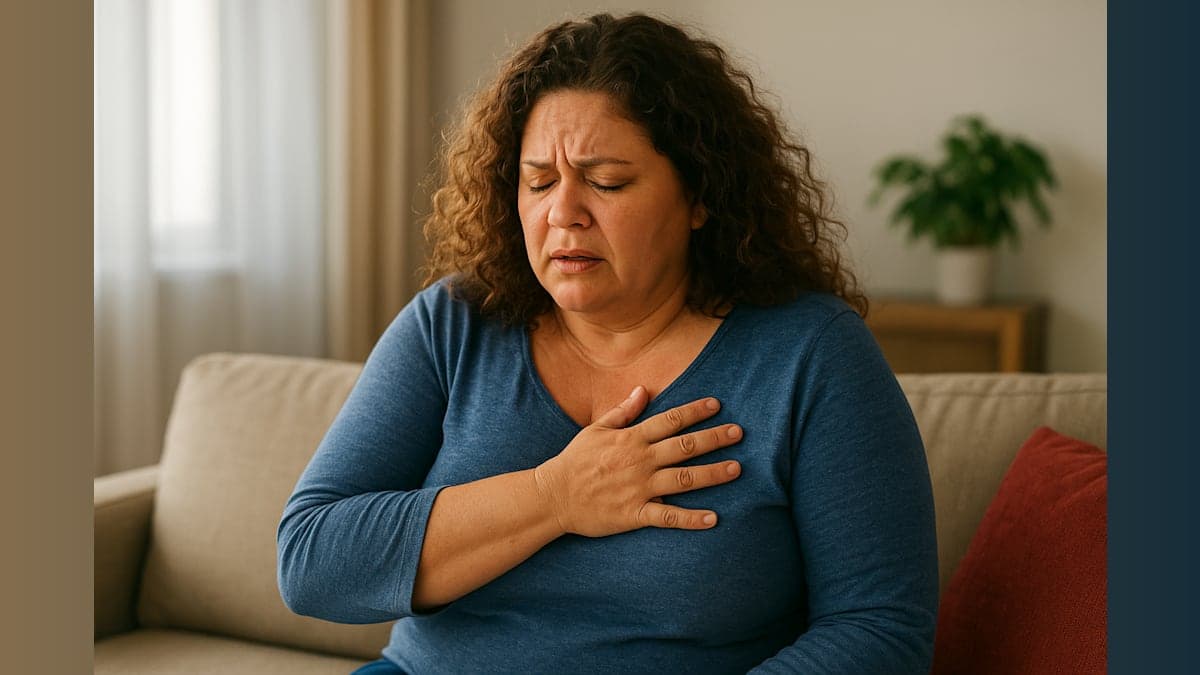
Actress Aida Turturro has opened up about a harrowing medical emergency that nearly claimed her life, revealing she failed to recognize the warning signs of a heart attack that required emergency surgery.
During a Tuesday, June 2, appearance on the "MeSsy" podcast hosted by Jamie-Lynn Sigler and Christina Applegate, the 63-year-old actress detailed the frightening experience that led to an emergency quadruple bypass surgery. Turturro, who portrayed Janice Soprano on the acclaimed HBO drama series The Sopranos, explained how she dismissed potentially fatal symptoms as a less serious condition.
"I was having chest pains for a while, but a hiatal hernia can imitate it [a heart attack]," Turturro said on the podcast. "My friend's like, 'Should we call the ambulance?' and I'm like, 'Nah, I'm fine.' I get in my car, I walk to my house … my cousin gave me his doctor's number, his doctor answered and he's like … 'It sounds like you might need to go to a cardiologist.' I go to the doctor, [an] amazing doctor, and he's like, 'Yeah, you had a heart attack.'"
The diagnosis revealed a critical situation. Medical professionals informed Turturro that 88 to 90 percent of her arteries were clogged before she was rushed to emergency surgery. The severity of her condition underscored how close she came to a fatal outcome.
"I could've died, I should've died then, but I didn't," the actress stated. She attributed her initial misdiagnosis to her diabetes, which she believed was causing symptoms consistent with a hiatal hernia. According to Mayo Clinic, a hiatal hernia occurs when the upper part of the stomach bulges through the diaphragm, the large muscle separating the abdomen and chest.
Turturro emphasized the connection between her pre-existing condition and cardiovascular disease. "I was lucky it wasn't my time … diabetes is the number one cause of heart disease," she explained during the podcast appearance.
The experience has fundamentally changed how the actress approaches her health and wellness. She now advocates for prioritizing self-care, not only for personal benefit but for the ability to support loved ones.
"I'm blessed with beautiful people in my life. It's all in your brain. I learned my lessons, you have to take care of yourself," Turturro said. "We can always do better but it's really about, don't do nothing. You can't help your kids, you can't help your family if you don't do you. Get everybody involved [because] this is a priority. This is our life, we're doing this together."
Turturro's story echoes similar experiences from other celebrities who have ignored or misidentified heart attack symptoms. Earlier this year, comedian Drew Carey recounted his own 2001 heart attack, which he initially dismissed while attempting to lose weight before taping The Drew Carey Show.
During a March 4 appearance on Ted Danson's "Where Everybody Knows Your Name" podcast, the 67-year-old Carey described experiencing elevated heart rate and shoulder numbness while jogging. Despite recognizing these as potential heart attack symptoms, he continued his activities and even went to dinner. The following day on set, additional symptoms prompted hospitalization and a coronary angioplasty procedure.
Following his medical emergency, Carey committed to significant lifestyle changes, ultimately losing 80 pounds through diet and exercise. His transformation demonstrates the potential for recovery and improved health following cardiovascular events.
Both accounts serve as important reminders of the dangers of dismissing cardiac symptoms and the critical importance of seeking immediate medical attention when experiencing chest pain, numbness, or other warning signs of heart attack. Medical professionals consistently emphasize that prompt treatment significantly improves survival rates and long-term outcomes for cardiac patients.

About the Author
Ava Hart
Ava Hart is a pop culture junkie and loves to share what's happening in Hollywood and what trends are taking the world by storm.