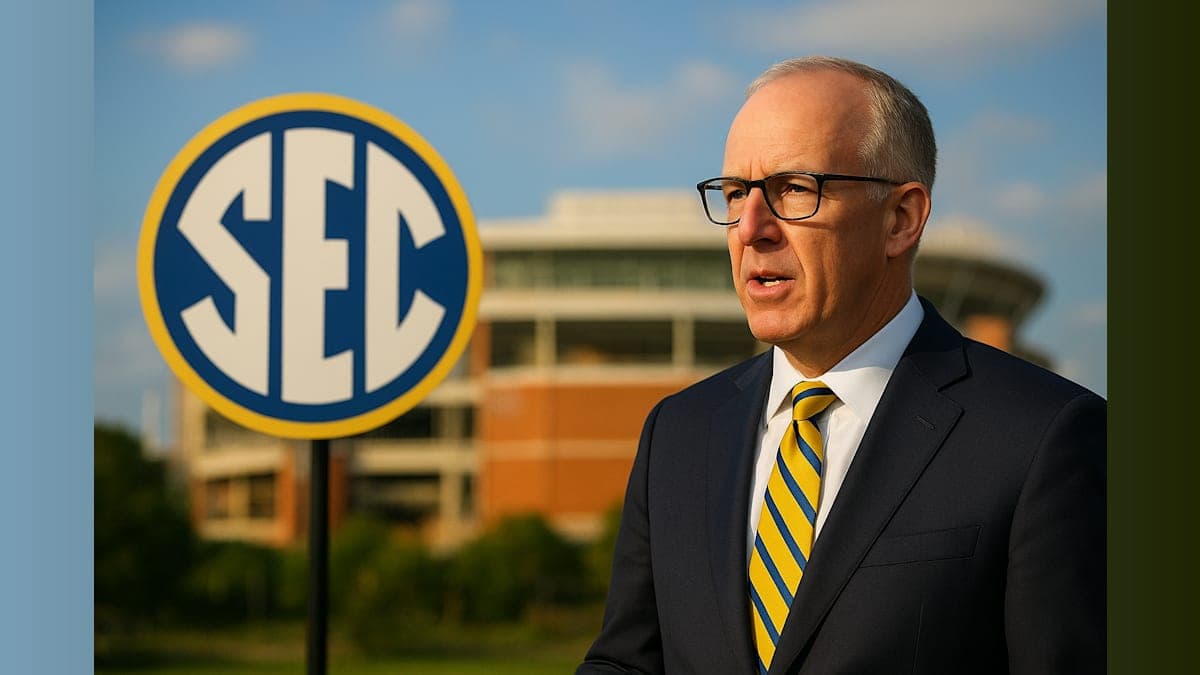
SEC commissioner Greg Sankey has doubled down on his conference's supremacy claims, asserting the league "stands alone" even as mounting evidence suggests the Big Ten has seized control of college football's highest level.
The bold declaration comes against a backdrop of undeniable Big Ten dominance in recent postseason play. The conference has captured the past three national championships while compiling a perfect 4-0 record against SEC opponents in College Football Playoff matchups over the same period.
Sankey's comments underscore the intensifying rivalry between college football's two most powerful conferences. The SEC has long positioned itself as the sport's premier league, built on decades of recruiting dominance, television revenue, and championship pedigree. However, the Big Ten's recent playoff success has challenged that narrative in the most definitive way possible: on the field when championships are decided.
The head-to-head playoff record proves particularly damaging to SEC claims of superiority. When the conferences' best teams have met in elimination games with national title implications, Big Ten programs have prevailed in every instance. This streak represents more than statistical anomaly; it reflects preparation, coaching, and execution at the highest competitive level.
Conference commissioners serve as chief advocates for their leagues, responsible for negotiating television contracts, managing expansion, and promoting their brands to recruits, fans, and media. Sankey's defense of SEC excellence fits within this role, even as objective measures suggest the competitive balance has shifted northward.
The debate carries significant implications beyond bragging rights. Conference perception influences recruiting battles, media rights valuations, and playoff selection decisions. As the College Football Playoff expands, the relative strength of conferences will shape seeding, matchups, and ultimately which programs compete for championships.
Both conferences have undergone dramatic expansion in recent years, adding marquee programs and reshaping the sport's geographic and competitive landscape. The SEC and Big Ten now function as super-conferences, wielding unprecedented influence over college football's future direction.
Whether Sankey's confidence proves justified or misplaced will ultimately be determined on the field. The upcoming seasons will test whether the SEC can reclaim its championship form or whether the Big Ten's recent dominance represents a fundamental power shift in college football's hierarchy.