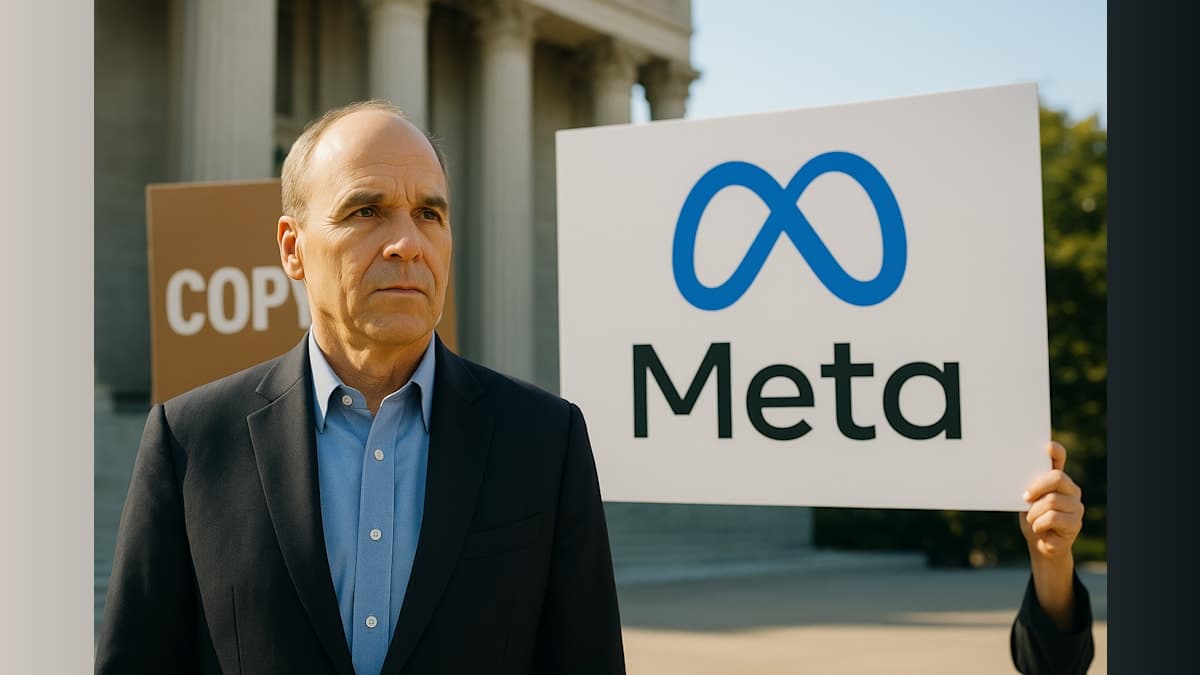
The legal world collided with Silicon Valley on Tuesday as bestselling author Scott Turow joined forces with five major publishing houses to file a class-action lawsuit against Meta and its Chief Executive Officer, Mark Zuckerberg. The complaint, filed in the United States District Court for the Southern District of New York, accuses the technology giant of systematically stealing millions of copyrighted books and journal articles to train its generative artificial intelligence models.
The plaintiffs—Hachette, Macmillan, McGraw Hill, Elsevier, Cengage, and Turow's company S.C.R.I.B.E—allege that Meta knowingly copied copyrighted materials from notorious pirate websites such as LibGen and Anna's Archive to train various iterations of its Llama language model. The complaint further alleges that Zuckerberg personally authorized this strategy, willfully bypassing legal licensing markets to gain an advantage in what the lawsuit describes as the "AI arms race."
"All Americans should understand that the bold future promised by A.I., has been, to paraphrase the investigative writer Alex Reisner, created with stolen words," Turow stated. "It is all the more shameful that these violations of the law were undertaken by one of the richest corporations in the world."
The complaint reveals that Meta "briefly considered licensing deals with major publishers" but changed course in April 2023. According to the lawsuit, the question of whether to license or pirate content was "escalated" to Zuckerberg himself. Following this escalation, Meta's business development team allegedly received verbal instructions to cease licensing efforts. The complaint quotes a Meta employee as saying, "If we license once [sic] single book, we won't be able to lean into the fair use strategy."
Authors Guild Chief Executive Officer Mary Rasenberger characterized the alleged infringement in stark terms. "It's the most flagrant copyright breach in history," she stated. "And these voracious tech companies need to be held accountable."
The lawsuit cites numerous specific works allegedly stolen by Meta to feed Llama. Turow alleges Meta infringed several of his well-known books, including the 1987 legal thriller Presumed Innocent. Other cited works include Douglas Preston's Impact, Peter Brown's The Wild Robot, The Fifth Season by N.K. Jemisin, and Lemony Snicket's Who Could That Be at This Hour? The list also includes research and academic titles.
The potential scope of this class action is substantial. According to the complaint, the class represented by Turow could potentially include "all legal or beneficial owners of registered copyrights, in whole or in part, for any book possessing an International Standard Book Number (ISBN) or journal article possessing a Digital Object Identifier (DOI) or International Standard Serial Number (ISSN)." While some books do not have ISBN numbers, the vast majority do, suggesting thousands of authors could be affected.
The plaintiffs are seeking statutory damages, a permanent injunction against Meta to stop further use of their works, and an order requiring the technology giant to destroy all infringing copies of copyrighted materials.
Meta has responded forcefully to the allegations. "AI is powering transformative innovations, productivity and creativity for individuals and companies, and courts have rightly found that training AI on copyrighted material can qualify as fair use," said Nkechi Nneji, a public affairs director for Meta. "We will fight this lawsuit aggressively."
This lawsuit represents the latest salvo in an ongoing legal battle between authors, publishers, and artificial intelligence companies. Authors and publishers have brought dozens of lawsuits against AI companies in recent years, many of which remain pending. The outcomes have been mixed, creating an uncertain legal landscape.
In September 2025, Anthropic paid a $1.5 billion settlement to authors to resolve a lawsuit brought by a group of literary plaintiffs. This settlement came after United States District Court judge William Alsup initially supported Anthropic's argument that the company's use of copyrighted books to train their AI model was acceptable. "The use of the books at issue to train Claude and its precursors was exceedingly transformative," Alsup said last June. However, the judge later ruled that Anthropic's use of millions of pirated books to build its models copied without obtaining the authors' consent or giving them compensation was not acceptable, leading to the settlement.
However, other cases could bolster technology companies' "fair use" defense. Last June, a federal judge dismissed a copyright infringement lawsuit from a different group of authors who accused Meta of stealing their works to train its models. "The Court has no choice but to grant summary judgment to Meta on the plaintiffs' claim that the company violated copyright law by training its models with their books," said United States District Court judge Vince Chhabria, finding that the plaintiffs did not present enough evidence to make the case that Meta's use of their copyrighted works was harmful.
The conflicting judicial opinions underscore the evolving nature of copyright law in the age of artificial intelligence. As generative AI technology continues to advance and reshape industries, courts are grappling with fundamental questions about intellectual property rights, fair use doctrine, and the balance between innovation and creator compensation. The outcome of this lawsuit could have far-reaching implications for both the publishing industry and the future development of artificial intelligence technology.