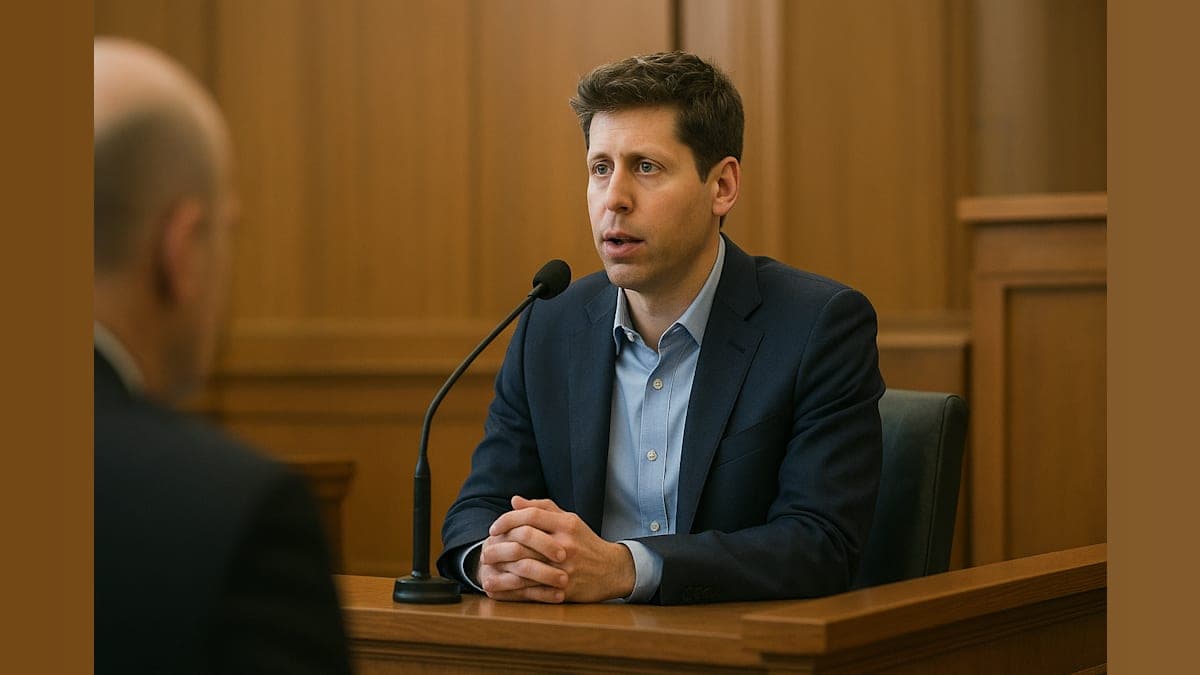
The legal confrontation between OpenAI and billionaire entrepreneur Elon Musk reached a critical juncture on Wednesday as Sam Altman, the company's chief executive, provided testimony in defense of the artificial intelligence organization he leads.
The lawsuit, brought by Elon Musk against OpenAI, has drawn considerable attention within the technology sector and beyond. Musk, who was among the original co-founders of OpenAI before his departure, has raised questions about the direction and governance of the organization that has become synonymous with cutting-edge artificial intelligence development.
New York Times tech correspondent Mike Isaac provided analysis of Sam Altman's testimony, offering insight into the substance and implications of the proceedings. The case represents a significant moment for OpenAI, which has emerged as a dominant force in artificial intelligence following the public release of its ChatGPT platform.
The dispute between Musk and OpenAI underscores broader tensions within the artificial intelligence industry regarding corporate structure, mission alignment, and the balance between commercial interests and stated public benefit objectives. OpenAI was originally established as a nonprofit research organization before transitioning to a capped-profit model that has attracted substantial investment from major technology companies.
Sam Altman has been at the forefront of OpenAI's transformation into one of the most valuable and influential artificial intelligence companies in the world. His testimony provides a rare public forum for addressing the allegations and concerns raised by Musk, whose own ventures include competing artificial intelligence initiatives.
The outcome of this legal battle could have far-reaching implications for the governance and operational structure of artificial intelligence companies, particularly those that began with nonprofit or public benefit missions before pursuing commercial partnerships and revenue models. As artificial intelligence continues to advance rapidly and integrate into numerous aspects of society, questions about corporate accountability and mission fidelity have taken on heightened significance.
The proceedings continue to unfold as both parties present their arguments before the court. The technology industry and artificial intelligence community are closely monitoring developments in this case, which may establish important precedents for how transformative technology companies navigate the tension between innovation, profitability, and their founding principles.