
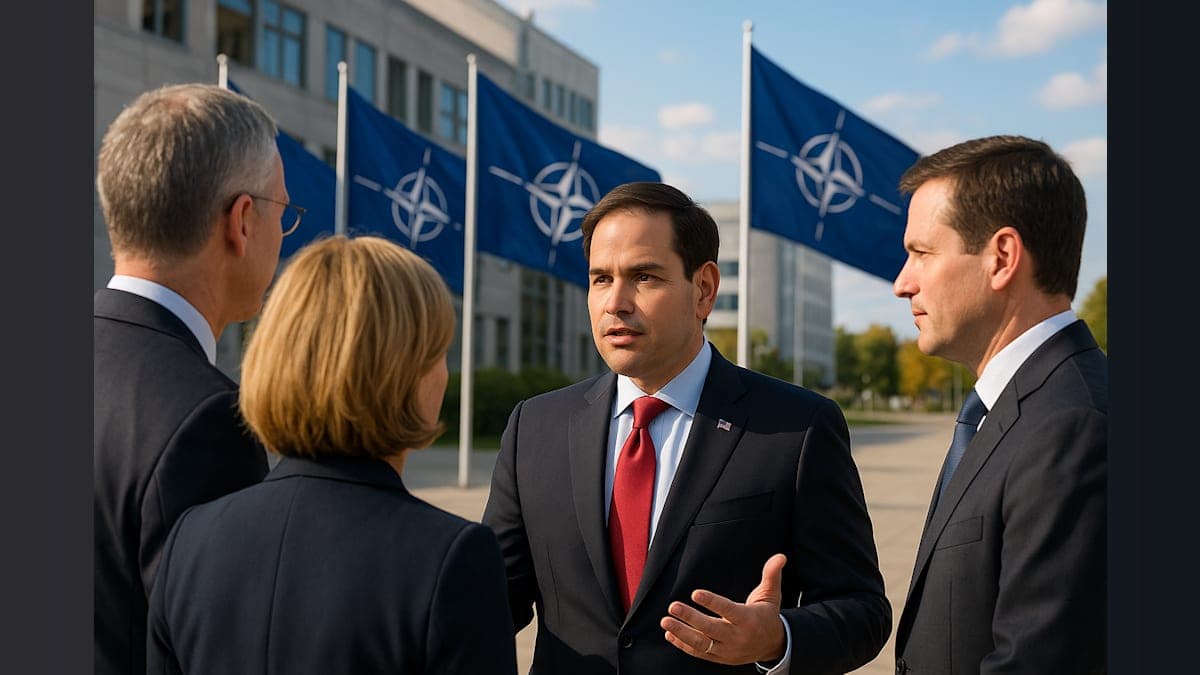
Secretary of State Marco Rubio is currently meeting with NATO allies as confusion mounts over changing plans for United States troop deployments across Europe, raising questions about the future of American military commitments to the transatlantic alliance.
The diplomatic engagement comes amid uncertainty regarding the scope and timeline of potential shifts in the American military footprint on the continent. Such deployments have served as a cornerstone of European security architecture since the end of World War II, providing both deterrence against potential adversaries and reassurance to allied nations.
Kristine Berzina, Senior Fellow at the non-partisan think tank The German Marshall Fund, has been analyzing the situation and its implications for NATO cohesion. Her expertise highlights the complexity of managing alliance expectations during periods of policy transition, particularly when clear communication regarding military posture remains elusive.
The uncertainty surrounding troop deployment plans carries significant implications for both strategic planning and alliance unity. European partners rely on predictable American military presence for defense planning, training exercises, and rapid response capabilities. Any substantial changes to deployment patterns require extensive coordination to maintain operational readiness and alliance credibility.
The meetings between Rubio and NATO counterparts represent an opportunity to clarify American intentions and address allied concerns. Effective alliance management depends on transparent communication regarding military commitments, particularly as European nations continue to increase their own defense spending and capabilities in response to evolving security challenges.
As these diplomatic discussions unfold, the outcome will likely shape not only the immediate military posture in Europe but also the broader trajectory of transatlantic security cooperation in the years ahead. The ability of alliance leadership to navigate this period of uncertainty may prove decisive in maintaining NATO unity and deterrence credibility.