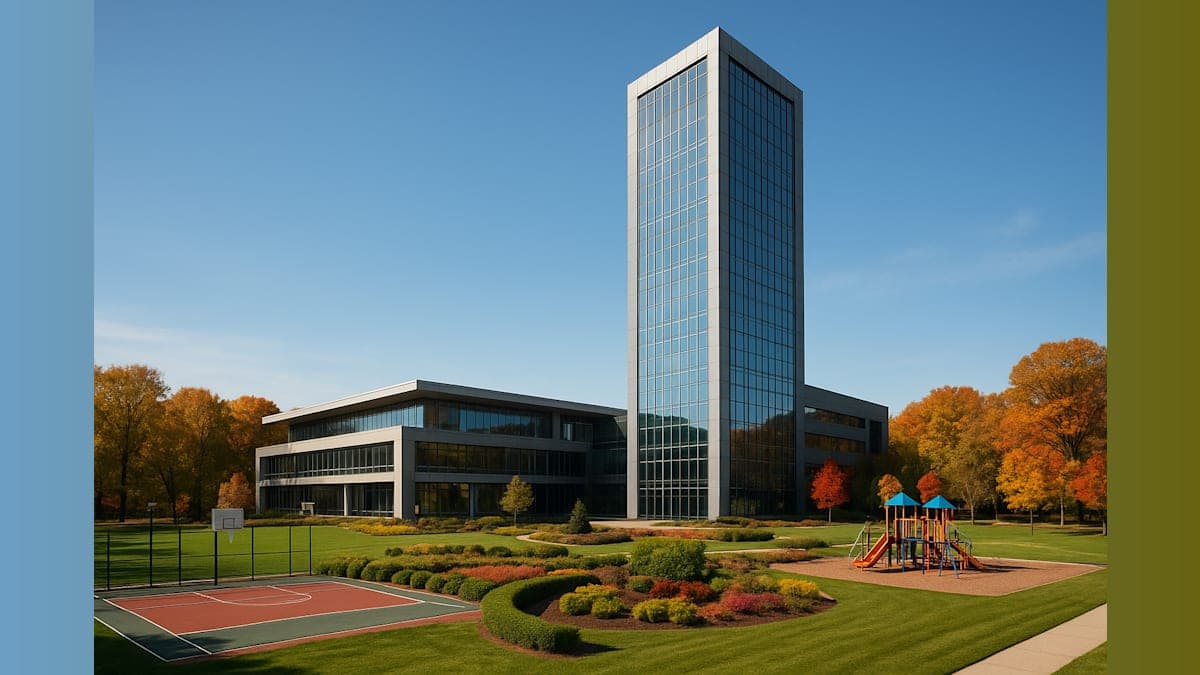
The Obama Presidential Center will be dedicated Thursday, June 18, 2026, in Chicago, marking the opening of a massive campus that diverges from the traditional presidential library model. The facility features an eight-story museum tower alongside gardens, playgrounds, and basketball courts, creating a community-focused space that extends beyond conventional archival functions.
The museum's narrative begins not with Barack Obama's presidency, but with the broader American story that made his election possible. Valerie Jarrett, CEO of the Obama Foundation, explained the deliberate structure of the first exhibit, called Toward a More Perfect Union.
"So when you walk in, it doesn't begin with President Obama's time in office because he said, I stand on a lot of shoulders of people who came before me," Jarrett told NPR. "It begins with the history of our country - the Declaration of Independence, the suffrage movement, slavery, Reconstruction, the Civil Rights Movement - all of the different ways in which ordinary people brought about the change that led to his presidency."
The museum dedicates substantial space to Obama's 2008 presidential campaign, including a collection of 440 campaign buttons. Among them are unofficial items reflecting local enthusiasm, such as a Wisconsin-themed "Brat Obama" button featuring a brat sausage. A documentary-style video recreates Election Night 2008, capturing the historic moment when millions of Americans celebrated the election of the nation's first Black president.
John Roberson, who heads operations for the center, described the emotional impact of revisiting that night. The exhibit includes Obama's words from his victory speech, a moment that continues to resonate with visitors.
A section called The People's House features a detailed model of the White House, with the East Wing still intact. The model preserves the building as it existed during Obama's tenure, before President Trump ordered the East Wing demolished last year to make way for a ballroom. Visitors can sit at a full-scale replica of the Oval Office, decorated exactly as Obama had it, complete with a BlackBerry in the Resolute Desk drawer.
The museum presents a timeline of administration accomplishments, including several initiatives since reversed by the Trump administration, such as the Paris climate accord and the Iran nuclear deal. Tina Tchen, executive vice president of programs for the Obama Foundation, acknowledged the challenge of presenting this history in the current political climate.
"The challenge that we're trying to express is representing a time when, you know, hope propelled, you know, an unlikely person to become president of the United States, but to also convey that hope is always with us," Tchen told NPR.
The Obama Presidential Center breaks with tradition by operating outside the National Archives presidential library system. Obama's papers and artifacts not on display at the museum are stored in Maryland rather than at the Chicago facility. This departure from established practice has drawn criticism from some historians and archivists.
Timothy Naftali, former director of the Nixon presidential library, expressed concern about the implications of this decision. "And I worry that we are going to have fewer and fewer professional nonpartisan spaces for national memory. And we need more of them, not fewer of them," Naftali told NPR.
Despite operating outside the traditional framework, museum organizers emphasize their commitment to balanced historical presentation. Tchen noted that the exhibits include administration failures, such as the unsuccessful effort to pass comprehensive immigration reform.
"We were very careful to be balanced, you know? And we wanted - you know, we had historians who advised us. President Obama himself was wanting always tell the contrary story," Tchen told NPR.
The center represents an early draft of the Obama legacy, shaped significantly by the former president himself. Beyond serving as a museum, the facility aims to inspire visitors to engage in civic action and community change, maintaining the themes of hope and grassroots activism that defined Obama's political career. Whether those messages resonate in the current political environment remains to be seen as the center opens its doors to the public.