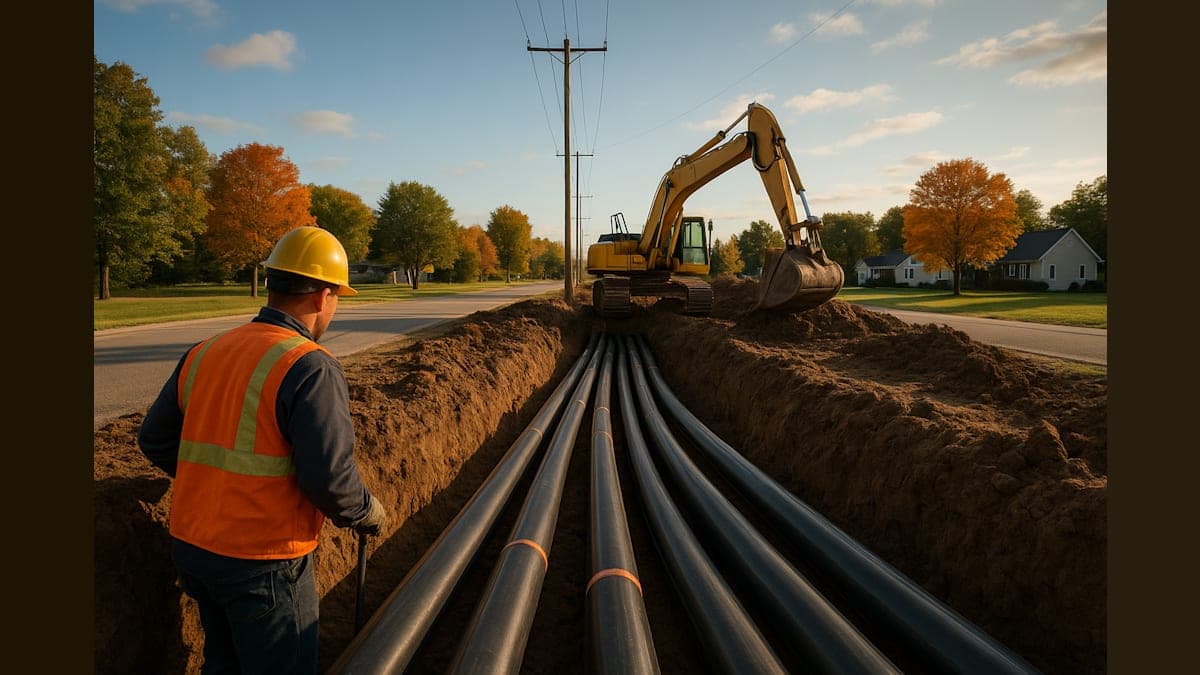
Power utilities in northern Michigan are undertaking efforts to bury electrical infrastructure underground, responding to a growing national challenge of weather-related power disruptions that have intensified as climate patterns shift across the United States.
The initiative comes as power outages continue to increase nationwide, driven by more severe weather events linked to climate change. Underground power lines demonstrate significantly greater reliability compared to traditional overhead systems, yet represent only approximately twenty percent of the nation's electrical distribution network.
The disparity between underground and overhead infrastructure reflects longstanding industry practices and investment patterns. While buried lines offer substantial advantages in terms of service continuity during adverse weather conditions, the majority of American electrical distribution continues to rely on pole-mounted systems vulnerable to environmental disruptions.
For northern Michigan communities, the transition to underground infrastructure represents a strategic response to regional weather patterns and reliability concerns. The area's utilities are positioning themselves among the growing number of service providers reconsidering traditional overhead distribution models in favor of more resilient underground alternatives.
The broader national context underscores the significance of these local efforts. As climate change continues to drive increasingly severe weather events, the reliability gap between underground and overhead power delivery systems has become more pronounced, prompting utilities across various regions to evaluate infrastructure modernization strategies.
The northern Michigan projects contribute to a gradual but meaningful shift in how American communities approach electrical infrastructure resilience. While the pace of conversion from overhead to underground systems remains measured, these regional initiatives demonstrate growing recognition of the reliability benefits associated with buried power lines in an era of changing climate conditions.