
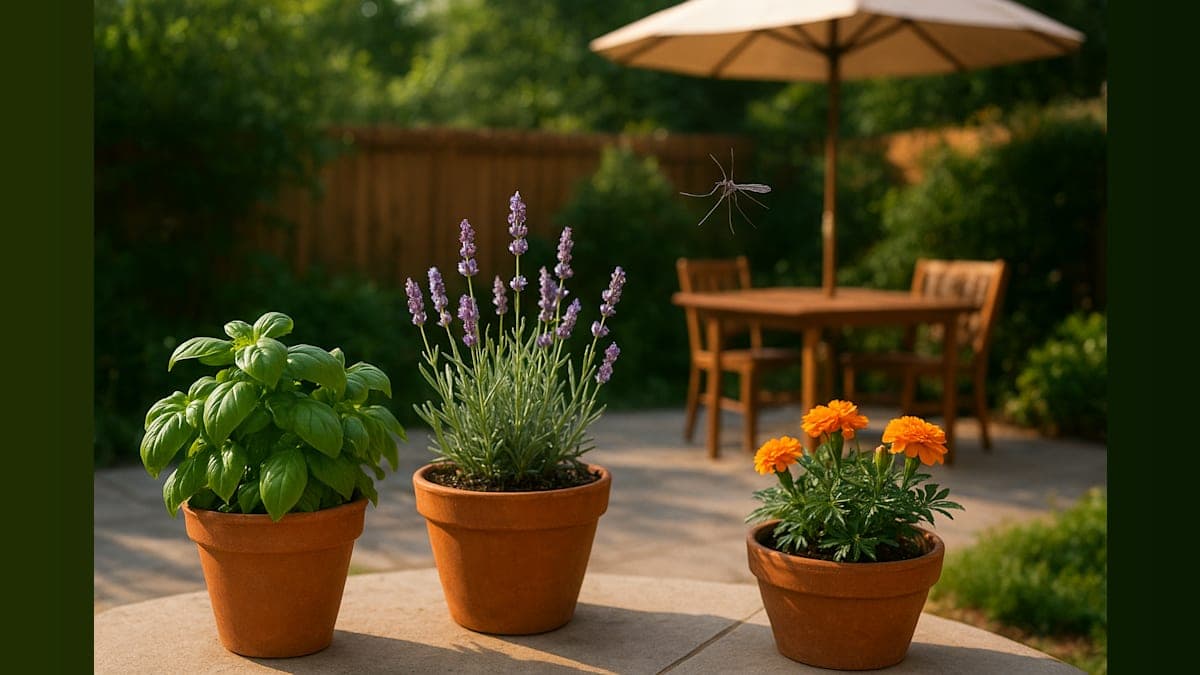
As outdoor entertaining season reaches its peak, homeowners face a familiar challenge: competing with mosquitoes, flies, and ants for their own patios and dining spaces. While chemical sprays and citronella candles remain popular solutions, a handful of easy-to-grow plants offer a natural alternative that requires minimal maintenance and provides lasting protection throughout the season.
The Natural Arsenal Against Outdoor Pests
A short list of common herbs and flowers can help keep pests away from seating areas, doorways, and dining spaces outdoors. The roster includes lavender, marigolds, basil, mint, citronella, rosemary, lemongrass, petunias, chrysanthemums, and catnip. Each plant targets different bugs through natural compounds and aromatic oils that prove unbearable to insects while remaining pleasant to humans.
Lavender works effectively on mosquitoes and moths. Marigolds repel aphids, mosquitoes, and flies. Basil discourages mosquitoes and houseflies. Mint helps with ants and mosquitoes. Rosemary deters mosquitoes and cabbage moths. Petunias work against aphids and tomato hornworms, while chrysanthemums repel multiple insects thanks to natural compounds in the flowers.
Citronella Leads the Pack
Among pest-repelling plants, citronella stands out as the most recognized option. Garden expert Carmen Johnston explained the plant's popularity and versatility to Real Simple, noting its distinctively pungent odor. "Citronella is by far the most popular plant that repels mosquitoes," Johnston stated. "It has a very pungent odor. I often place this in small eight-inch terra cotta pots and mix in with my centerpieces when entertaining outdoors. You can either use the clippings mixed in with arrangements or use the plant itself as the centerpiece."
Lemongrass, sometimes called citronella grass, targets mosquitoes as well. Catnip has earned a reputation as a surprisingly strong mosquito repellent. Selecting two or three plants that cover the pests you actually deal with proves more effective than relying on a single variety.
Top Performers Against Mosquitoes
For mosquitoes specifically, citronella, lemongrass, rosemary, lavender, basil, marigolds, mint, and catnip represent the standouts among easy-to-grow options. Rosemary serves as a particularly reliable choice for patios in warm regions.
Annie Burdick and Jamie McIntosh write in The Spruce: "The scent of rosemary (Salvia rosmarinus) is a deterrent to mosquitos and other garden pests, such as cabbage moths. Rosemary loves warm and dry climates and may need to be moved indoors in areas with harsh, cold winters. But all summer long it adorns your patio and keeps pests at bay."
The underlying principle remains consistent across these plants: scent performs most of the work. Plants that smell strong to humans—rosemary, mint, lavender, basil, citronella—tend to smell unbearable to mosquitoes, which explains why placement matters as much as the plant itself.
Strategic Placement Maximizes Effectiveness
To achieve real results, homeowners should place pest-repelling plants near seating areas and doorways, use pots on patios for a stronger barrier effect, mix several varieties together, and position fragrant plants where air flow can spread their scent. A single basil pot tucked behind a grill will not accomplish much.
Clustering plants along the edges of a patio or dining table—and brushing or crushing leaves occasionally to release oils—gives the scent a chance to actually reach the bugs you are trying to repel. Carmen Johnston's tip of working citronella into centerpieces provides a useful template: bring the plant to where people are sitting.
Layering plants matters as well. Combining a mosquito-targeted plant like citronella or catnip with something that handles flies or aphids, like marigolds or basil, covers more of what shows up uninvited. Chrysanthemums add another layer because their natural compounds work against several insects at once.
Plants Work Best as Part of Comprehensive Strategy
Plants alone will not solve a pest problem. Homeowners should pair them with fundamental pest-control practices: empty standing water from buckets, planters, and birdbaths; clean up yard debris where bugs breed and rest; and keep grass and shrubs trimmed back from seating areas. Done together, the right plants and the right habits make outdoor spaces noticeably less hospitable to pests, allowing families to reclaim their patios and gardens for the entertaining season ahead.