
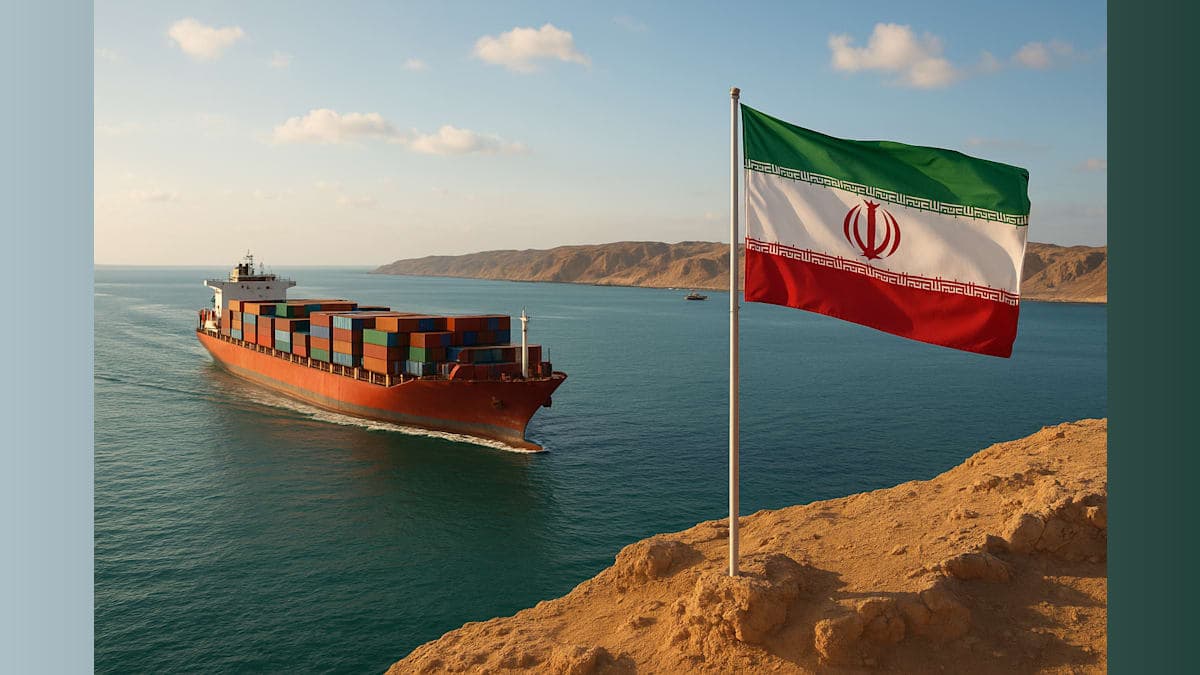
In a significant development for global maritime trade, Iran's Revolutionary Guard announced Wednesday that it will permit safe passage through the Strait of Hormuz, effectively ending a months-long blockade of one of the world's most critical shipping channels.
The Guard's navy command issued a statement on social media declaring it will no longer block shipping through the strait. The waterway has been effectively closed since the United States and Israel launched their attack on Iran on February 28, causing widespread economic disruption across the globe.
"We express our thanks to the captains and owners of ships stationed in the Persian Gulf and the Sea of Oman for their cooperation in transiting through the Strait of Hormuz in accordance with Iranian regulations and for the desirable participation of vessels in the regional maritime security," the online statement said.
The announcement represents a potential turning point in a standoff that has threatened global energy supplies and international commerce. The Strait of Hormuz serves as a vital chokepoint for oil tankers and cargo vessels traveling between the Persian Gulf and international markets.
"With the end of the aggressors' threats and in the shadow of new procedures, the possibility of safe and sustainable passage through the strait will be provided," the Revolutionary Guard statement continued.
The Iranian announcement came just hours after President Trump declared he was suspending "Project Freedom," a United States military operation that began Monday to escort merchant vessels through the contested waters. The operation involved the United States Navy guiding two United States-flagged merchant ships through the Strait of Hormuz.
According to the United States military, the escort operation came under fire from Iranian forces, resulting in the sinking of several Iranian Revolutionary Guard speedboats. The confrontation underscored the volatile nature of the situation and the risks inherent in attempting to force passage through the blockaded strait.
The Revolutionary Guard statement did not specify what it meant by "new procedures," leaving uncertainty about what conditions or requirements Iran may impose on vessels seeking to transit the waterway. This ambiguity raises questions about whether the reopening represents a complete return to normal operations or whether shipping companies will face additional restrictions or oversight.
The closure of the Strait of Hormuz since late February has had far-reaching economic consequences, affecting energy prices, supply chains, and international trade routes. The reopening could provide relief to global markets that have struggled to adapt to the disruption of this crucial maritime corridor.
This remains a developing situation, and the international community will be closely monitoring whether Iran follows through on its commitment to provide safe passage and what operational changes, if any, will be implemented for vessels transiting the strait.